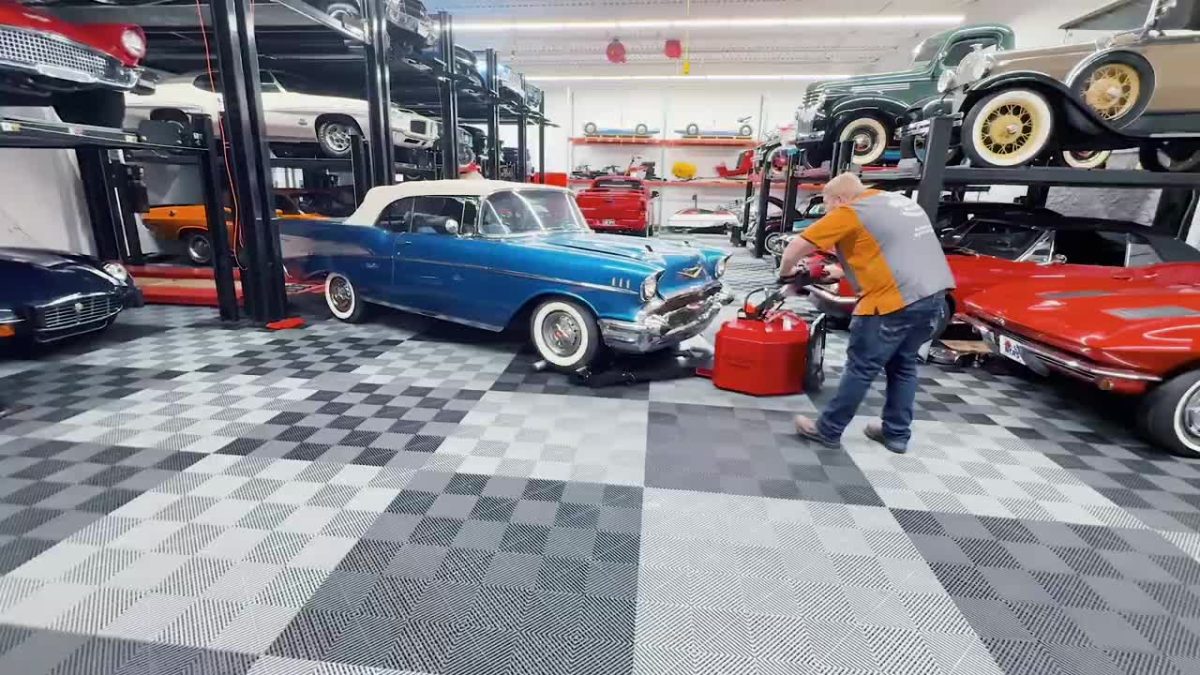
CarCaddy Vehicle Puller: Born from Real Need

A car can be the centerpiece of a collection and still need to be repositioned for a new display, storage arrangement or maintenance access. Moving it is a separate task from driving it. That practical need is the focus of the CarCaddy Vehicle Puller Collector’s Edition.

CarCaddy is a battery-powered vehicle puller from DJ Products, Inc., based in Little Falls, Minnesota. Its published application overview describes uses in car museums, private collections, social clubs and storage facilities. This story explains that product rationale and connects it to the published equipment details and customer evidence.

The need behind the Collector’s Edition

A change to an exhibition can require a vehicle to move between displays. A collector may need access to another car or a service area. In either case, the vehicle’s condition and the available route matter: a non-running car, a tight doorway and a crowded display floor each raise different questions.

Powered assistance offers another way to approach that work. It does not establish that every car or space is compatible. Vehicle weight, front axle weight, wheel movement and the proposed route need to be reviewed for the actual application.

From an application need to equipment features

The published CarCaddy specification lists roller arms, neutral throttle braking, adjustable acceleration/braking, a safety stop switch and a 0–3 mph forward/reverse speed range. The product overview shows the low-profile design and adjustable arms.

These are equipment features, rather than guarantees of accident prevention, a particular positioning accuracy or a fixed improvement in moving time. Confirm operating instructions, training requirements and vehicle compatibility with the team before using the equipment.

Customer evidence from collections and shops

The published CarCaddy testimonials include named examples from Parc Motor Club, Hyman LTD, the Midwest Car Collection Museum and Classic Auto Repair. They provide customer context for display, collection and shop use.

Classic Auto Repair’s published account describes moving from two or three people repositioning vehicles to one operator. That is an attributed customer experience, not a universal staffing or productivity promise. Review the original testimonials and discuss how your facility differs before drawing conclusions for your own workflow.

Bring your own requirements to the conversation

Start with the product overview, then compare your vehicles with the specification limits. Prepare their weights and condition, route measurements, floor details and expected frequency of use. Those details make a recommendation more useful than a general promise about speed or storage density.

To learn about the manufacturer, visit About CarCaddy and DJ Products. To review your application, contact the CarCaddy team. The goal is a vehicle-moving approach suited to your collection and its day-to-day needs.

Vehicle Movers: A Guide to Moving a Non-Running Cars

What’s the Best Way to Move a Car That Isn’t Running? 

Moving a non-running car presents unique challenges that classic car collectors, museums, and auction houses face regularly. Whether you’re dealing with a rare 1967 Shelby Cobra or repositioning vehicles in a cramped showroom, the right approach can mean the difference between preserving a priceless asset and causing costly damage. 

At DJ Products, we’ve spent years perfecting vehicle moving solutions for the collector community. Through our work with premier dealers like Hyman Ltd. and countless museums worldwide, we’ve learned that moving non-running cars requires more than just muscle—it demands the right tools, techniques, and understanding of what makes each situation unique. 

Why Can’t You Simply Drive It? 

Non-running vehicles present obvious challenges, but even cars that could potentially start shouldn’t always be driven. Classic and collectible vehicles often have: 

  • Seized engines or transmission problems 
  • Fuel systems that haven’t been serviced in years 
  • Brake systems requiring inspection before operation 
  • Irreplaceable components that shouldn’t be stressed 
  • Insurance restrictions on driving vintage vehicles 

Additionally, tight spaces in showrooms, garages, or exhibition halls make traditional driving impractical, even when the vehicle runs perfectly. 

Method 1: Using Wheel Dollies 

Wheel dollies lift individual wheels slightly off the ground, allowing maneuvering in tight spaces but is often a slow process requiring more than one person. 

Step-by-step process: 

  1. Ensure the vehicle is in neutral with parking brake disengaged 
  2. Position dollies under each wheel, starting with the front 
  3. Use a jack to lift each corner slightly and slide dollies underneath 
  4. Lower the vehicle onto the dollies 
  5. Push or pull the vehicle slowly to its destination 

This is the tried and true old school method but it lacks innovation or the safety of a modern motorized vehicle mover. 

Method 2: Towing with a Tow Strap or Rope 

When space allows, towing offers an efficient solution for longer distances, but can often lead to damage of fragile vehicles. 

Step-by-step process: 

  1. Attach the tow strap to proper anchor points on both vehicles 
  2. Ensure the non-running car is in neutral 
  3. Establish clear communication signals between drivers 
  4. Begin towing slowly, maintaining constant tension on the strap 
  5. Plan stops in advance, as the non-running vehicle lacks power steering and brakes 

Critical safety note: This method requires more than one person to be involved and is the most dangerous. 

Method 3: Hiring a Professional Towing Service 

Professional services become necessary when: 

  • The vehicle must travel on public roads 
  • Distance exceeds facility boundaries  
  • Liability concerns outweigh DIY savings 
  • Specialized equipment like flatbed trucks is required 

Safety Precautions for Classic Vehicle Moving Methods 

Vehicle moving carries inherent risks. Always: 

  • Have multiple people involved—never attempt solo moves 
  • Clear the path completely before beginning 
  • Move slowly and deliberately 
  • Use wheel chocks when stopping on inclines 
  • Maintain constant communication between team members 

The CarCaddy Collectors Edition: A Superior Vehicle Moving Solution 

After years of working with collectors who struggled with traditional methods, we developed the CarCaddy Collector’s Edition—a motorized vehicle mover specifically designed for valuable vehicles. 

Unlike manual dollies or risky towing, our vehicle mover offers: 

  • Precision control: Move vehicles exactly where needed without overshooting 
  • Solo operation: One person can safely and easily relocate a 7,000-pound vehicle 
  • Zero risk starting: Never risk engine damage or fuel system problems 
  • Professional appearance: Designed to look appropriate around million-dollar vehicles 

Hyman Ltd., managing over 200 vehicles in their facility, chose our CarCaddy Vehicle Mover after experiencing the limitations of manual methods. As they noted in their testimonial, the precision and efficiency transformed their daily operations. 

Collectors benefit from the ability to maneuver valuable cars in tight garage spaces without risking damage, while auction houses can efficiently showcase non-running vehicles to potential buyers. Museums particularly appreciate the professional appearance and quiet operation that doesn’t disrupt visitors. 

With specifications including a 7,000-pound capacity, 36VDC drive system, and precision speed control, the CarCaddy handles everything from lightweight sports cars to heavy luxury vehicles. The shock-assisted platform and non-marking wheels protect both vehicle and flooring. 

Making the Right Choice for Your Collection 

The best method depends on your specific situation, but investing in proper equipment pays dividends in safety, efficiency, and peace of mind. Whether you choose wheel dollies for occasional moves or a motorized car mover for regular operations, the key is matching your tool to your needs. 

Don’t let improper moving techniques risk your valuable collection. Contact us for a free consultation to discuss your specific vehicle moving needs, and check out our testimonials page to see how other classic car collectors are using the CarCaddy CE to protect and manage their investments.