Preserving History: Why Museums Trust the CarCaddy

Ask any museum curator about their job, and you’ll hear a familiar mix of pride and pressure. They aren’t just dusting display cases. They’re the guardians of history—and when that history happens to be a 1962 Ferrari 250 GTO or a one-of-a-kind concept car from the 1930s, the stakes climb into the millions. 

Caring for rare, vintage, and historically significant automobiles is a privilege. It’s also a daily test of patience, planning, and precision. These vehicles weren’t built to last forever, yet curators are tasked with keeping them pristine for generations to come. Every decision matters, from climate control to lighting to the gentle hands that touch the paint. 

And then there’s the part nobody warns you about: actually moving the cars. It sounds simple. It’s anything but. 

The Hidden Risk in Moving Priceless Cars 

Picture a packed exhibit hall. Display pedestals everywhere. Velvet ropes. Glass cases just inches from priceless fenders. Now imagine you need to shift a multimillion-dollar automobile three feet to the left for a new exhibit layout. How do you do it without putting the car—or your staff—at risk? 

Curators face two bad options, and both come with real consequences. 

Option one: start the engine.

It seems logical. The car has a motor, so why not use it? Because firing up a rare, decades-old engine just to roll a few feet causes genuine harm. Old seals dry out. Fuel systems gum up. Fragile components wear down with every unnecessary ignition. You’re trading long-term preservation for short-term convenience—a terrible deal when the engine itself is part of what makes the car valuable. Many of these vehicles haven’t run in years, and for good reason. 

Option two: push it by hand.

This is where things get dangerous. Manual pushing invites human error in the worst possible setting. One slip, one misjudged angle, and you’ve got a dented panel, a scratched bumper, or a car that’s rolled into a display stand. Then there’s the human cost. Pushing a 4,000-pound vehicle strains backs, pulls muscles, and turns a routine task into an injury report. 

Neither choice protects what matters most. Curators deserve a third option—one built for delicacy, not damage. 

A Smarter Way to Move Multimillion-Dollar Vehicles 

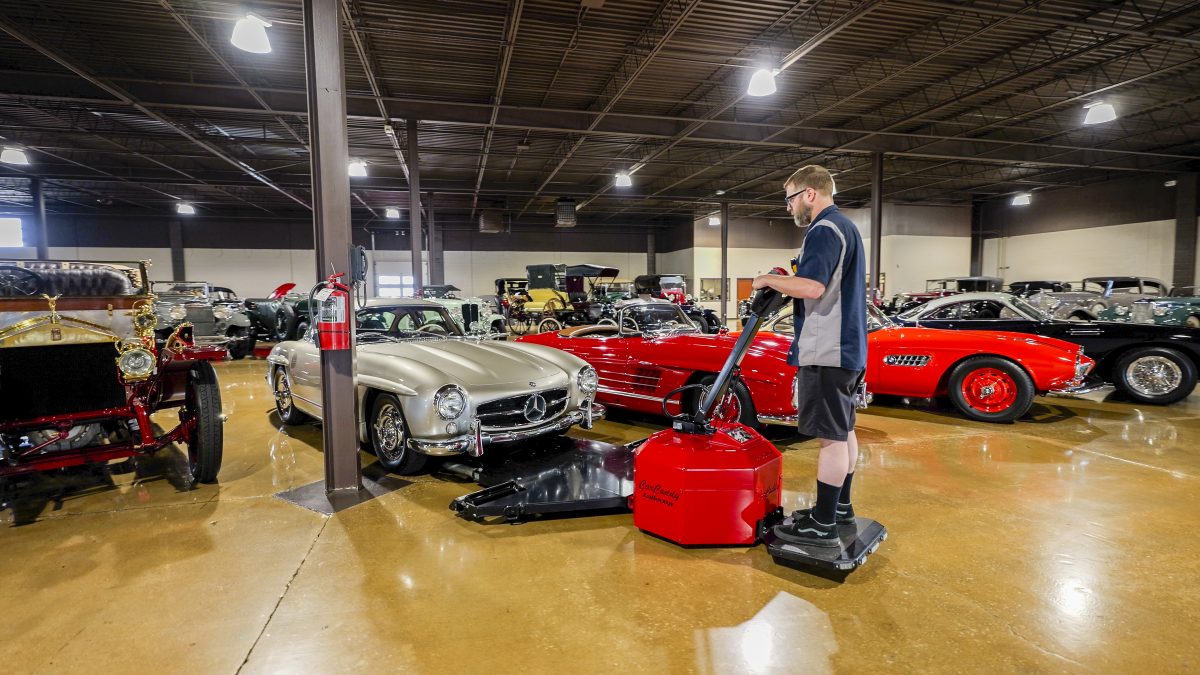
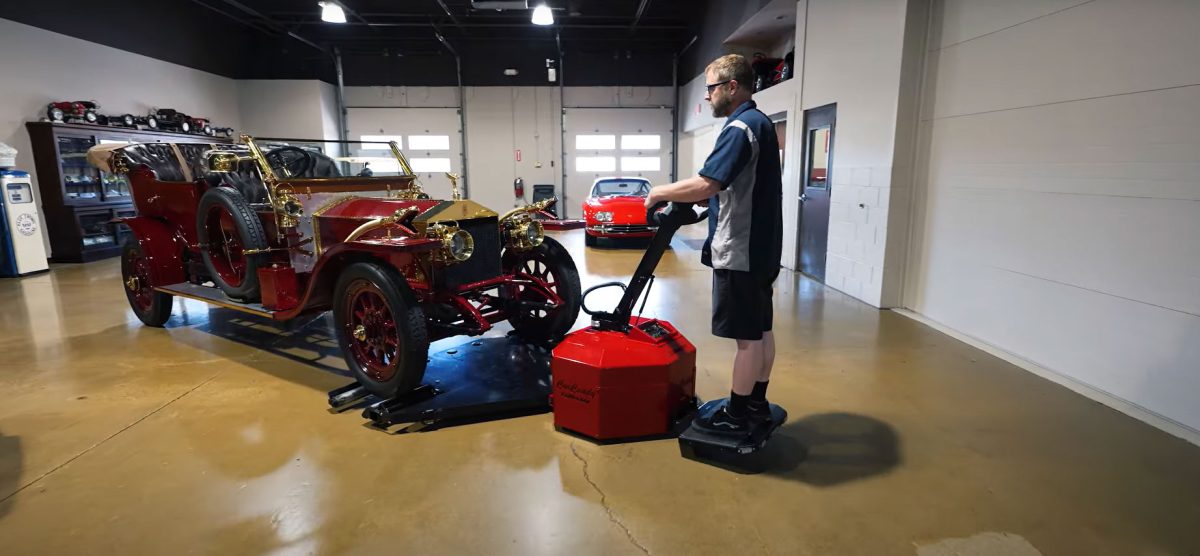
That’s exactly why the CarCaddy exists. It’s an electric vehicle mover designed for high-value environments where mistakes simply aren’t an option. 

Here’s what sets it apart. The CarCaddy pulls vehicles up to 7,000 pounds easily, safely, and efficiently—without ever touching the engine. No ignition, no wear, no fumes. The car stays exactly as it should: silent, preserved, and protected. For a museum, that peace of mind is worth its weight in gold. 

Size is where the CarCaddy really shines. Its low-profile, compact design lets staff maneuver expensive vehicles around tight corners and snug display pedestals with confidence. You’re not wrestling with a bulky industrial machine meant for a factory floor. You’re working with a tool that respects the space—and the cars—around it. 

A few features make it especially well-suited to museum work: 

• 7,000 lb. pulling capacity for handling everything from lightweight classics to heavier vintage models 

• 36V electric drive system with a non-marking drive wheel, so your floors stay flawless 

• Variable adjustable arms that load and unload almost any vehicle with ease 

• Zero emissions, keeping the air clean around irreplaceable collections 

• Smooth 0–3 mph forward and reverse control for slow, deliberate movements in tight quarters 

• Non-marking crown caster wheels that won’t leave a trace on polished gallery floors 

There’s also the matter of looks, which collectors and curators appreciate more than most. The Collector’s Edition comes in standard Ferrari Red, with options like Matte Black and Gold, Baby Blue, Silver, and more. It’s a piece of equipment that earns its place beside the cars it serves. As the team behind it puts it, “Let us know if we need to match a certain vehicle or collection and we will do it!” 

Built in America and backed by a technical service team that ships parts the same day, the CarCaddy is ready to work when work needs doing. That reliability counts when you’re responsible for the irreplaceable. 

Why Compact Design Beats Heavy-Duty Muscle

It’s tempting to assume bigger means better when it comes to moving vehicles. In a museum, the opposite is true. Heavy-duty industrial movers are built for brute force—useful on a loading dock, risky around a glass display case. 

Preservation calls for finesse. The cars in your care are delicate, valuable, and often one of a kind. They need a tool that moves them with the same care a conservator brings to a centuries-old painting. The CarCaddy’s strength is its control. It does the heavy lifting while your staff stays in command, gliding a priceless vehicle into place without strain, fumes, or fear of a costly mistake. 

That’s the difference between moving cars and protecting them. 

Upgrade Your Preservation Toolkit

Museum directors invest heavily in keeping their collections safe—climate systems, security, lighting, and expert staff. Yet one of the most common risks to a vehicle happens in the simple act of moving it. The right equipment closes that gap. 

If your team is still starting engines or pushing priceless automobiles by hand, it’s time for a better approach. The CarCaddy gives you a way to move your collection with the care it deserves, protecting both your vehicles and the people who look after them. 

Your cars have already stood the test of time. Give them a mover built to keep it that way. Visit the CarCaddy website to learn more, explore color options, and find the right fit for your collection. 

The Secret to Stopping Cold Starting: Moving Your Classic Cars

May is finally here, and for private automotive collectors, that means it is time to get your vehicles ready for the road. The weather is warming up, the salt is off the roads, and the open highway is calling. But before you can take your favorite summer driver out for a spin, you usually have to deal with a frustrating logistical hurdle: “the shuffle.”

Often, the exact car you want to take out on the first sunny weekend is tucked safely in the back corner of your garage, completely blocked by three other vehicles. Moving a million-dollar car with only inches of clearance is a stressful endeavor. It requires careful planning, a lot of patience, and usually a few extra sets of hands.

Many collectors resort to simply turning on the engines of the blocking cars, backing them out into the driveway, and then pulling the summer vehicle out. While this might seem like the fastest method, it introduces a host of risks to your delicate engines and your enclosed air quality. There is a much better, safer way to handle the summer shuffle.

By utilizing an electric car pusher, you can safely and efficiently move your vehicles without the exhaust fumes or the risk of damaging your engines. Let’s look at why this simple equipment upgrade is the best investment you can make for your private garage this season.

The Problem with Cold Starts

Starting a vintage engine just to move a vehicle 15 feet is one of the worst things you can do for its longevity. When a car has been sitting in a garage for weeks or months, the oil drains down into the oil pan. The engine is completely dry at the top. When you turn the key, the metal components rub against each other without proper lubrication for those first few crucial seconds.

This is known as a cold start, and it causes significant wear and tear. Furthermore, running an engine for only a minute or two prevents it from reaching its proper operating temperature. This short run time leads to several mechanical issues:

  • Condensation buildup: Moisture naturally forms inside the engine and exhaust system. If the car does not get hot enough to burn this moisture off, it sits inside the exhaust pipes and engine block, leading to internal rust and corrosion.
  • Oil pressure drops: Cold oil is thick and heavy. Asking your oil pump to move cold oil for a 15-foot trip, only to shut the engine off immediately, places unnecessary strain on your vehicle’s internal systems.
  • Toxic exhaust fumes: Starting multiple older, un-catalyzed vehicles in an enclosed or semi-enclosed garage fills your sanctuary with dangerous carbon monoxide and noxious odors.

Using an electric car pusher eliminates the need for cold starts entirely. You can safely maneuver your classic cars out of the way without ever turning the ignition key, protecting your investment and your lungs.

Reclaiming Your Garage Space

Garage real estate is incredibly valuable. Whether you have a dedicated warehouse or a heavily customized residential garage, maximizing your square footage is always a priority. Unfortunately, maneuvering vehicles by hand or by driving them requires leaving wide gaps between the cars. You need enough room to swing the driver’s side door open, get inside, and physically steer the wheel.

An electric car pusher changes the geometry of your garage entirely. Because the pusher attaches directly to the tires and allows you to control the vehicle’s direction from the outside, you no longer need door-swing clearance.

You can park your cars safely with mere inches of clearance between them. This allows you to fit more vehicles into the same footprint, effectively reclaiming lost space. You can push a vehicle tightly against a wall or snug it up next to another car with complete confidence, knowing you have total control over its momentum and direction.

Reorganize on Your Own Terms: One-Person Operation

For many collectors, the garage is a place of solitude and relaxation. Spending a Saturday morning detailing, maintaining, and reorganizing your collection should be an enjoyable experience. But if you have to rely on neighbors, friends, or family members to help you push heavy cars around, that independence disappears.

An electric car pusher gives you the freedom of a true one-person operation. You do not need a spotter, and you do not need someone steering from the driver’s seat while you push from the bumper.

  • Total control: You stand at the front or rear of the vehicle, giving you a clear line of sight to all potential obstacles.
  • Effortless movement: The electric motor does all the heavy lifting, allowing you to move heavy vintage steel across flat surfaces or slight inclines without breaking a sweat.
  • Ultimate convenience: Reorganize your entire layout on a whim, at any hour of the day, without waiting for assistance or waking up the neighborhood with loud exhaust notes.

Frequently Asked Questions (FAQ)

Can an electric car pusher handle heavy vintage vehicles?

Absolutely. Most high-quality electric car pushers are rated to move vehicles weighing several thousand pounds. Whether you are moving a lightweight European sports car or a heavy American muscle car, the pusher provides consistent, smooth torque to get the job done safely.

Will the pusher damage my tires or bodywork?

No. An electric car pusher is designed to engage smoothly with the tread of your tires. It does not make contact with your fragile bodywork, bumpers, or undercarriage components, ensuring your million-dollar vehicles remain in pristine condition.

Is it difficult to steer a car from the outside?

Not at all. The pusher handles the forward and reverse momentum. For steering, you simply guide the vehicle’s tires from the outside, or in some cases, you can reach through an open window to adjust the steering wheel slightly. Because you are moving at a slow, highly controlled pace, keeping the car on track is incredibly easy.

Make Your Next Garage Reorganization a Breeze

Your collection is your sanctuary, and the time you spend with your vehicles should be relaxing and rewarding. Moving your cars to prepare for the summer driving season should never involve stress, the risk of body damage, or the mechanical strain of cold starting a delicate engine.

As a fellow enthusiast, I understand the level of care your collection requires. Keep your private garage running smoothly and safely this season. Contact us today for a personalized price quote on an electric car pusher, and make your next garage shuffle a completely effortless experience.

Why Your Showroom Needs an Electric Vehicle Mover

Walk into a high-end automotive museum or a meticulously curated private collection, and you immediately notice the atmosphere. The lighting perfectly highlights the curves of classic bodywork. The epoxy floors shine flawlessly underfoot. Above all, there is a distinct, hushed quiet that commands respect for the mechanical art on display. The “vibe” of the room is a massive part of the value, creating a premium experience for visitors, buyers, and fellow collectors.

Maintaining that pristine environment requires constant work behind the scenes. Vehicles need to be rotated, new acquisitions must be placed, and displays are frequently rearranged to keep the space fresh. Moving a heavy, valuable automobile indoors poses a significant logistical challenge. Starting a classic car engine indoors introduces noise, exhaust fumes, and the risk of accidental damage. Pushing it manually requires a team of people and invites a high risk of slips or handprints on immaculate paint jobs.

This is where investing in an electric vehicle mover becomes essential. Unlike loud industrial equipment designed for outdoor shipping yards, an electric vehicle mover is completely silent and emission-free. It is the definitive choice for relocating cars during public hours or within strict, climate-controlled spaces where air quality and the visitor experience are absolutely paramount.

Silence is the Ultimate Luxury

Think about the equipment typically used in industrial settings or shipping yards. It is loud, clanking, and disruptive. That type of machinery shatters the reverent atmosphere of a well-lit museum hall or a high-end private garage. When guests are admiring a million-dollar collection, the last thing they want to hear is the grinding gears of a heavy-duty forklift or a gas-powered tractor.

An electric vehicle mover operates with a whisper-quiet electric motor. You can actively reposition a display on one side of a showroom while visitors continue enjoying a guided tour on the other side. There are no loud engine revs, no backup alarms echoing off the walls, and no disruptive mechanical noises. The silence maintains the luxurious, professional atmosphere of your space.

Zero Emissions, Zero Odor

Automotive preservation is a white-glove industry. The environment must be strictly controlled to prevent deterioration of leather, rubber, and classic paint formulations. Operating gas-powered equipment indoors immediately compromises that environment. Combustion engines release toxic fumes, strong odors, and airborne particulates that settle on pristine vehicles.

Furthermore, using gas-powered machinery indoors usually requires opening massive warehouse bay doors to ventilate the carbon monoxide. Opening those doors ruins your expensive climate control. Humidity and outside temperature rush in, forcing your HVAC system to work overtime and putting delicate vintage components at risk.

Using an electric vehicle mover eliminates this problem entirely. Because the battery-powered motor produces zero emissions, there is no exhaust, no lingering smell of unburnt fuel, and no need to ventilate the building. You keep your doors closed, your climate control stable, and your air quality pristine. It ensures a comfortable, odor-free experience for your guests and a safe environment for your staff.

Smooth Motion for Priceless Assets

Moving a vehicle by hand is notoriously difficult. It takes several people to break the inertia, and the resulting movement is often jerky and unpredictable. A sudden stop or a slight miscalculation in steering can easily result in a bumped bumper or a scraped fender. When dealing with rare or custom automobiles, even the smallest mistake is an incredibly costly one.

An electric vehicle mover provides a smooth, heavily controlled transfer of power. The acceleration and deceleration feel almost hydraulic. The operator has precise control over the speed, allowing the car to inch forward without any sudden lurches. This level of control is crucial when navigating tight spaces between stanchions, display cases, and other priceless vehicles.

Museum-Grade Precision for the Private Collector

Many heavy-duty pushers on the market are built strictly for service bays and high-volume dealerships. They are bulky, complicated, and designed to be used by mechanics in greasy jumpsuits handling daily repairs.

We take a different approach with our CarCaddy. We specialize in preservation, not just repair. We deliver the exact same museum-grade precision trusted by massive institutions, but in a format that is accessible and incredibly easy for a private collector to operate entirely alone. You do not need a team of five people to reposition your collection.

Here is how our electric vehicle mover empowers a single user to manage a world-class collection:

  1. Effortless attachment: The unit easily slides under the tires of the vehicle without touching the chassis or the bodywork. This protects delicate undercarriages and avoids the need for crawling on the floor.
  2. Ergonomic controls: The handle features intuitive, variable-speed thumb controls. You simply walk behind the unit, guiding it effortlessly as the motor does all the heavy lifting.
  3. Tight turning radius: The compact footprint allows a single operator to pivot vehicles in remarkably tight spaces, maximizing the floor plan of your private garage.
  4. Clean operation: The battery-powered system means there are no oil leaks, no hydraulic fluid drips, and no grease to stain your beautiful epoxy floors.

Let’s face it. Curating and preserving your collection is what you know and love. An experienced equipment partner can offer advantages, such as specialized moving technology, that keep your overhead low while providing superior protection for your assets. In the meantime, you are free to work on enjoying and building your collection.

Elevate Your Showroom Operations

Your collection represents a massive investment of time, money, and passion. The tools you use to manage it should reflect that same level of quality and care. Enhance the professional atmosphere of your collection with a tool that works as hard as you do, all while remaining completely silent.

Keep your showroom running safely and efficiently. Request a quote and see which of our electric vehicle mover models best suits your display needs.

Tight Spaces and Pristine Floors

Managing a high-end vehicle collection, classic car consignment shop, or automotive museum brings a unique set of daily challenges. You need to maximize your available space, which often involves “puzzle-parking” cars to fit as much valuable inventory as possible into a tight garage or display area. Moving these vehicles safely and efficiently is critical to your daily operations.

Many facility owners rely on gas-powered equipment or bulky forklifts to relocate their inventory. These traditional machines are loud, difficult to maneuver in tight spaces, and worst of all, they leave unsightly black tire marks and exhaust residue across polished showroom floors. Constantly cleaning and repairing these high-end surfaces takes time away from your core business and cuts directly into your bottom line.

You need a solution that protects both your inventory and your facility. An electric car pusher offers the perfect balance of power and precision, allowing you to easily relocate vehicles without compromising your pristine display areas. We will show you exactly how a compact vehicle mover can streamline your operations, protect your investments, and keep your showroom looking flawless.

The Problem With Traditional Vehicle Movers

Every time you move a classic car or heavy vehicle using traditional gas-powered pushers, you risk damaging your property. Forklifts and standard warehouse movers feature heavy-duty industrial tires designed for rough concrete or asphalt. When these tires turn sharply on a glossy epoxy or polished concrete floor, they leave deep, dark scuff marks that require heavy scrubbing to remove.

Gas-powered equipment also creates a less obvious but equally damaging problem: exhaust residue. The fumes from gas engines eventually settle onto your floors and the vehicles themselves, creating a dull, greasy film. This forces your staff to spend extra hours detailing cars and mopping floors instead of focusing on sales, curation, or customer service.

Attempting to move cars manually is not a safe alternative. Pushing a heavy vehicle by hand puts your employees at risk of severe back and neck strains. You need a mechanical advantage, but you need one designed specifically for high-end automotive environments.

How the CarCaddy Protects Your Showroom Floors

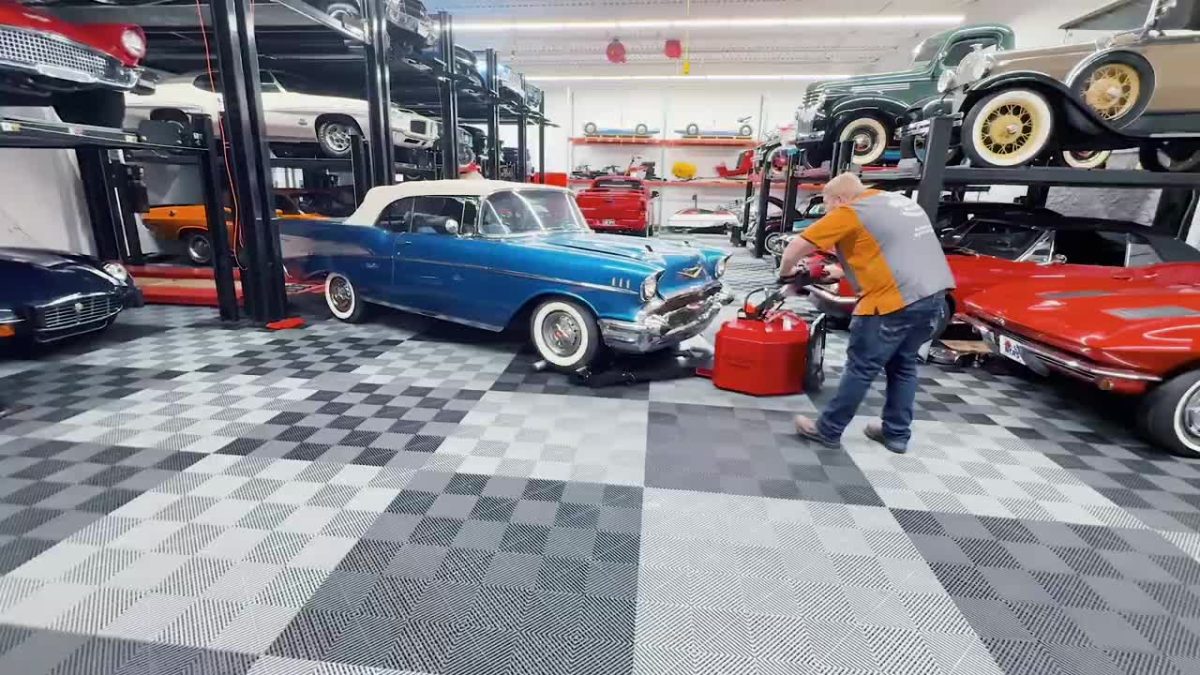
The CarCaddy Collector’s Edition is a sleek, low-profile vehicle moving solution engineered specifically for museums, classic car shops, and private collectors. It eliminates the hazards of traditional movers while providing all the power you need to manage your inventory.

Non-Marking Tires and Casters

The most important feature for your facility is the drive system. The CarCaddy features a 36VDC drive system equipped with a specialized non-marking drive wheel. It also utilizes non-marking crown caster wheels. This means you can pivot, turn, and push vehicles across your most expensive showroom floors without leaving a single black streak behind.

Zero Exhaust and Clean Operation

Because this electric car pusher runs entirely on a 36-volt, 3-battery system, it produces zero emissions. You will never have to worry about greasy exhaust residue settling on your pristine floors or your classic cars. The external battery charger easily plugs in at the end of the day, ensuring the unit is always ready for a clean, quiet shift.

Complete Bumper and Body Protection

Floor protection is only half the battle; you also need to protect the vehicles. The CarCaddy features a low-profile design with variable roller adjustments for loading and unloading almost any vehicle. The hydraulic roller arms effortlessly pull two wheels of a vehicle up off the ground. You can safely maneuver the car without cumbersome straps, hooks, or rubber push pads bumping against fragile vintage bumpers.

Mastering the Puzzle of Tight Spaces

Space is premium real estate in any private collection or dealership. “Puzzle-parking” allows you to maximize that space, but it requires extreme precision. The CarCaddy is designed to give you total control in the tightest confines.

  • Wagon Wheel Steering: This feature provides exceptional maneuverability, allowing you to navigate narrow aisles and sharp corners with ease.
  • Controlled Speed: A high-tech speed controller with adjustable acceleration and neutral throttle braking gives you precise control. You can safely operate the unit at speeds of 0-3 mph in both forward and reverse.
  • Ride-on Platform: The shock-assisted lighted rider platform flips up and down, allowing your staff to seamlessly switch between riding and walk-behind operations depending on the space available.
  • Hi-Beam Headlights: LED lighting makes visibility easy for quick “grab and go” moves, even in dimly lit garage corners.

Built for High-End Collections and Boutique Dealerships

Performance is crucial, but aesthetics matter in a high-end showroom. You want your equipment to look as professional as the vehicles you sell or display. The CarCaddy Collector’s Edition is designed to look sleek and modern, featuring standard molded handlebars and an angled control panel.

It also comes in a variety of striking colors to match your brand or facility. Choose from the standard Ferrari Red, Baby Blue, Matte Black + Gold, Pink, Silver, or White. We can even custom-match a specific vehicle or collection color upon request.

Despite its stylish appearance, this car pushing machine is a true workhorse. It easily handles vehicles up to 7,000 lbs, accommodating a front axle weight of up to 3,000 lbs. Whether you are moving a lightweight vintage sports car or a heavy luxury sedan, the CarCaddy provides the reliable power you need.

Upgrade Your Showroom Operations Today

Your showroom floors are a direct reflection of your brand’s quality and professionalism. Stop wasting time and money cleaning up after outdated, dirty equipment. By investing in an electric car pusher designed specifically for high-end collections, you can protect your facility, keep your employees safe, and manage your inventory with total precision.

Contact our sales and engineering team today to learn more about the CarCaddy Collector’s Edition. We are ready to help you customize a vehicle moving solution that fits your exact needs and keeps your business running smoothly.

Cruisin’ Through the Crossroads: Classic Car Culture in Indiana

Indiana’s classic car culture connects automotive history with the people who keep older vehicles on the road and on display. Auburn and South Bend offer places to explore that history, while shows and cruise-ins provide opportunities to meet owners and see their cars outside a museum.

Use this guide as a starting point for a visit or a collection-focused trip. Check each organizer’s current information before you travel; schedules, entry rules and visitor arrangements can change.

Explore Indiana’s automotive history

In Auburn, the Auburn Cord Duesenberg Automobile Museum occupies the former Auburn Automobile Company showroom and offices. The Indiana Historical Bureau’s Auburn marker documents the company and the building’s connection to the Cord Corporation.

South Bend is another stop for automotive history. Visit Indiana’s museum road-trip guide highlights Auburn and Studebaker museums as destinations in northern Indiana. For a collector, these stops can also prompt questions about how cars are preserved, interpreted and arranged for visitors.

Choose an event that fits your interests

Street rods in Evansville

Frog Follies, organized by E’ville Iron Street Rods, takes place at the Vanderburgh 4-H Center in Evansville. The organizer identifies it as a pre-1949 street rod show. Check the official site for the current schedule and participation details instead of assuming that all classic vehicles are eligible.

Automotive heritage in Auburn

The Auburn Cord Duesenberg Festival celebrates the area’s automobile heritage with events that include the Parade of Classics and cruise-ins. Its official calendar is the place to confirm dates and individual events around the Labor Day period.

The James Dean connection in Fairmount

James Dean was born in Marion and raised in Fairmount. The Fairmount Historical Museum documents his life and displays belongings on loan from his family. That is a useful distinction when exploring the area: his Indiana connection includes both places, rather than Fairmount being his birthplace.

Make a useful plan before you go

For a museum visit, allow time to read the collection’s interpretation rather than treating it only as a photo stop. For a show, check spectator access, parking and the vehicle classes on display. If you want to participate, confirm registration and entry requirements directly with the organizer.

Local cruise-ins can offer a different experience from a large festival. Look for a current organizer listing and ask about the cars or clubs expected to attend. This avoids relying on unverified claims about a particular club’s history or an event’s attendance.

Moving vehicles in a private collection

Displaying classic vehicles also raises a practical question: how will a non-running car be repositioned within a garage, showroom or museum? The answer depends on the vehicle and the space, including weight, wheel movement and the route between displays.

The CarCaddy Vehicle Puller Collector’s Edition is a battery-powered option from DJ Products, Inc., based in Little Falls, Minnesota. Learn more about the manufacturer and review the vehicle and front axle weight limits before considering it for your collection.

The published customer examples show collection and shop applications. To discuss your own vehicles and layout, contact the CarCaddy team with the vehicle details and proposed route.

CarCaddy Vehicle Puller: Born from Real Need

A car can be the centerpiece of a collection and still need to be repositioned for a new display, storage arrangement or maintenance access. Moving it is a separate task from driving it. That practical need is the focus of the CarCaddy Vehicle Puller Collector’s Edition.

CarCaddy is a battery-powered vehicle puller from DJ Products, Inc., based in Little Falls, Minnesota. Its published application overview describes uses in car museums, private collections, social clubs and storage facilities. This story explains that product rationale and connects it to the published equipment details and customer evidence.

The need behind the Collector’s Edition

A change to an exhibition can require a vehicle to move between displays. A collector may need access to another car or a service area. In either case, the vehicle’s condition and the available route matter: a non-running car, a tight doorway and a crowded display floor each raise different questions.

Powered assistance offers another way to approach that work. It does not establish that every car or space is compatible. Vehicle weight, front axle weight, wheel movement and the proposed route need to be reviewed for the actual application.

From an application need to equipment features

The published CarCaddy specification lists roller arms, neutral throttle braking, adjustable acceleration/braking, a safety stop switch and a 0–3 mph forward/reverse speed range. The product overview shows the low-profile design and adjustable arms.

These are equipment features, rather than guarantees of accident prevention, a particular positioning accuracy or a fixed improvement in moving time. Confirm operating instructions, training requirements and vehicle compatibility with the team before using the equipment.

Customer evidence from collections and shops

The published CarCaddy testimonials include named examples from Parc Motor Club, Hyman LTD, the Midwest Car Collection Museum and Classic Auto Repair. They provide customer context for display, collection and shop use.

Classic Auto Repair’s published account describes moving from two or three people repositioning vehicles to one operator. That is an attributed customer experience, not a universal staffing or productivity promise. Review the original testimonials and discuss how your facility differs before drawing conclusions for your own workflow.

Bring your own requirements to the conversation

Start with the product overview, then compare your vehicles with the specification limits. Prepare their weights and condition, route measurements, floor details and expected frequency of use. Those details make a recommendation more useful than a general promise about speed or storage density.

To learn about the manufacturer, visit About CarCaddy and DJ Products. To review your application, contact the CarCaddy team. The goal is a vehicle-moving approach suited to your collection and its day-to-day needs.

Vehicle Movers: A Guide to Moving a Non-Running Cars

What’s the Best Way to Move a Car That Isn’t Running? 

Moving a non-running car presents unique challenges that classic car collectors, museums, and auction houses face regularly. Whether you’re dealing with a rare 1967 Shelby Cobra or repositioning vehicles in a cramped showroom, the right approach can mean the difference between preserving a priceless asset and causing costly damage. 

At DJ Products, we’ve spent years perfecting vehicle moving solutions for the collector community. Through our work with premier dealers like Hyman Ltd. and countless museums worldwide, we’ve learned that moving non-running cars requires more than just muscle—it demands the right tools, techniques, and understanding of what makes each situation unique. 

Why Can’t You Simply Drive It? 

Non-running vehicles present obvious challenges, but even cars that could potentially start shouldn’t always be driven. Classic and collectible vehicles often have: 

  • Seized engines or transmission problems 
  • Fuel systems that haven’t been serviced in years 
  • Brake systems requiring inspection before operation 
  • Irreplaceable components that shouldn’t be stressed 
  • Insurance restrictions on driving vintage vehicles 

Additionally, tight spaces in showrooms, garages, or exhibition halls make traditional driving impractical, even when the vehicle runs perfectly. 

Method 1: Using Wheel Dollies 

Wheel dollies lift individual wheels slightly off the ground, allowing maneuvering in tight spaces but is often a slow process requiring more than one person. 

Step-by-step process: 

  1. Ensure the vehicle is in neutral with parking brake disengaged 
  2. Position dollies under each wheel, starting with the front 
  3. Use a jack to lift each corner slightly and slide dollies underneath 
  4. Lower the vehicle onto the dollies 
  5. Push or pull the vehicle slowly to its destination 

This is the tried and true old school method but it lacks innovation or the safety of a modern motorized vehicle mover. 

Method 2: Towing with a Tow Strap or Rope 

When space allows, towing offers an efficient solution for longer distances, but can often lead to damage of fragile vehicles. 

Step-by-step process: 

  1. Attach the tow strap to proper anchor points on both vehicles 
  2. Ensure the non-running car is in neutral 
  3. Establish clear communication signals between drivers 
  4. Begin towing slowly, maintaining constant tension on the strap 
  5. Plan stops in advance, as the non-running vehicle lacks power steering and brakes 

Critical safety note: This method requires more than one person to be involved and is the most dangerous. 

Method 3: Hiring a Professional Towing Service 

Professional services become necessary when: 

  • The vehicle must travel on public roads 
  • Distance exceeds facility boundaries  
  • Liability concerns outweigh DIY savings 
  • Specialized equipment like flatbed trucks is required 

Safety Precautions for Classic Vehicle Moving Methods 

Vehicle moving carries inherent risks. Always: 

  • Have multiple people involved—never attempt solo moves 
  • Clear the path completely before beginning 
  • Move slowly and deliberately 
  • Use wheel chocks when stopping on inclines 
  • Maintain constant communication between team members 

The CarCaddy Collectors Edition: A Superior Vehicle Moving Solution 

After years of working with collectors who struggled with traditional methods, we developed the CarCaddy Collector’s Edition—a motorized vehicle mover specifically designed for valuable vehicles. 

Unlike manual dollies or risky towing, our vehicle mover offers: 

  • Precision control: Move vehicles exactly where needed without overshooting 
  • Solo operation: One person can safely and easily relocate a 7,000-pound vehicle 
  • Zero risk starting: Never risk engine damage or fuel system problems 
  • Professional appearance: Designed to look appropriate around million-dollar vehicles 

Hyman Ltd., managing over 200 vehicles in their facility, chose our CarCaddy Vehicle Mover after experiencing the limitations of manual methods. As they noted in their testimonial, the precision and efficiency transformed their daily operations. 

Collectors benefit from the ability to maneuver valuable cars in tight garage spaces without risking damage, while auction houses can efficiently showcase non-running vehicles to potential buyers. Museums particularly appreciate the professional appearance and quiet operation that doesn’t disrupt visitors. 

With specifications including a 7,000-pound capacity, 36VDC drive system, and precision speed control, the CarCaddy handles everything from lightweight sports cars to heavy luxury vehicles. The shock-assisted platform and non-marking wheels protect both vehicle and flooring. 

Making the Right Choice for Your Collection 

The best method depends on your specific situation, but investing in proper equipment pays dividends in safety, efficiency, and peace of mind. Whether you choose wheel dollies for occasional moves or a motorized car mover for regular operations, the key is matching your tool to your needs. 

Don’t let improper moving techniques risk your valuable collection. Contact us for a free consultation to discuss your specific vehicle moving needs, and check out our testimonials page to see how other classic car collectors are using the CarCaddy CE to protect and manage their investments. 

Hyman Needed a Vehicle Moving Solution

“We love cars! Everyone at Hyman Ltd. is passionate about what they do.” Says Mark Hyman, owner and founder of Hyman Limited, one the premier multisegmented Car Collector and Consignment companies in the world.

Hyman Ltd. was created in 1989 because of Mark Hyman’s interest in antique, classic and special interest automobiles. Beginning in a small, rented garage of approximately 4,000 sq ft., the business quickly grew their current location — a beautiful two facility compound consisting of 67,000 sq ft. located near the St. Louis International Airport that houses their sales department, restoration, repair facility, showroom, and administrative offices.

At Hyman Ltd., they search the world to seek out and acquire rare and unusual cars of exceptional quality. Their clientele consists of collectors, museums, and enthusiasts throughout the world who come to them for assistance in buying, selling, and in refining their collections while shopping their extensive inventory exceeding over 200 vehicles.

With an operation at this scale Hyman knew they needed a vehicle moving solution other than towing or manually moving on wheeled car dollies. Hyman discovered the CarCaddy and realized the answer to their problem was a motorized vehicle mover.

Hyman, one of our DJProducts Inc. first CarCaddy Vehicle Puller customers, called us after receiving and using our CarCaddyVP, “Great product, but we have identified a few technical improvements… can you make it more aesthetically appealing to our premium car buyers? ”. After 3 years of refining the details, we finally delivered a finished product called the CarCaddy Vehicle Puller Collector’s Edition. See our premier vehicle mover in action in the following video:

Add Your Heading Text Here

Add Your Heading Text Here

Add Your Heading Text Here