
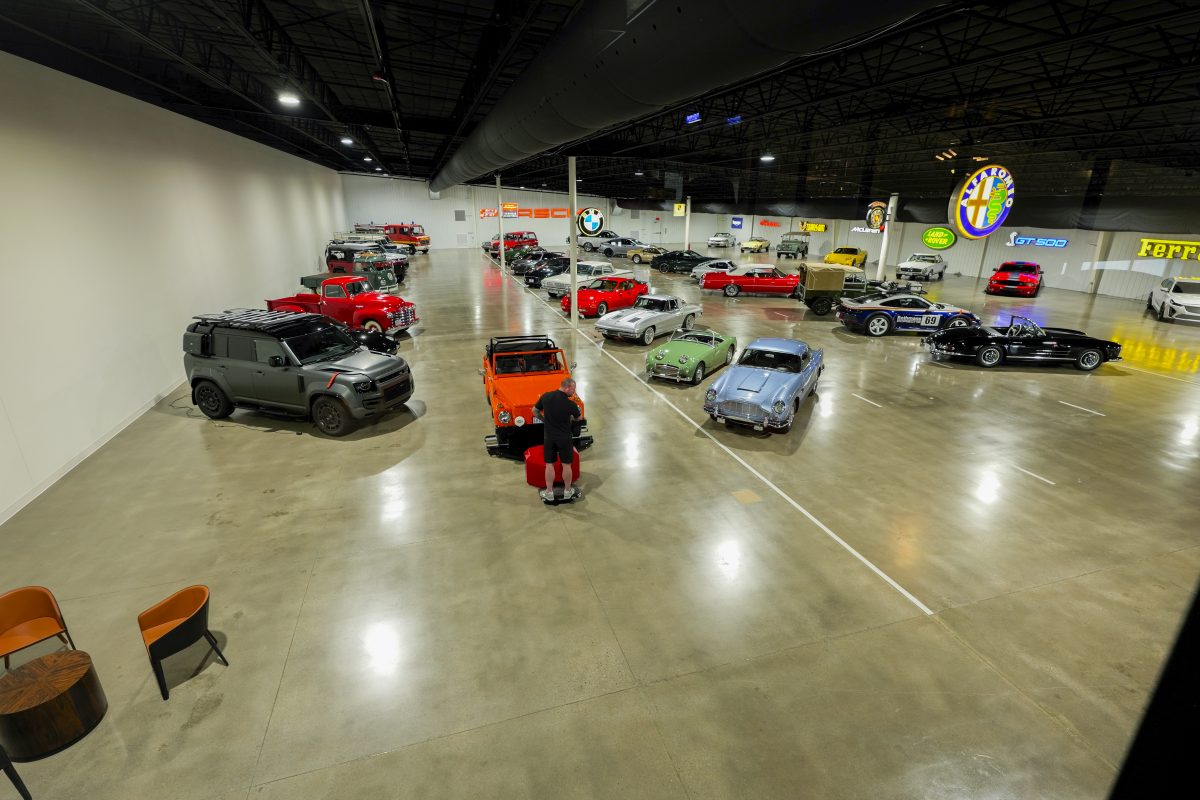
David Letterman is best known for decades behind the late-night desk. But away from the cameras, he’s been quietly building one of the most respected private car collections in the United States. Since the 1980s, Letterman has pursued rare, high-performance automobiles with the same intensity he brought to interviewing guests—zeroing in on European sports cars built for speed, precision, and engineering excellence.
His collection includes legendary machines like the Ferrari 275 GTB and the Porsche 911 RS. These aren’t weekend cruisers. They’re rolling works of art—historically significant vehicles that demand meticulous care, thoughtful storage, and careful handling at every stage.
That level of care doesn’t stop when a vehicle parks. For museum curators, private collectors, and boutique dealership operators, it extends to every time a vehicle needs to be repositioned, rotated, or moved through a facility. And that’s where many collections face an underappreciated risk.
The Hidden Danger of Moving High-Value Vehicles Indoors
Moving a pristine, vintage, or high-performance vehicle inside a confined space—whether it’s a climate-controlled museum, a private garage, or a showroom floor—is far more complicated than it looks.
The instinct is often to push by hand. But hand-pushing a vehicle introduces real risks. Uneven force across the body panels can cause stress on the chassis. A momentary lapse in attention near a display stand, wall, or neighboring vehicle can result in a costly dent or scratch. For vehicles like a Ferrari 275 GTB or a classic Porsche 911 RS, even minor cosmetic damage can significantly reduce value.
Starting the engine indoors creates a different set of problems. Exhaust fumes accumulate quickly in enclosed spaces, creating health hazards for staff and potentially damaging finishes on nearby vehicles. High-rpm cold starts on a historic engine add unnecessary wear. And low-speed engine operation offers minimal steering control, making precise maneuvering in tight spaces genuinely difficult.
The solution isn’t more manpower or more caution—it’s the right equipment.
Why Dedicated Vehicle Movers Are the Professional Standard
A dedicated electric vehicle mover is purpose-built to do exactly what pushing by hand or running an engine cannot: move valuable vehicles safely, precisely, and without introducing risk.
The concept of using a car pushing machine for high-value applications has grown significantly in professional facilities. Museum collections, exotic car dealerships, and private garages with multiple vehicles now rely on electric car pushers to protect their investments during routine repositioning. The advantages are straightforward.
Zero emissions indoors. A battery-powered electric vehicle mover produces no exhaust, making it safe for enclosed environments regardless of ventilation. Staff can work confidently around vehicles without respiratory concerns or the smell of fumes contaminating upholstery and interiors.
Precision control at low speed. Unlike hand-pushing—where control depends entirely on the strength and coordination of the people involved—a purpose-built vehicle mover gives the operator consistent, adjustable speed in both forward and reverse. That level of control matters enormously in tight spaces where a few inches of clearance separate a $400,000 Ferrari from a concrete pillar.
No contact with painted surfaces. A well-designed car pushing machine connects to the vehicle at the wheel or axle, not the body. That means no handprints, no pressure on body panels, and no accidental scratches from belt buckles or clothing.
Repeatable safety. In a busy dealership or active museum, vehicles get moved regularly. A defined, repeatable process using an electric car pusher is far safer than relying on ad hoc manual methods that vary by staff member and situation.
Introducing the CarCaddy Vehicle Puller: The Collector’s Edition
For facilities managing high-value, vintage, or exotic vehicles, the CarCaddy Vehicle Puller—Collector’s Edition is worth a close look.
American-made and engineered for precision environments, the CarCaddy electric vehicle mover handles vehicles up to 7,000 lbs. and front axle weights up to 3,000 lbs. It operates on a 36VDC drive system with a non-marking drive wheel, meaning no tire marks on polished garage floors or museum surfaces. Speed tops out at 3 mph in both forward and reverse—slow enough for safe indoor use, controlled enough for tight maneuvering.
A few features stand out for collector-grade environments:
- Non-marking crown caster wheels protect flooring in showrooms, museums, and private facilities
- Shock-assisted ride-on platform that flips up for walkie operations, giving operators flexibility in how they work
- LED hi-beam headlights for clear visibility in low-light garage environments
- Neutral throttle braking and adjustable acceleration/braking for confident, controlled stops
- Safety stop switch for immediate halt in any situation
- Same-day parts shipping from the CarCaddy technical service team, so downtime stays minimal
The Collector’s Edition also features a low-profile design with variable roller adjustments for loading and unloading almost any vehicle—an important consideration for cars with low ground clearance. And if your facility has a specific aesthetic or you want the CarCaddy to complement a particular collection, custom color options are available, including Ferrari Red, Matte Black + Gold, Baby Blue, Silver, Pink, and White.
It’s a vehicle mover designed to look as good as the cars it moves.
Protecting the Collection Is Part of Managing the Collection
David Letterman didn’t build his collection by treating rare automobiles carelessly. The same philosophy applies to every facility responsible for high-value vehicles—whether that’s 3 cars or 300.
Moving a vehicle is never just a logistical task. It’s a moment where the physical integrity, cosmetic condition, and long-term value of the asset are on the line. The right electric car pusher removes the variables that make that moment risky: unpredictable human force, exhaust in enclosed spaces, and the absence of precision speed control.
For museum managers, private collection owners, and boutique dealership operators, the CarCaddy Vehicle Puller offers a professional-grade solution that matches the standard of the vehicles in your care.
Ready to protect what you’ve built? Visit carcaddyvehiclepuller.com to explore full specifications, see the CarCaddy in action, and configure the right model for your facility. Fill out the contact form on the website to connect directly with a CarCaddy product engineer—someone who can assess your specific layout, vehicle weights, and handling requirements and recommend the right solution for your collection.