Why Boutique Dealerships and Showrooms Are Upgrading Their Indoor Vehicle Handling

Walk into any high-end showroom and you’ll notice something immediately: the floors gleam, the lighting is deliberate, and every vehicle looks like it’s posed for a photoshoot. That polish doesn’t happen by accident. Behind the scenes, boutique dealerships and private showrooms work hard to protect that pristine environment, and increasingly, that means rethinking how vehicles actually get moved from one spot to another.

For years, the default solution was simple: have a couple of staff members push the car by hand, or fire up the engine and drive it a few feet. Neither option fits the standards boutique operations hold themselves to. A showroom selling six-figure vehicles can’t afford a scuffed bumper, a scratched floor, or the smell of exhaust drifting past a client mid-conversation. As a result, more dealership managers are investing in purpose-built equipment designed specifically for quiet, precise, indoor vehicle handling.

This shift matters for anyone managing a showroom floor, a private collection, or a boutique consignment space. Below, we’ll look at the hidden costs of traditional moving methods, what to look for in better equipment, and why an electric vehicle mover like the CarCaddy Vehicle Puller is becoming the standard for operations that can’t afford to compromise.

The Hidden Costs of Traditional Moving Methods

Manually pushing a vehicle sounds simple enough, but anyone who has actually done it in a showroom knows how quickly things can go wrong.

Physical risk is the first problem. Pushing a heavy vehicle, especially an exotic or vintage model, requires real effort and coordination. One slip, one uneven push, and you’re looking at a dented bumper, a scraped panel, or a scratched floor. Worse, staff members can strain their backs or suffer other injuries trying to muscle a multi-ton vehicle into position. These incidents aren’t just costly to repair; they can shake a client’s confidence in how carefully their investment is being handled.

Noise and fumes are the second problem, and they’re often underestimated. Starting an engine just to reposition a car a few feet might seem like the easier option, but it introduces noise and exhaust into a space designed to feel calm, clean, and exclusive. Clients browsing a boutique showroom expect a quiet, almost gallery-like atmosphere. A sudden engine roar or a whiff of exhaust breaks that spell instantly, and it can undercut the luxury experience a dealership has worked hard to build.

Taken together, these risks explain why more showroom managers are looking for an alternative that protects both their inventory and their brand image.

Choosing the Right Equipment for Boutique Work

Not all vehicle-moving equipment is built with boutique environments in mind. Traditional floor pushers and towing dollies were designed for utility, not finesse, and it shows.

Traditional floor pushers typically require more manual effort, offer less precise control, and weren’t engineered with delicate positioning in mind. They can work fine in a utilitarian service bay, but they’re a poor match for a showroom floor surrounded by glass walls, polished concrete, and other high-value vehicles parked just inches away.

Precision-controlled equipment, by contrast, is built for exactly this kind of tight, high-stakes maneuvering. A dedicated electric car pusher gives the operator fine control over speed and direction, which matters enormously when you’re threading a vehicle between a showroom window and a neighboring car with little room to spare. For managers responsible for multimillion-dollar inventory, that level of control isn’t a luxury. It’s a requirement.

The right vehicle mover should let a single operator reposition a car confidently, without guesswork and without the risk of overcorrecting into something expensive.

Key Benefits of the CarCaddy for Dealerships

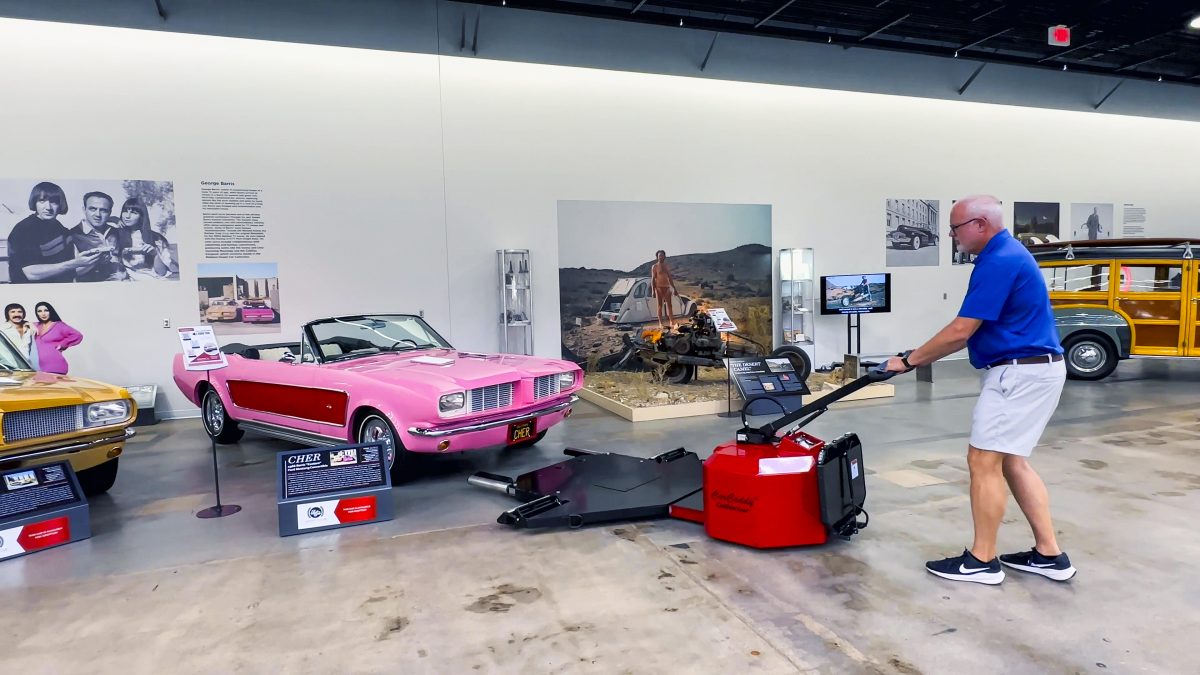
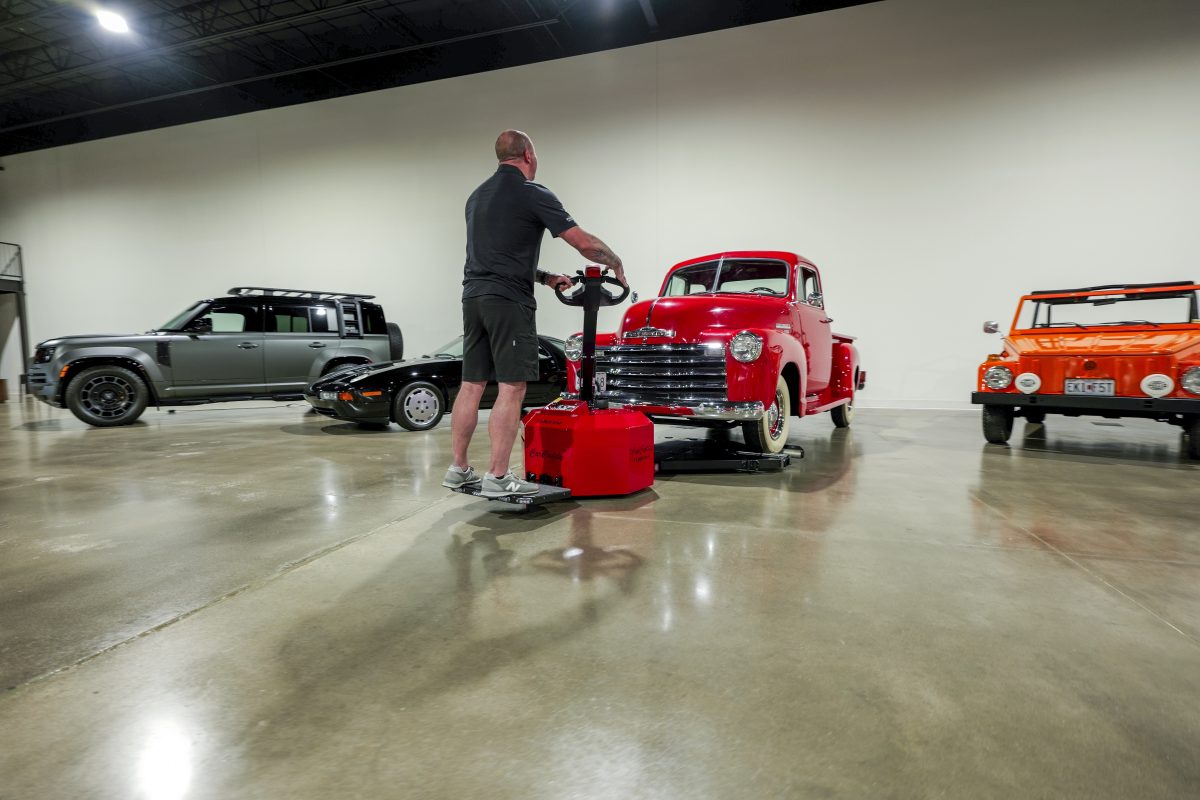
The CarCaddy Vehicle Puller: Collector’s Edition was built with exactly these challenges in mind. It’s a battery-powered, motorized car mover designed for museums, collectors, and classic consignment shops, and it’s rated for vehicles up to 7,000 lb., with front axle weight up to 3,000 lb.

Here’s what that means for a boutique dealership or showroom:

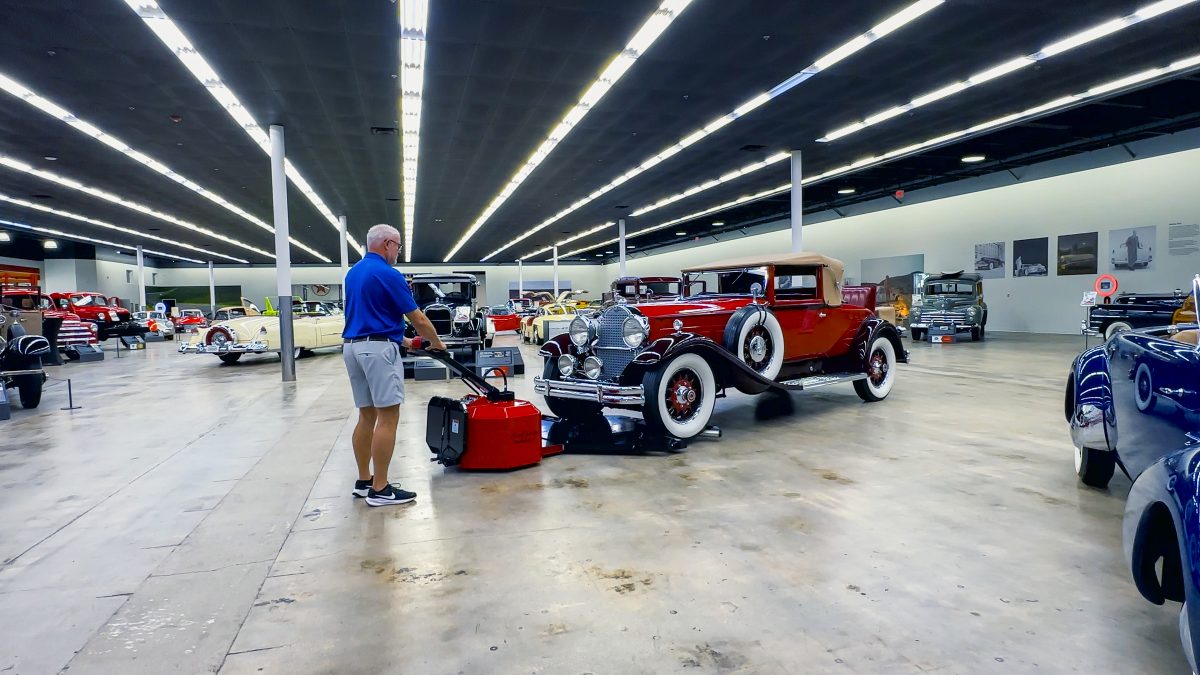
Single-operator convenience. Instead of pulling two or three staff members away from other work to muscle a car into place, one person can operate the CarCaddy and move even heavy exotic or vintage models with ease. That frees up your team to focus on clients instead of logistics.

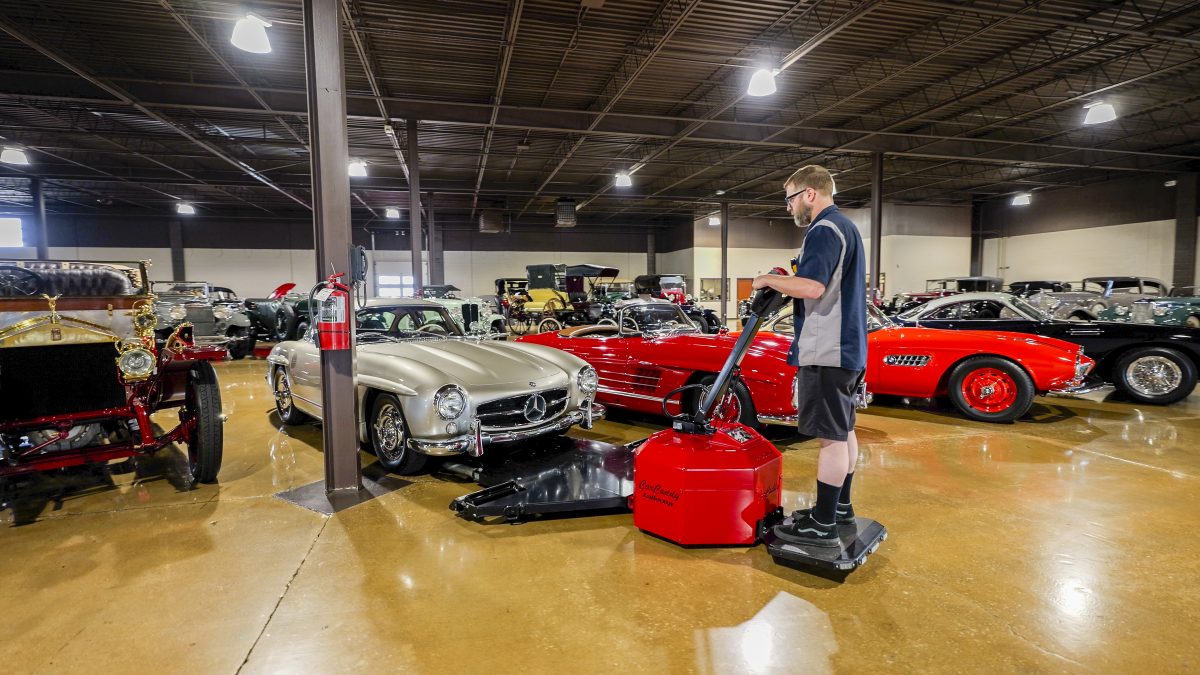
Zero touch on body panels. The CarCaddy’s roller arms engage the vehicle’s tires rather than its body, so there’s no risk of marring a bumper or panel during positioning. For dealerships handling rare or irreplaceable vehicles, this kind of protection is non-negotiable.

Clean, battery-powered operation. With a 36VDC drive system and a non-marking drive wheel, the CarCaddy moves vehicles without engine noise, exhaust fumes, or floor damage. The non-marking crown caster wheels also help protect polished showroom floors, so the clean, quiet atmosphere clients expect stays intact.

Precise, adjustable control. A high-tech speed controller, neutral throttle braking, and adjustable acceleration and braking give operators fine command over the vehicle’s movement, forward or reverse, at speeds up to 3 mph. Combined with a low-profile design and adjustable roller arms, it’s built to position vehicles within inches of glass, walls, or other cars.

These aren’t hypothetical advantages. Teams at collections and dealerships like Parc Motor Club, Hyman, and the Midwest Car Collection Museum have made the switch specifically because manual methods were slow, labor-intensive, and, in some cases, bordering on unsafe. According to Doug Melon, Curator of the Midwest Car Collection Museum, his team previously relied on multiple people to move cars in confined spaces in a way that felt risky. Classic Auto Repair’s Blake Mullen reported a similar story: what once took two or three team members now takes one, and the vehicles move faster and more confidently than before.

Protect Your Showroom’s Standards with the Right Equipment

Boutique dealerships and showrooms succeed by controlling every detail of the client experience, from the lighting to the layout to the way a vehicle glides into position. Manual pushing methods and loud engine starts work against that goal, introducing risk, noise, and wear that boutique operations simply can’t afford.

Upgrading to a dedicated electric vehicle mover isn’t just about convenience. It’s about protecting your inventory, your staff, and the polished experience your clients expect every time they walk through the door.

If you’re ready to explore which CarCaddy model fits your showroom’s space and vehicle lineup, reach out for a custom consultation. Our team can walk you through vehicle compatibility, available colors, and the features that matter most for your collection.

Protecting Your High-Value Vehicles Before Winter

Fall is when serious collection owners earn their reputation. Anyone can admire a pristine Mercedes-Benz 300SL or a numbers-matching Shelby Cobra in July. But keeping that same vehicle in showroom condition after a long, cold winter? That takes planning, discipline, and the right equipment.

As the leaves turn and temperatures drop, museum curators, private collectors, and boutique dealerships face a narrow window to prepare high-value vehicles for months of storage. Get it right, and your collection emerges in spring looking exactly as it did when you tucked it away. Get it wrong, and you’re staring down corroded brake lines, flat-spotted tires, or worse.

This guide walks through the essentials of fall storage prep, the hidden dangers of starting engines indoors, and why the way you move your vehicles into position matters just as much as how you store them.

Essential Fall Storage Checklist

Before winter sets in, every vehicle in your collection deserves a thorough once-over. Here’s where to focus your attention:

Fluid checks. Old fuel breaks down and can gum up fuel lines over months of inactivity. Top off tanks with fresh fuel and add a stabilizer to prevent degradation. Check oil, coolant, and brake fluid levels too—moisture in brake fluid is a particular concern as temperatures swing.

Tire preservation. Vehicles sitting in one spot for months risk developing flat spots, especially on softer, high-performance tires. Inflate tires to the manufacturer’s recommended pressure (some collectors add a few extra PSI for long-term storage), and consider tire cradles or periodic repositioning to distribute weight evenly.

Battery tenders. A dead battery is one of the most common—and most avoidable—storage casualties. Connect a quality battery tender to maintain charge without overcharging, and you’ll avoid the headache of a jump-start (or a full replacement) come spring.

Climate-controlled storage setups. Humidity is the enemy of chrome, leather, and paint. A climate-controlled environment with stable temperature and humidity levels protects against rust, mildew, and cracking upholstery far better than a standard garage.

Skip any one of these steps, and you’re gambling with a vehicle that may represent a six- or seven-figure investment.

Why You Should Never Start an Engine Just to Reposition a Car

Here’s a habit worth breaking: starting a car’s engine just to move it a few feet in storage. It feels harmless, but it introduces real risks into an enclosed space.

Carbon monoxide builds up quickly in closed garages and storage facilities, posing a serious hazard to anyone working nearby. Unburned fuel and exhaust residue can settle on nearby surfaces, including the paint and glass of neighboring vehicles. And every cold start puts unnecessary wear on an engine that’s better off resting through the winter.

There’s also the moisture problem. Cold starts produce condensation inside the exhaust system and engine, and if a vehicle isn’t driven long enough to burn that moisture off, it lingers—creating ideal conditions for internal corrosion.

For a collection of irreplaceable vehicles, these aren’t risks worth taking for the sake of convenience.

Rearranging Your Collection Without Starting the Engine

So how do you move a car across the showroom floor or shuffle vehicles into winter storage positions without firing up the engine? This is where a powered vehicle mover earns its keep.

An electric vehicle mover lets you reposition vehicles smoothly and quietly, without cranking an engine that doesn’t need to run. That means no exhaust fumes building up in an enclosed space, no unnecessary wear on the drivetrain, and no risk of a cold start leaving moisture behind in the exhaust system.

It also protects the tires. Pushing or dragging a car by hand—or worse, rolling it on a flat battery with the parking brake half-engaged—can scuff tires and strain suspension components in ways that add up over a storage season. A motorized car mover glides the vehicle into place with controlled, even movement, sparing the tires and the undercarriage alike.

For collections with dozens of vehicles that need to be shuffled into optimal storage positions each fall, this isn’t a nice-to-have. It’s the difference between an afternoon of careful, low-stress repositioning and a day spent nursing stubborn engines and worrying about exhaust buildup.

Why Precision Matters in Private Storage

Not all vehicle movers are created equal, and when you’re working around six-figure paint jobs and irreplaceable trim, precision matters more than brute strength.

Bulky push pads and traditional dollies can be a hassle to maneuver, particularly in tight museum aisles or boutique showroom floors where clearance is measured in inches, not feet. They often require two or three people to operate safely, and a single misjudged push can mean a scuffed bumper or a dented quarter panel.

Compare that to a vehicle mover built for single-operator control, like the CarCaddy Vehicle Puller: Collector’s Edition. With wagon wheel steering, an angled control panel, and neutral throttle braking, one person can glide a vehicle into position with the kind of precision that hand-pushing or oversized pads simply can’t match. The shock-assisted ride-on platform and adjustable roller arms accommodate a range of vehicle sizes, while non-marking wheels protect showroom and museum floors.

Teams at facilities like Hyman LTD, Parc Motor Club, and the Midwest Car Collection Museum have made the switch for exactly this reason. What once took two or three staff members wrestling a car into place now takes one person and a few quiet minutes.

Protect Your Collection This Winter

Fall storage prep isn’t glamorous work, but it’s the foundation of a collection that holds its value and its beauty year after year. Fluid checks, tire care, battery maintenance, and climate control all matter. So does how you move your vehicles once they’re ready for their winter positions.

If your team is still relying on cold starts and bulky push pads to reposition high-value vehicles, it’s worth asking whether that habit is costing you more than it’s saving. A single scuffed quarter panel or cracked exhaust gasket can erase months of careful maintenance in a matter of seconds.

The CarCaddy Vehicle Puller: Collector’s Edition was built for exactly this kind of work—moving valuable vehicles safely, quietly, and with one-person precision, whether you’re arranging a museum floor or prepping a private garage for winter. Review the full specifications to see how it fits your collection’s weight and space requirements, then head to our site to click Get Now and bring one into your facility before the first frost hits.

Have questions about how the CarCaddy Vehicle Puller works with your specific vehicles or storage layout? Fill out our contact form and one of our product engineers will walk you through the details—no pressure, just straight answers from people who know this equipment inside and out.

How Minnesota Car Collectors Connect: Top Clubs, Display Spaces & Communities

Minnesota’s car scene punches well above its weight. Between classic American muscle, pristine street rods, and the occasional European exotic hiding in a suburban garage, this state takes its automotive passion seriously. But as autumn leaves pile up and the first frost warning rolls in, every collector faces the same seasonal ritual: getting prized vehicles tucked safely into winter storage before the Minnesota chill turns garages into ice boxes.

Whether you’re a longtime club member or a newer collector still figuring out where the local scene hangs out, this guide covers the clubs, communities, and storage solutions that keep Minnesota’s car culture running strong—even when the roads don’t cooperate.

MN Car Condos & Private Garage Communities

For collectors who want more than a drafty two-car garage, Minnesota’s garage condo communities have become the gold standard for winter storage. These facilities offer something a typical home garage simply can’t: climate control, security, and the kind of neighbors who actually appreciate a flawless paint job.

AutoMotorPlex Chanhassen houses more than 140 private garage condo units and has become a gathering point for enthusiast events like Cars & Caves. It’s part storage facility, part social club—exactly the combination serious collectors are looking for. With vehicles staged close together in high-density layouts, having a reliable vehicle mover on hand isn’t a luxury here; it’s a practical necessity.

AutoMotorPlex Medina serves collectors west of the Twin Cities with similar climate-controlled luxury hangars, built for detailed winter prep and tight, high-density vehicle arrangement. Whether you’re storing a single show car or rotating several vehicles between lifts and floor space, precise positioning matters.

If you’ve ever tried to explain to a non-car-person why you need a climate-controlled condo for a vehicle, these facilities make the case far better than words ever could.

Top Minnesota Car Clubs

Clubs are the backbone of any regional car culture, and Minnesota’s are no exception.

The Minnesota Street Rod Association (MSRA) anchors the local classic car community. Its annual Back to the 50’s Weekend draws more than 10,000 vintage vehicles to the Minnesota State Fairgrounds—proof that Minnesotans will brave almost anything for a good car show, including unpredictable June weather.

Beyond MSRA, marque-specific clubs give owners of particular makes a place to swap notes with people who understand their obsession on a deeper level. The Nord Stern Region Porsche Club of America, local Corvette clubs, and BMW CCA chapters all bring specialized expertise to members prepping unique builds for the off-season. Many club members in these circles have also started sharing recommendations on practical garage tools—including electric vehicle mover options that make seasonal transitions smoother and safer.

Online Forums & Local Groups

Once driving season winds down, the conversation doesn’t stop—it just moves indoors, right along with the cars.

Regional Facebook groups, Midwest automotive forums, and community message boards become the go-to spots for seasonal maintenance tips, detailing hacks, and storage advice. These groups are where you’ll find out which fuel stabilizer actually works and which one just sounds official. You’ll also find firsthand reviews from collectors who’ve tried different vehicle mover solutions in real garage condo settings—and have strong opinions about what works.

Swap meets hosted by local clubs round out the off-season calendar, giving enthusiasts a chance to buy, sell, and trade rare parts, specialized tools, and display accessories before everything gets tucked away until spring. Think of it as a farmers market, except instead of tomatoes, you’re haggling over a vintage carburetor—or comparing notes on the best car pushing machine for a tight six-car layout.

Managing Tight Display Spaces & Storage

Why High-Density Parking Gets Risky

Here’s the catch with garage condos and shared display rooms: maximizing square footage usually means parking vehicles within inches of each other. And when you’re maneuvering a multi-vehicle collection through a space built for efficiency rather than elbow room, the margin for error shrinks fast.

A few inches of clearance can mean the difference between a clean parking job and an expensive lesson in door dings, bumper scrapes, or a mirror clipped against a lift post. Add in the physical strain of pushing a heavy vehicle by hand—on a polished, slippery garage floor—and you’ve got a recipe for sore backs and nervous owners.

Firing up a cold engine just to reposition a car a few feet isn’t much better. It accelerates engine wear and introduces moisture into a cold exhaust system, which is exactly the opposite of what you want before months of sitting idle. This is a common mistake that club veterans are quick to point out to newer collectors every fall.

Why the Right Vehicle Mover Makes All the Difference

This is where a motorized, compact electric vehicle mover earns its keep. A car pushing machine like the CarCaddy Vehicle Puller takes the guesswork—and the muscle—out of tight-space maneuvering. Instead of enlisting three buddies and hoping nobody’s knee gives out, one person can guide a heavy vehicle into position with confidence.

Here’s what that looks like in practice:

  • Precision control: An electric vehicle mover lets a single operator guide a heavy vehicle with millimeter-level accuracy, even through the narrowest garage layouts.
  • Ding and strain prevention: Removing manual pushing from the equation—and skipping unnecessary cold starts—protects both the owner’s back and the vehicle’s finish.
  • Maximized storage density: With the right car pushing machine, collectors can position vehicles tightly against back walls or tuck them under lifts without worrying about how they’ll roll them back out come spring.
  • Versatility across vehicle types: Whether you’re moving a classic roadster or a heavier muscle car, the right vehicle mover handles the job without breaking a sweat—or a side mirror.

The CarCaddy Collector’s Edition is built specifically for this kind of work. It’s rated for vehicles up to 7,000 lb. with a front axle weight up to 3,000 lb., and its low-profile design with adjustable roller arms makes loading and unloading straightforward, even in condos packed tighter than a Back to the 50’s parking lot. A lighted, flip-up platform supports both rider and walk-behind operation, so you can choose whichever style suits your space and storage setup.

For Minnesota collectors who invest heavily in their vehicles—and in the spaces that protect them—this kind of tool pays for itself quickly in avoided damage and saved time.

Ready for a Stress-Free Winter Storage Season?

As another great Minnesota driving season wraps up, transitioning your collection into winter storage shouldn’t be the most stressful part of fall. Whether you manage a private multi-car garage or share a hangar with fellow enthusiasts at AutoMotorPlex, having the right equipment makes all the difference between a smooth process and a nerve-wracking one.

If you’re ready to make garage reorganization effortless, precise, and safe—whether you’re an individual collector or part of a private garage community—contact our team today to find the ideal electric vehicle mover for your space and collection.

Stop Pushing Six-Figure Cars Around Like It’s Moving Day

Boutique dealerships and high-end showrooms live and die by presentation. Seasonal inventory rotates in, featured arrivals take center stage under the lights, and yesterday’s showstopper gets quietly relocated to make room for today’s. It’s a constant, delicate dance — except the dance partners weigh several thousand pounds apiece and cost more than most people’s houses.

That’s where things get tricky. Showroom floors are tight. Sightlines matter. Clients are watching. And somehow, you still need to shuffle a $200,000 vehicle six feet to the left without turning your showroom into a demolition derby. If you’ve ever watched four grown adults grunt and shove a Lamborghini toward a display pedestal, you already know the problem. If you haven’t, count yourself lucky — and keep reading, because we’re about to save you from that exact scene.

The Trouble With Manual Pushing (and Bulky Equipment)

There are two traditional ways to move a vehicle across a showroom floor, and neither one is great.

Option one: recruit the team. Grab a few staff members, put your shoulders into it, and hope nobody’s back gives out before the car reaches its new spot. This looks about as professional as it sounds. In front of high-end clients sipping espresso near the front window, a crew of employees straining against a vehicle’s bumper doesn’t exactly scream “luxury experience.” And every push carries risk — one wrong angle, one slipped hand, and you’ve got a scuffed bumper or a dented panel on a car that isn’t even sold yet.

Option two: bring in the big equipment. Industrial tow motors and gas-powered movers can technically get the job done, but they’re built for warehouses and lots, not boutique showrooms with polished floors and carefully curated lighting. They’re loud, they’re bulky, and they tend to leave exhaust fumes hanging in the air — not the ambiance you’re going for when you’re trying to sell a vintage Porsche.

Neither option protects your inventory, your image, or your staff’s lower back. Fortunately, there’s a third option that doesn’t involve grunting, gas fumes, or crossed fingers.

Upgrade Your Showroom Strategy With an Electric Vehicle Mover

This is where the CarCaddy Vehicle Puller — Collector’s Edition earns its keep. Built and manufactured in America, the CarCaddy is an electric vehicle mover designed specifically for situations where brute force simply isn’t an option. It pulls vehicles weighing up to 7,000 pounds smoothly, safely, and without putting a scratch on the bumper or body.

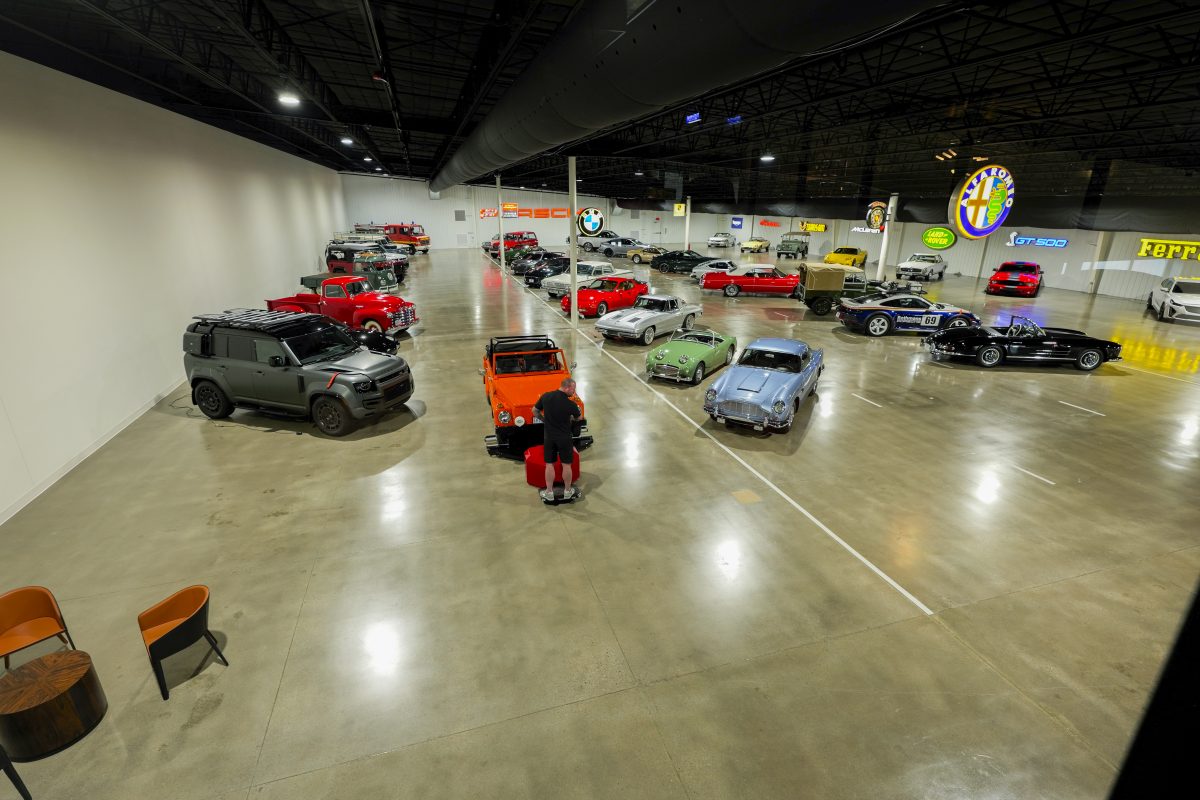
Instead of a crew of four wrestling a vehicle across the floor, one team member can operate the CarCaddy and relocate a vehicle quietly and precisely — even around tight displays, support columns, and other cars parked just a little too close for comfort. The low-profile design and variable roller adjustments mean it can load and unload nearly any vehicle, from a featherweight classic roadster to something with a bit more heft.

Think of it as the difference between carrying a full coffee cup across a crowded room versus sliding it across the counter to a friend. Both get the job done. Only one of them risks a mess.

Why CarCaddy Outshines the Competition

Plenty of equipment can move a vehicle. Not much can do it with the control, quiet, and finesse a boutique environment demands. Here’s what sets the CarCaddy apart.

Smooth Acceleration and a Tight Turning Radius

The CarCaddy runs on a 36VDC drive system with a non-marking drive wheel, paired with a high-tech speed controller and neutral throttle braking. Translation: no jerky starts, no sudden stops, and no floor scuffs. Speeds adjust smoothly from 0 to 3 mph in forward or reverse, which is plenty fast to get the job done and plenty slow to keep everyone’s nerves intact. The tight turning radius means your operator can steer around obstacles, support beams, and neighboring vehicles without needing three attempts and a small miracle.

Controls Simple Enough for Anyone on Staff

You shouldn’t need an engineering degree to reposition a car. The CarCaddy’s angled control panel, wagon wheel steering, and molded handlebars make it approachable enough that any team member can operate it safely, without needing to be a bodybuilder or a professional mover. Add in a safety stop switch and a battery charge indicator, and your staff gets confidence along with control.

Gentle Handling That Protects What Matters

This is a car pushing machine that behaves like it understands what it’s carrying. Non-marking crown caster wheels and a shock-assisted, ride-on platform keep the vehicle steady throughout the move, protecting pristine tires, glossy paint, and delicate custom bodywork from the bumps and jostles that come with less refined equipment. LED lighting and hi-beam headlights make “grab and go” moves easy to execute, even in the low, moody lighting boutique showrooms tend to favor.

And because appearances matter as much on the equipment as they do on the cars, the CarCaddy comes in Ferrari Red as standard, with Baby Blue, Matte Black + Gold, Pink, Silver, and White also available. If you need it color-matched to your collection or branding, just ask — we’ll make it happen.

A Smarter Way to Handle Showroom Logistics

Every time a vehicle gets moved by hand or hauled by oversized equipment, you’re rolling the dice with your inventory and your image. An electric car pusher like the CarCaddy removes that risk entirely, giving your team a quiet, controlled, and genuinely dignified way to reposition vehicles — no crew required, no bumps, no bruised egos.

Investing in the right vehicle mover isn’t just about convenience. It’s about protecting the cars that protect your bottom line, and presenting your showroom the way your clients expect: polished, professional, and utterly in control.

Curious what the CarCaddy Collector’s Edition can do for your boutique dealership, private collection, or museum floor? Head over to our website to review the full specifications, explore your color options, and hit “Get It Now” when you’re ready to make the switch. Prefer to talk it through first? Fill out our contact form and one of our product engineers will walk you through exactly how the CarCaddy fits into your space — no pushing required.

Why Your Electric Vehicle Mover Should Look as Good as the Cars It Moves

Every detail in a premium automotive environment is intentional. The lighting, the flooring, the signage, the spacing between vehicles—it all works together to create an atmosphere that says, without a word, this collection is something special. So why would you roll a clunky, industrial-yellow machine through the middle of it?

That’s the question more auto museum managers, private collectors, and boutique dealership owners are asking. And it’s exactly the problem CarCaddy was built to solve.

When Your Equipment Reflects Your Brand

High-end automotive spaces are visual experiences first. A curated showroom floor isn’t just a place to store cars—it’s a stage. Every Ferrari, every classic Porsche, every limited-edition supercar is a centerpiece, and the environment around it is part of the story being told.

Off-the-shelf industrial equipment has its place, but that place isn’t a boutique dealership or a museum with white-glove ambitions. Standard vehicle movers typically come in whatever color the factory decided worked best in a warehouse or service bay. That’s fine if your priority is utility. But if you’ve invested significantly in creating an environment that communicates quality, your tools should keep pace.

CarCaddy’s Collector’s Edition electric vehicle mover is available in a range of colors—Baby Blue, Matte Black + Gold, Pink, Silver, White, and the standard Ferrari Red—and the team will custom-match a finish to your dealership’s logo colors, your showroom’s interior palette, or the specific aesthetic of your personal collection. The result is equipment that looks like it belongs there, because it was designed to.

Looking the Part During Live Operations

Here’s a scenario worth thinking through: A museum tour is in progress. Forty guests are walking the floor when the curator realizes a vehicle needs to be repositioned for the afternoon’s private event. What happens next says a lot about how an institution presents itself.

In many facilities, that moment means pausing, clearing the area, and bringing in equipment that looks distinctly out of place—interrupting the experience guests paid to have. In a boutique dealership, it means a potential buyer watches a staff member wrestle with something that doesn’t quite fit the room.

CarCaddy changes that equation. An electric vehicle mover finished in your brand’s colors, operated smoothly and quietly, becomes a seamless part of the operation rather than an interruption to it. Routine vehicle staging—something that happens constantly in active collections—becomes an extension of your brand presentation rather than a break from it.

The machine’s low-profile design also helps here. CarCaddy was built for environments where the cars are the priority, and the mover needs to stay out of the way visually and physically. Variable roller arms allow for clean loading and unloading of almost any vehicle, and hi-beam headlights make repositioning quick, even in tighter display configurations.

Performance Worthy of a Multi-Million Dollar Collection

Good looks only matter if the machine behind them can do the job. CarCaddy handles vehicles up to 7,000 lbs. with a front axle weight capacity of 3,000 lbs., so it’s fully capable across the range of vehicles typically found in premium collections—classics, exotics, heavy SUVs, and modern electric vehicles alike.

The 36VDC drive system runs quietly, produces zero exhaust fumes, and moves at a controlled 0–3 mph in both forward and reverse. That combination matters a great deal when you’re working around cars that may be irreplaceable. There’s no revving, no exhaust drifting across a freshly detailed paint job, and no jerky motion near low-slung bumpers.

For the operator, the experience is equally considered. Adjustable acceleration and braking, neutral throttle braking, a shock-assisted ride-on platform, and an angled control panel all contribute to a machine that a single person can operate confidently—even around tight displays and narrow spacing. A safety stop switch adds an additional layer of protection when you’re maneuvering a vehicle that simply cannot be damaged.

The lighted rider platform flips up and down for both rider and walkie operations, which gives operators the flexibility to match their working style to the layout of the space. Non-marking crown caster wheels and a non-marking drive wheel protect flooring that, in many showroom environments, is just as carefully selected as the vehicles sitting on it.

You Don’t Have to Choose Between Form and Function

The assumption in most industrial equipment categories is that style is a luxury—something you sacrifice for performance or price. CarCaddy’s Collector’s Edition was built specifically to challenge that assumption.

Museums and showrooms that have made significant investments in their environments deserve equipment that respects those investments. A custom-colored electric vehicle mover isn’t a cosmetic upgrade on top of a capable machine—it’s the result of understanding who actually uses this product and what their environment demands.

A private collector who has spent years assembling a garage of rare automobiles shouldn’t have to accept a tool that looks out of place. A museum curator leading a tour shouldn’t have to apologize for the equipment on the floor. And a boutique dealership trying to close a sale on a $400,000 vehicle shouldn’t have its atmosphere undercut by the equipment staging it.

Ready to Talk Custom Colors and Configuration?

CarCaddy’s team of product engineers is available to walk through your specific situation—whether that’s matching a particular brand color, discussing the layout of your facility, or helping you select the right configuration for the vehicles in your collection.

Specifications, standard features, and optional add-ons are available at carcaddyvehiclepuller.com, where you can also review the full range of available colors. When you’re ready to talk through the details, complete the contact form and a product engineer will follow up directly.

Your collection deserves equipment that works as hard as it looks good. CarCaddy delivers both.

The Tow-Bar Tango and Other Garage Rituals You Can Finally Retire

There is a precise sequence of events that occurs when you need to move a dead, dormant, or mid-restoration car across a shop floor or down a driveway. It starts with optimism, quickly moves through sweat and mild panic, and usually ends with someone yelling, “Turn the wheel! No, the OTHER left!”

If you’ve ever tried to steer an engine-less classic while three people push, or tried to nudge a rolling chassis up a 2-degree incline with nothing but raw willpower and a pry bar, you already know the truth: moving unpowered vehicles by hand is a sport nobody asked for.

Enter the CarCaddy Vehicle Puller—the piece of equipment designed specifically to end the manual labor, save your back, and prevent your vehicle’s front bumper from making unexpected, intimate contact with the garage wall.

The Anatomy of the “Push & Pray” Method

Before looking at how the CarCaddy solves the problem, let’s honor the age-old methods we are leaving behind:

  • The Solo Lean: You place one shoulder against the A-pillar, put one hand on the steering wheel through the open window, and push with your legs. You gain six inches of momentum before the tire hits a tiny pebble, stopping the car dead and nearly dislocating your collarbone.
  • The Family Emergency Crew: You draft your spouse, your teenager, and a neighbor who was just walking by to check their mail. One person steers, two push, and one stands in front waving their arms like a deck officer on an aircraft carrier.
  • The Lawn Tractor Hack: You attach a tow strap to a riding mower. The mower spins its turf tires uselessly on the concrete, leaving rubber marks right next to the oil stain you haven’t cleaned up yet.

While these traditions build character, they aren’t particularly efficient. They also carry a high risk of dented sheet metal, pulled lower back muscles, and colorful language that startles the local wildlife.

How the CarCaddy Changes the Game

The CarCaddy Vehicle Puller is built on a very simple premise: a single operator should be able to move up to 20,000 pounds of rolling steel without breaking a sweat, calling for backup, or risk running over their own toes.

Instead of relying on momentum, brute force, or awkward angles, the CarCaddy connects directly to the vehicle’s tires or frame. Here is why making the switch feels like moving from a stone-wheel cart to a hovercraft:

1. One-Person Operation (No Draft Picks Required)

You no longer need to recruit an entire pit crew just to move a vehicle out of a bay for cleaning or detail work. With variable-speed twist grips and smooth acceleration, a single person can guide cars, light trucks, or vans around tight shop corners with millimeter precision.

2. Total Control on Incline and Decline

Moving a car downhill is easy; stopping it before it meets the workbench is the tricky part. The CarCaddy features automatic braking systems. When you let go of the controls, the unit stops. The vehicle doesn’t coast, roll away, or take on a mind of its own.

3. Compact Power for Tight Spaces

Floor jacks, tow trucks, and larger machinery require massive turn radiuses and clear aisles. The CarCaddy operates within a extremely tight footprint, letting you tuck vehicles into tight corners of a showroom, storage barn, or service bay without needing ten extra feet of runway to maneuver.

Where It Earns Its Keep

While it’s a favorite for classic car collectors who treat their garages like museum wings, the CarCaddy is built for heavy daily use across a wide variety of settings:

  • Auto Repair & Body Shops: Effortlessly shift dead-on-arrival vehicles from the parking lot into service bays without tying up three technicians who should be billing hours on a lift.
  • Dealership Showrooms: Move high-end display vehicles across slick tile floors smoothly, without scuffing tires, leaving exhaust fumes, or risking a slip-and-fall.
  • Collector Barns & Storage Facilities: Maximize floor space by parking cars inches apart, knowing you can easily pull the front one out whenever it’s time for a weekend drive.
  • Fleet Maintenance Depots: Handle vans, service trucks, and utility vehicles safely on gravel, asphalt, or concrete.

The ROI of Saving Your Back

It’s easy to look at shop equipment strictly in terms of specs—torque, weight capacity, battery life, and duty cycles. But the real return on investment comes down to two things: time and physical wear-and-tear.

When moving a non-running vehicle takes two minutes instead of twenty minutes of setup and coordination, work moves faster. When your technicians aren’t straining their joints to muscle a 4,000-pound SUV onto a flatbed or into an alignment rack, they stay safer and fresher throughout the workday.

Plus, you eliminate the risk of the “oops” moment—that heart-stopping sound of metal meeting garage door frames because someone lost their footing while pushing.

Upgrade Your Move

The days of calling the whole family into the driveway to push a project car into the sun are over. The days of risking a hernia over a dead battery are finished.

Whether you’re running a high-volume commercial shop, managing a fleet, or maintaining a private collection of restored classics, the CarCaddy Vehicle Puller gives you absolute control over heavy equipment with the push of a button.

Work smarter, keep your body intact, and leave the heavy pushing to the machine built for the job.

Ready to streamline your shop flow? Contact our team today to find the exact CarCaddy model, weight capacity, and tire attachment setup for your facility.

David Letterman: The Car Collector Who Proves Great Collections Demand Great Care

David Letterman is best known for decades behind the late-night desk. But away from the cameras, he’s been quietly building one of the most respected private car collections in the United States. Since the 1980s, Letterman has pursued rare, high-performance automobiles with the same intensity he brought to interviewing guests—zeroing in on European sports cars built for speed, precision, and engineering excellence.

His collection includes legendary machines like the Ferrari 275 GTB and the Porsche 911 RS. These aren’t weekend cruisers. They’re rolling works of art—historically significant vehicles that demand meticulous care, thoughtful storage, and careful handling at every stage.

That level of care doesn’t stop when a vehicle parks. For museum curators, private collectors, and boutique dealership operators, it extends to every time a vehicle needs to be repositioned, rotated, or moved through a facility. And that’s where many collections face an underappreciated risk.

The Hidden Danger of Moving High-Value Vehicles Indoors

Moving a pristine, vintage, or high-performance vehicle inside a confined space—whether it’s a climate-controlled museum, a private garage, or a showroom floor—is far more complicated than it looks.

The instinct is often to push by hand. But hand-pushing a vehicle introduces real risks. Uneven force across the body panels can cause stress on the chassis. A momentary lapse in attention near a display stand, wall, or neighboring vehicle can result in a costly dent or scratch. For vehicles like a Ferrari 275 GTB or a classic Porsche 911 RS, even minor cosmetic damage can significantly reduce value.

Starting the engine indoors creates a different set of problems. Exhaust fumes accumulate quickly in enclosed spaces, creating health hazards for staff and potentially damaging finishes on nearby vehicles. High-rpm cold starts on a historic engine add unnecessary wear. And low-speed engine operation offers minimal steering control, making precise maneuvering in tight spaces genuinely difficult.

The solution isn’t more manpower or more caution—it’s the right equipment.

Why Dedicated Vehicle Movers Are the Professional Standard

A dedicated electric vehicle mover is purpose-built to do exactly what pushing by hand or running an engine cannot: move valuable vehicles safely, precisely, and without introducing risk.

The concept of using a car pushing machine for high-value applications has grown significantly in professional facilities. Museum collections, exotic car dealerships, and private garages with multiple vehicles now rely on electric car pushers to protect their investments during routine repositioning. The advantages are straightforward.

Zero emissions indoors. A battery-powered electric vehicle mover produces no exhaust, making it safe for enclosed environments regardless of ventilation. Staff can work confidently around vehicles without respiratory concerns or the smell of fumes contaminating upholstery and interiors.

Precision control at low speed. Unlike hand-pushing—where control depends entirely on the strength and coordination of the people involved—a purpose-built vehicle mover gives the operator consistent, adjustable speed in both forward and reverse. That level of control matters enormously in tight spaces where a few inches of clearance separate a $400,000 Ferrari from a concrete pillar.

No contact with painted surfaces. A well-designed car pushing machine connects to the vehicle at the wheel or axle, not the body. That means no handprints, no pressure on body panels, and no accidental scratches from belt buckles or clothing.

Repeatable safety. In a busy dealership or active museum, vehicles get moved regularly. A defined, repeatable process using an electric car pusher is far safer than relying on ad hoc manual methods that vary by staff member and situation.

Introducing the CarCaddy Vehicle Puller: The Collector’s Edition

For facilities managing high-value, vintage, or exotic vehicles, the CarCaddy Vehicle Puller—Collector’s Edition is worth a close look.

American-made and engineered for precision environments, the CarCaddy electric vehicle mover handles vehicles up to 7,000 lbs. and front axle weights up to 3,000 lbs. It operates on a 36VDC drive system with a non-marking drive wheel, meaning no tire marks on polished garage floors or museum surfaces. Speed tops out at 3 mph in both forward and reverse—slow enough for safe indoor use, controlled enough for tight maneuvering.

A few features stand out for collector-grade environments:

  • Non-marking crown caster wheels protect flooring in showrooms, museums, and private facilities
  • Shock-assisted ride-on platform that flips up for walkie operations, giving operators flexibility in how they work
  • LED hi-beam headlights for clear visibility in low-light garage environments
  • Neutral throttle braking and adjustable acceleration/braking for confident, controlled stops
  • Safety stop switch for immediate halt in any situation
  • Same-day parts shipping from the CarCaddy technical service team, so downtime stays minimal

The Collector’s Edition also features a low-profile design with variable roller adjustments for loading and unloading almost any vehicle—an important consideration for cars with low ground clearance. And if your facility has a specific aesthetic or you want the CarCaddy to complement a particular collection, custom color options are available, including Ferrari Red, Matte Black + Gold, Baby Blue, Silver, Pink, and White.

It’s a vehicle mover designed to look as good as the cars it moves.

Protecting the Collection Is Part of Managing the Collection

David Letterman didn’t build his collection by treating rare automobiles carelessly. The same philosophy applies to every facility responsible for high-value vehicles—whether that’s 3 cars or 300.

Moving a vehicle is never just a logistical task. It’s a moment where the physical integrity, cosmetic condition, and long-term value of the asset are on the line. The right electric car pusher removes the variables that make that moment risky: unpredictable human force, exhaust in enclosed spaces, and the absence of precision speed control.

For museum managers, private collection owners, and boutique dealership operators, the CarCaddy Vehicle Puller offers a professional-grade solution that matches the standard of the vehicles in your care.

Ready to protect what you’ve built? Visit carcaddyvehiclepuller.com to explore full specifications, see the CarCaddy in action, and configure the right model for your facility. Fill out the contact form on the website to connect directly with a CarCaddy product engineer—someone who can assess your specific layout, vehicle weights, and handling requirements and recommend the right solution for your collection.