Fall is when serious collection owners earn their reputation. Anyone can admire a pristine Mercedes-Benz 300SL or a numbers-matching Shelby Cobra in July. But keeping that same vehicle in showroom condition after a long, cold winter? That takes planning, discipline, and the right equipment.
As the leaves turn and temperatures drop, museum curators, private collectors, and boutique dealerships face a narrow window to prepare high-value vehicles for months of storage. Get it right, and your collection emerges in spring looking exactly as it did when you tucked it away. Get it wrong, and you’re staring down corroded brake lines, flat-spotted tires, or worse.
This guide walks through the essentials of fall storage prep, the hidden dangers of starting engines indoors, and why the way you move your vehicles into position matters just as much as how you store them.
Essential Fall Storage Checklist
Before winter sets in, every vehicle in your collection deserves a thorough once-over. Here’s where to focus your attention:
Fluid checks. Old fuel breaks down and can gum up fuel lines over months of inactivity. Top off tanks with fresh fuel and add a stabilizer to prevent degradation. Check oil, coolant, and brake fluid levels too—moisture in brake fluid is a particular concern as temperatures swing.
Tire preservation. Vehicles sitting in one spot for months risk developing flat spots, especially on softer, high-performance tires. Inflate tires to the manufacturer’s recommended pressure (some collectors add a few extra PSI for long-term storage), and consider tire cradles or periodic repositioning to distribute weight evenly.
Battery tenders. A dead battery is one of the most common—and most avoidable—storage casualties. Connect a quality battery tender to maintain charge without overcharging, and you’ll avoid the headache of a jump-start (or a full replacement) come spring.
Climate-controlled storage setups. Humidity is the enemy of chrome, leather, and paint. A climate-controlled environment with stable temperature and humidity levels protects against rust, mildew, and cracking upholstery far better than a standard garage.
Skip any one of these steps, and you’re gambling with a vehicle that may represent a six- or seven-figure investment.
Why You Should Never Start an Engine Just to Reposition a Car
Here’s a habit worth breaking: starting a car’s engine just to move it a few feet in storage. It feels harmless, but it introduces real risks into an enclosed space.
Carbon monoxide builds up quickly in closed garages and storage facilities, posing a serious hazard to anyone working nearby. Unburned fuel and exhaust residue can settle on nearby surfaces, including the paint and glass of neighboring vehicles. And every cold start puts unnecessary wear on an engine that’s better off resting through the winter.
There’s also the moisture problem. Cold starts produce condensation inside the exhaust system and engine, and if a vehicle isn’t driven long enough to burn that moisture off, it lingers—creating ideal conditions for internal corrosion.
For a collection of irreplaceable vehicles, these aren’t risks worth taking for the sake of convenience.
Rearranging Your Collection Without Starting the Engine
So how do you move a car across the showroom floor or shuffle vehicles into winter storage positions without firing up the engine? This is where a powered vehicle mover earns its keep.
An electric vehicle mover lets you reposition vehicles smoothly and quietly, without cranking an engine that doesn’t need to run. That means no exhaust fumes building up in an enclosed space, no unnecessary wear on the drivetrain, and no risk of a cold start leaving moisture behind in the exhaust system.
It also protects the tires. Pushing or dragging a car by hand—or worse, rolling it on a flat battery with the parking brake half-engaged—can scuff tires and strain suspension components in ways that add up over a storage season. A motorized car mover glides the vehicle into place with controlled, even movement, sparing the tires and the undercarriage alike.
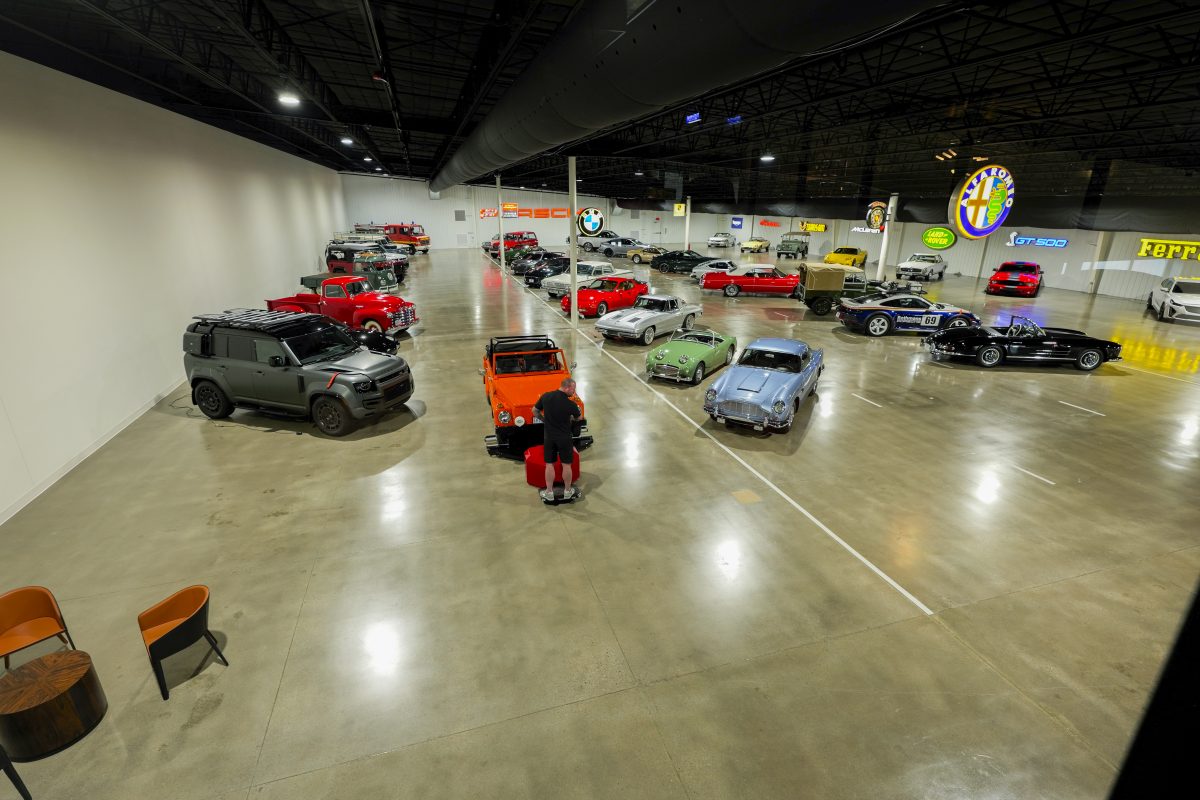
For collections with dozens of vehicles that need to be shuffled into optimal storage positions each fall, this isn’t a nice-to-have. It’s the difference between an afternoon of careful, low-stress repositioning and a day spent nursing stubborn engines and worrying about exhaust buildup.
Why Precision Matters in Private Storage
Not all vehicle movers are created equal, and when you’re working around six-figure paint jobs and irreplaceable trim, precision matters more than brute strength.
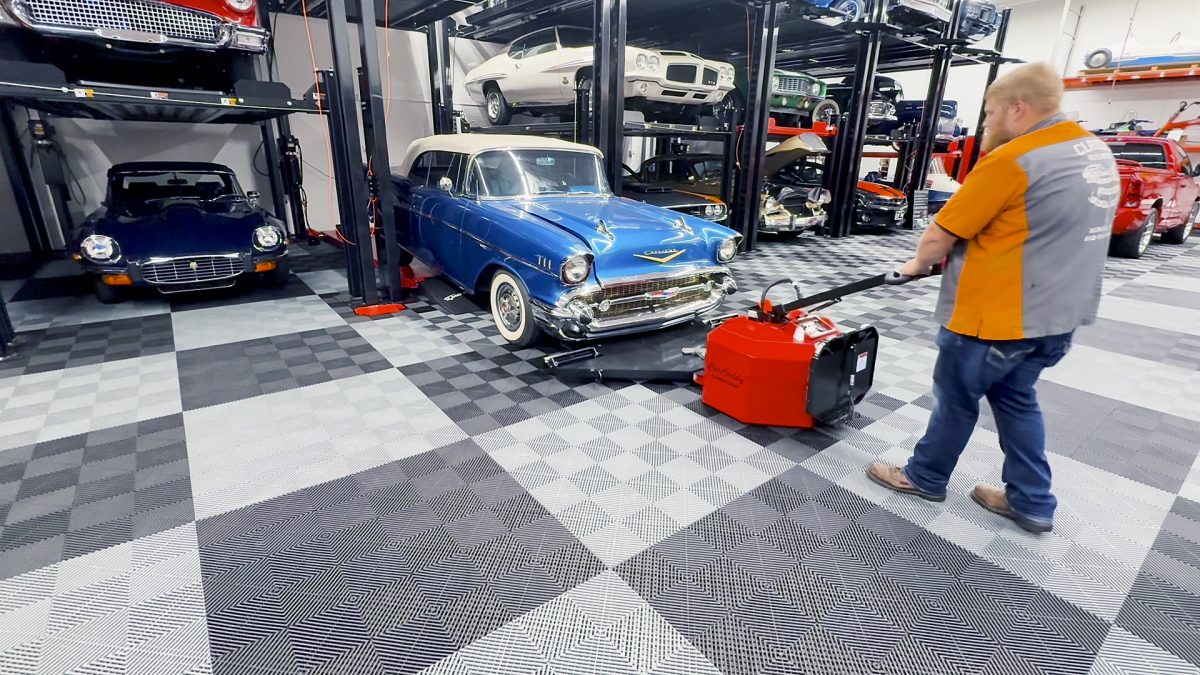
Bulky push pads and traditional dollies can be a hassle to maneuver, particularly in tight museum aisles or boutique showroom floors where clearance is measured in inches, not feet. They often require two or three people to operate safely, and a single misjudged push can mean a scuffed bumper or a dented quarter panel.
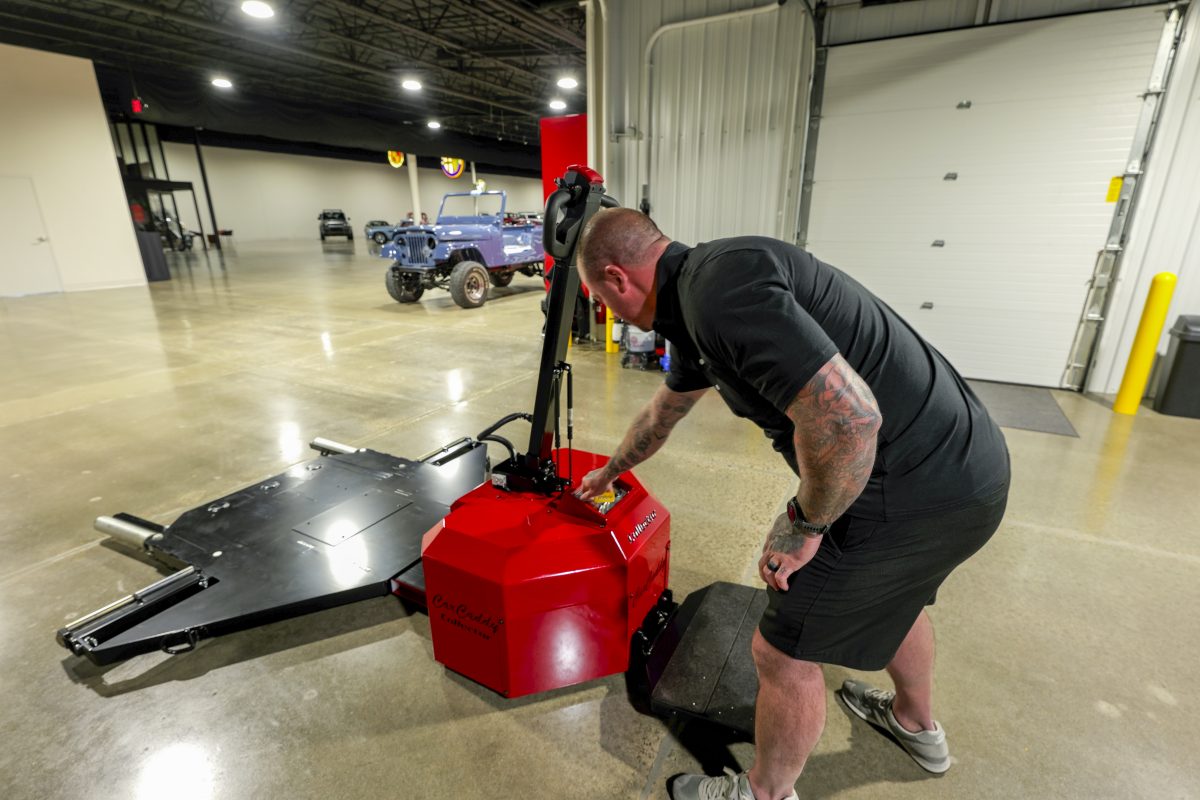
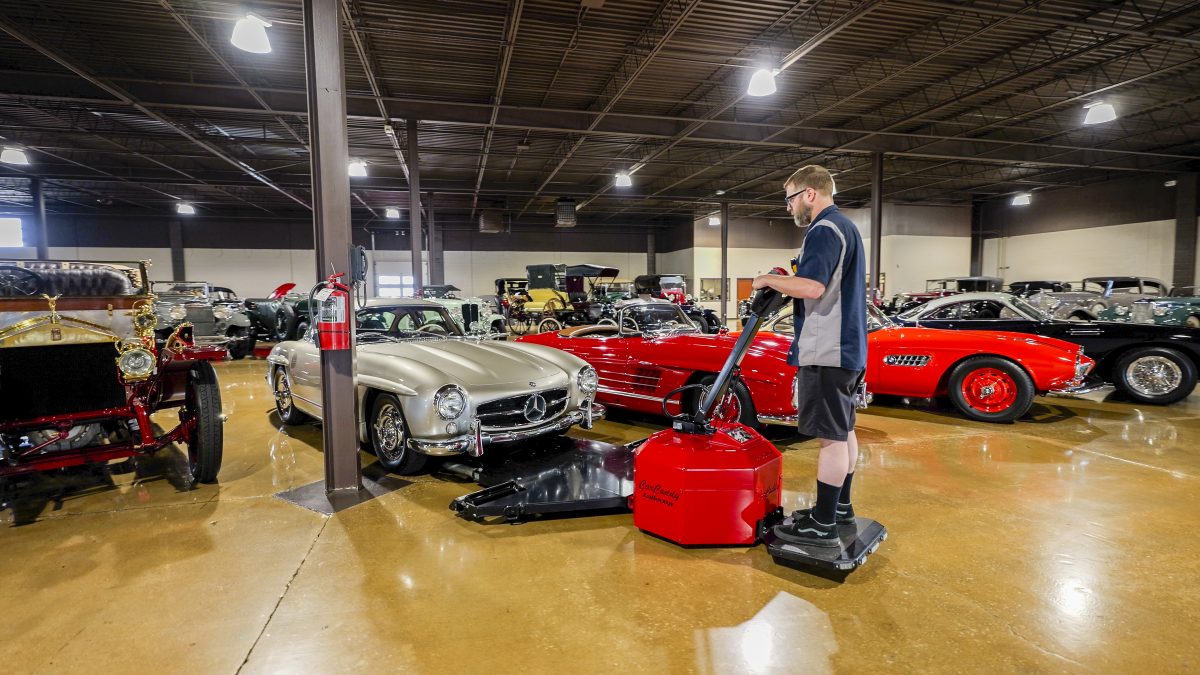
Compare that to a vehicle mover built for single-operator control, like the CarCaddy Vehicle Puller: Collector’s Edition. With wagon wheel steering, an angled control panel, and neutral throttle braking, one person can glide a vehicle into position with the kind of precision that hand-pushing or oversized pads simply can’t match. The shock-assisted ride-on platform and adjustable roller arms accommodate a range of vehicle sizes, while non-marking wheels protect showroom and museum floors.
Teams at facilities like Hyman LTD, Parc Motor Club, and the Midwest Car Collection Museum have made the switch for exactly this reason. What once took two or three staff members wrestling a car into place now takes one person and a few quiet minutes.
Protect Your Collection This Winter
Fall storage prep isn’t glamorous work, but it’s the foundation of a collection that holds its value and its beauty year after year. Fluid checks, tire care, battery maintenance, and climate control all matter. So does how you move your vehicles once they’re ready for their winter positions.
If your team is still relying on cold starts and bulky push pads to reposition high-value vehicles, it’s worth asking whether that habit is costing you more than it’s saving. A single scuffed quarter panel or cracked exhaust gasket can erase months of careful maintenance in a matter of seconds.
The CarCaddy Vehicle Puller: Collector’s Edition was built for exactly this kind of work—moving valuable vehicles safely, quietly, and with one-person precision, whether you’re arranging a museum floor or prepping a private garage for winter. Review the full specifications to see how it fits your collection’s weight and space requirements, then head to our site to click Get Now and bring one into your facility before the first frost hits.
Have questions about how the CarCaddy Vehicle Puller works with your specific vehicles or storage layout? Fill out our contact form and one of our product engineers will walk you through the details—no pressure, just straight answers from people who know this equipment inside and out.