Why Your Electric Vehicle Mover Should Look as Good as the Cars It Moves

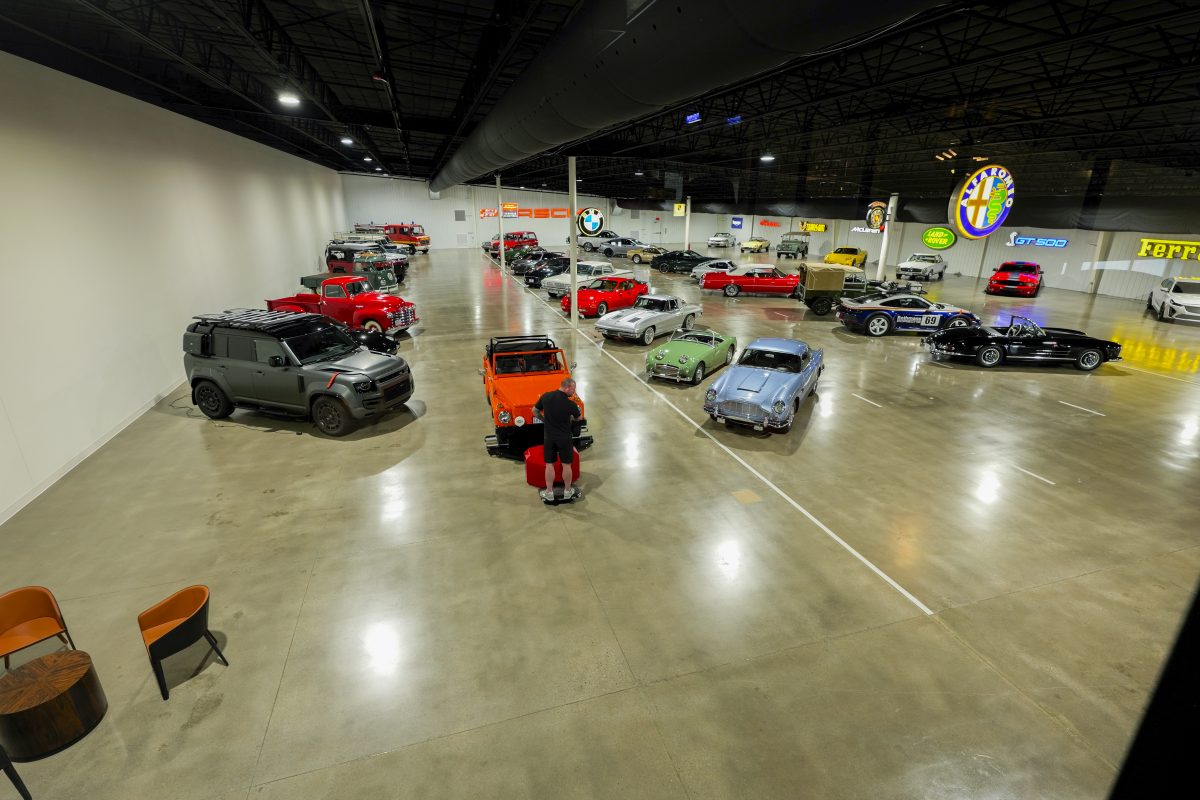
Every detail in a premium automotive environment is intentional. The lighting, the flooring, the signage, the spacing between vehicles—it all works together to create an atmosphere that says, without a word, this collection is something special. So why would you roll a clunky, industrial-yellow machine through the middle of it?

That’s the question more auto museum managers, private collectors, and boutique dealership owners are asking. And it’s exactly the problem CarCaddy was built to solve.

When Your Equipment Reflects Your Brand

High-end automotive spaces are visual experiences first. A curated showroom floor isn’t just a place to store cars—it’s a stage. Every Ferrari, every classic Porsche, every limited-edition supercar is a centerpiece, and the environment around it is part of the story being told.

Off-the-shelf industrial equipment has its place, but that place isn’t a boutique dealership or a museum with white-glove ambitions. Standard vehicle movers typically come in whatever color the factory decided worked best in a warehouse or service bay. That’s fine if your priority is utility. But if you’ve invested significantly in creating an environment that communicates quality, your tools should keep pace.

CarCaddy’s Collector’s Edition electric vehicle mover is available in a range of colors—Baby Blue, Matte Black + Gold, Pink, Silver, White, and the standard Ferrari Red—and the team will custom-match a finish to your dealership’s logo colors, your showroom’s interior palette, or the specific aesthetic of your personal collection. The result is equipment that looks like it belongs there, because it was designed to.

Looking the Part During Live Operations

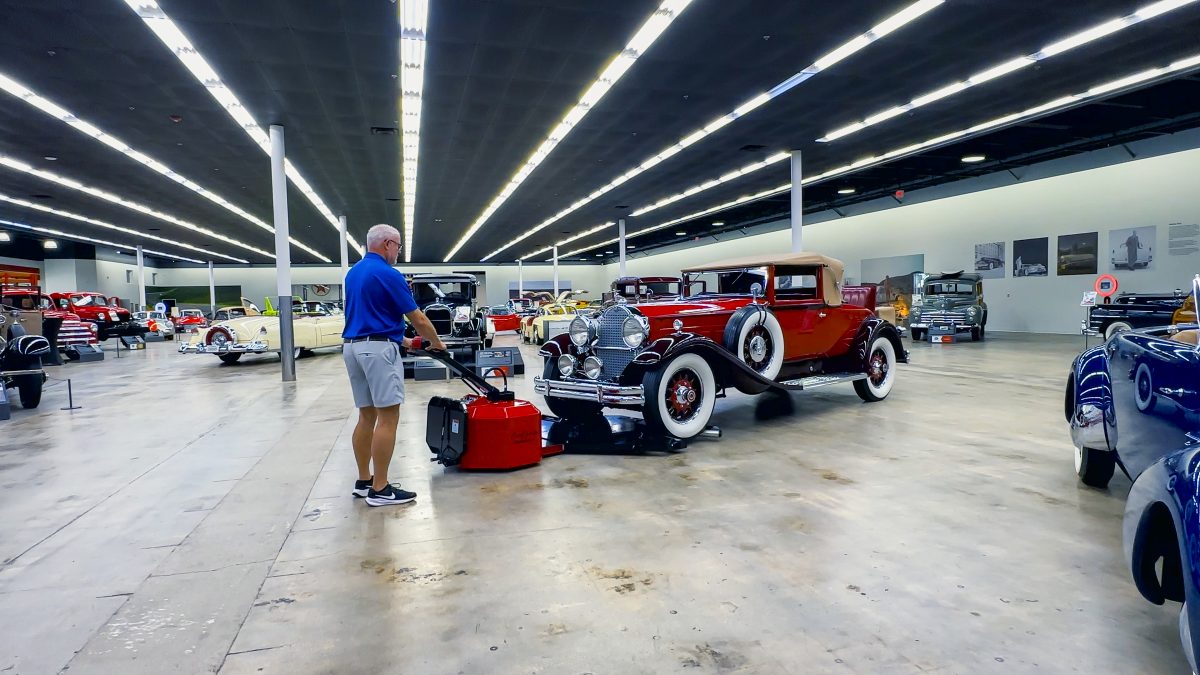
Here’s a scenario worth thinking through: A museum tour is in progress. Forty guests are walking the floor when the curator realizes a vehicle needs to be repositioned for the afternoon’s private event. What happens next says a lot about how an institution presents itself.

In many facilities, that moment means pausing, clearing the area, and bringing in equipment that looks distinctly out of place—interrupting the experience guests paid to have. In a boutique dealership, it means a potential buyer watches a staff member wrestle with something that doesn’t quite fit the room.

CarCaddy changes that equation. An electric vehicle mover finished in your brand’s colors, operated smoothly and quietly, becomes a seamless part of the operation rather than an interruption to it. Routine vehicle staging—something that happens constantly in active collections—becomes an extension of your brand presentation rather than a break from it.

The machine’s low-profile design also helps here. CarCaddy was built for environments where the cars are the priority, and the mover needs to stay out of the way visually and physically. Variable roller arms allow for clean loading and unloading of almost any vehicle, and hi-beam headlights make repositioning quick, even in tighter display configurations.

Performance Worthy of a Multi-Million Dollar Collection

Good looks only matter if the machine behind them can do the job. CarCaddy handles vehicles up to 7,000 lbs. with a front axle weight capacity of 3,000 lbs., so it’s fully capable across the range of vehicles typically found in premium collections—classics, exotics, heavy SUVs, and modern electric vehicles alike.

The 36VDC drive system runs quietly, produces zero exhaust fumes, and moves at a controlled 0–3 mph in both forward and reverse. That combination matters a great deal when you’re working around cars that may be irreplaceable. There’s no revving, no exhaust drifting across a freshly detailed paint job, and no jerky motion near low-slung bumpers.

For the operator, the experience is equally considered. Adjustable acceleration and braking, neutral throttle braking, a shock-assisted ride-on platform, and an angled control panel all contribute to a machine that a single person can operate confidently—even around tight displays and narrow spacing. A safety stop switch adds an additional layer of protection when you’re maneuvering a vehicle that simply cannot be damaged.

The lighted rider platform flips up and down for both rider and walkie operations, which gives operators the flexibility to match their working style to the layout of the space. Non-marking crown caster wheels and a non-marking drive wheel protect flooring that, in many showroom environments, is just as carefully selected as the vehicles sitting on it.

You Don’t Have to Choose Between Form and Function

The assumption in most industrial equipment categories is that style is a luxury—something you sacrifice for performance or price. CarCaddy’s Collector’s Edition was built specifically to challenge that assumption.

Museums and showrooms that have made significant investments in their environments deserve equipment that respects those investments. A custom-colored electric vehicle mover isn’t a cosmetic upgrade on top of a capable machine—it’s the result of understanding who actually uses this product and what their environment demands.

A private collector who has spent years assembling a garage of rare automobiles shouldn’t have to accept a tool that looks out of place. A museum curator leading a tour shouldn’t have to apologize for the equipment on the floor. And a boutique dealership trying to close a sale on a $400,000 vehicle shouldn’t have its atmosphere undercut by the equipment staging it.

Ready to Talk Custom Colors and Configuration?

CarCaddy’s team of product engineers is available to walk through your specific situation—whether that’s matching a particular brand color, discussing the layout of your facility, or helping you select the right configuration for the vehicles in your collection.

Specifications, standard features, and optional add-ons are available at carcaddyvehiclepuller.com, where you can also review the full range of available colors. When you’re ready to talk through the details, complete the contact form and a product engineer will follow up directly.

Your collection deserves equipment that works as hard as it looks good. CarCaddy delivers both.
The Tow-Bar Tango and Other Garage Rituals You Can Finally Retire

There is a precise sequence of events that occurs when you need to move a dead, dormant, or mid-restoration car across a shop floor or down a driveway. It starts with optimism, quickly moves through sweat and mild panic, and usually ends with someone yelling, “Turn the wheel! No, the OTHER left!”

If you’ve ever tried to steer an engine-less classic while three people push, or tried to nudge a rolling chassis up a 2-degree incline with nothing but raw willpower and a pry bar, you already know the truth: moving unpowered vehicles by hand is a sport nobody asked for.

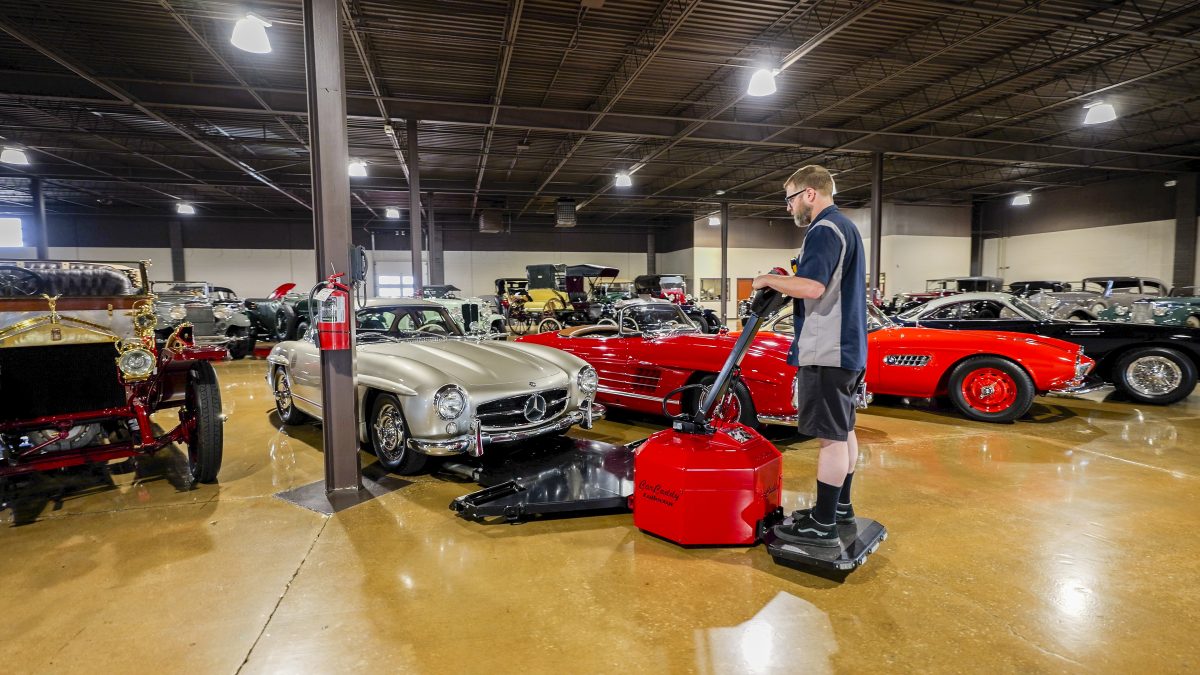
Enter the CarCaddy Vehicle Puller—the piece of equipment designed specifically to end the manual labor, save your back, and prevent your vehicle’s front bumper from making unexpected, intimate contact with the garage wall.

The Anatomy of the “Push & Pray” Method

Before looking at how the CarCaddy solves the problem, let’s honor the age-old methods we are leaving behind:

  • The Solo Lean: You place one shoulder against the A-pillar, put one hand on the steering wheel through the open window, and push with your legs. You gain six inches of momentum before the tire hits a tiny pebble, stopping the car dead and nearly dislocating your collarbone.
  • The Family Emergency Crew: You draft your spouse, your teenager, and a neighbor who was just walking by to check their mail. One person steers, two push, and one stands in front waving their arms like a deck officer on an aircraft carrier.
  • The Lawn Tractor Hack: You attach a tow strap to a riding mower. The mower spins its turf tires uselessly on the concrete, leaving rubber marks right next to the oil stain you haven’t cleaned up yet.

While these traditions build character, they aren’t particularly efficient. They also carry a high risk of dented sheet metal, pulled lower back muscles, and colorful language that startles the local wildlife.

How the CarCaddy Changes the Game

The CarCaddy Vehicle Puller is built on a very simple premise: a single operator should be able to move up to 20,000 pounds of rolling steel without breaking a sweat, calling for backup, or risk running over their own toes.

Instead of relying on momentum, brute force, or awkward angles, the CarCaddy connects directly to the vehicle’s tires or frame. Here is why making the switch feels like moving from a stone-wheel cart to a hovercraft:

1. One-Person Operation (No Draft Picks Required)

You no longer need to recruit an entire pit crew just to move a vehicle out of a bay for cleaning or detail work. With variable-speed twist grips and smooth acceleration, a single person can guide cars, light trucks, or vans around tight shop corners with millimeter precision.

2. Total Control on Incline and Decline

Moving a car downhill is easy; stopping it before it meets the workbench is the tricky part. The CarCaddy features automatic braking systems. When you let go of the controls, the unit stops. The vehicle doesn’t coast, roll away, or take on a mind of its own.

3. Compact Power for Tight Spaces

Floor jacks, tow trucks, and larger machinery require massive turn radiuses and clear aisles. The CarCaddy operates within a extremely tight footprint, letting you tuck vehicles into tight corners of a showroom, storage barn, or service bay without needing ten extra feet of runway to maneuver.

Where It Earns Its Keep

While it’s a favorite for classic car collectors who treat their garages like museum wings, the CarCaddy is built for heavy daily use across a wide variety of settings:

  • Auto Repair & Body Shops: Effortlessly shift dead-on-arrival vehicles from the parking lot into service bays without tying up three technicians who should be billing hours on a lift.
  • Dealership Showrooms: Move high-end display vehicles across slick tile floors smoothly, without scuffing tires, leaving exhaust fumes, or risking a slip-and-fall.
  • Collector Barns & Storage Facilities: Maximize floor space by parking cars inches apart, knowing you can easily pull the front one out whenever it’s time for a weekend drive.
  • Fleet Maintenance Depots: Handle vans, service trucks, and utility vehicles safely on gravel, asphalt, or concrete.

The ROI of Saving Your Back

It’s easy to look at shop equipment strictly in terms of specs—torque, weight capacity, battery life, and duty cycles. But the real return on investment comes down to two things: time and physical wear-and-tear.

When moving a non-running vehicle takes two minutes instead of twenty minutes of setup and coordination, work moves faster. When your technicians aren’t straining their joints to muscle a 4,000-pound SUV onto a flatbed or into an alignment rack, they stay safer and fresher throughout the workday.

Plus, you eliminate the risk of the “oops” moment—that heart-stopping sound of metal meeting garage door frames because someone lost their footing while pushing.

Upgrade Your Move

The days of calling the whole family into the driveway to push a project car into the sun are over. The days of risking a hernia over a dead battery are finished.

Whether you’re running a high-volume commercial shop, managing a fleet, or maintaining a private collection of restored classics, the CarCaddy Vehicle Puller gives you absolute control over heavy equipment with the push of a button.

Work smarter, keep your body intact, and leave the heavy pushing to the machine built for the job.

Ready to streamline your shop flow? Contact our team today to find the exact CarCaddy model, weight capacity, and tire attachment setup for your facility.

The Ultimate Guide to Solo Management for Your Private Car Collection

Every serious collector knows the feeling: you want to pull out a specific vehicle, maybe to work on it or simply to admire it under better light, but it’s hemmed in by two others. Your options? Call a neighbor. Round up some staff. Or just leave it where it is and settle for a different car.

None of those are good options when you’ve built a collection you’re proud of.

Moving vehicles around a private garage or estate shouldn’t require a crew. With the right electric vehicle pusher, one person can safely and smoothly reposition even heavy cars without breaking a sweat—or calling anyone for help. Here’s everything you need to know about taking full solo control of your collection.

Why Solo Vehicle Management Is a Real Challenge for Private Collectors

Most collectors don’t think about vehicle movement until they need it. Then, suddenly, it becomes the most frustrating part of owning multiple cars.

The physics are straightforward: even a compact sports car can weigh close to 3,000 pounds. Pushing or steering a vehicle by hand—especially on a tight garage floor—isn’t just difficult, it risks scratching bodywork, straining your back, or losing control of a rolling chassis. For vintage or high-value vehicles, that’s not a risk worth taking.

Commercial tow equipment exists, but it’s typically built for service bays and body shops, not a carefully curated private collection. That kind of heavy industrial machinery feels out of place in a luxury home stable or a museum-quality display space. It also tends to be complex to operate, requiring training and experience before you can trust it around a vehicle worth six or seven figures.

What private collectors actually need is something that bridges the gap: enough power to move heavy vehicles, with the simplicity and elegance that fits the environment they’ve built.

How an Electric Car Pusher Puts One Person in Full Control

A quality electric car pusher changes the equation entirely. Instead of brute force or a team of helpers, you’re relying on a machine that does the heavy lifting—precisely, safely, and on your schedule.

The CarCaddy Vehicle Puller Collector’s Edition is designed exactly for this use case. It’s American-made, built to move vehicles up to 7,000 lbs., and engineered so that a single operator—regardless of physical strength—can guide a heavy car smoothly across a garage floor. The controls are intuitive: variable speed from 0 to 3 mph in both forward and reverse, with adjustable acceleration and neutral throttle braking so you stay in command at every point of the move.

What makes this work in practice is the combination of a 36V three-battery drive system, non-marking wheels (critical for pristine garage floors), and roller arms that attach to a vehicle without contact with the bumper or body. Your vehicles stay undamaged. Your floor stays clean. And you do it all yourself.

The lighted rider platform flips up or down depending on whether you want to ride or walk alongside the unit—a small detail that makes a real difference during tight maneuvers. Hi-beam headlights mean you can operate confidently even in lower-light garage conditions.

Why the Car Caddy Outperforms Commercial Alternatives for Private Collections

Commercial vehicle movers are built for volume. They’re designed to move cars in and out of body shops dozens of times a day, which means they prioritize durability and raw capability over aesthetics and ease of use. For a private collector, that’s the wrong trade-off.

The CarCaddy CE takes a different approach. Its low-profile design and variable adjustable arms allow it to load and unload almost any vehicle, including low-slung sports cars and vintage models with minimal ground clearance. The sleek design—available in Ferrari Red (standard), Matte Black with Gold, Baby Blue, Pink, Silver, and White—means it actually belongs in a collector’s environment. If you need it matched to a specific vehicle or the color scheme of your collection, the team will work with you to make that happen.

Operationally, the CarCaddy CE requires no special training. The wagon wheel steering and angled control panel are designed for natural, intuitive use. There’s no learning curve to worry about, and no concern about handing it off to a guest or house manager who’s never used it before.

The other commercial dealbreaker for private collectors is support. Heavy industrial equipment often means long lead times on parts and service delays that leave you without a functioning unit for days or weeks. CarCaddy offers same-day parts shipping through their technical service team, so when work needs doing, the equipment is ready.

Key Features That Make a Difference in Day-to-Day Use

If you’re evaluating an electric vehicle mover for your collection, these are the specs and features that matter most in practice:

  • Weight capacity: The CarCaddy CE handles up to 7,000 lbs. vehicle weight and 3,000 lbs. front axle weight—enough for nearly any production car in a private collection
  • Non-marking wheels: Essential for protecting epoxy-coated, polished concrete, or any premium garage flooring
  • Battery system: The 36V three-battery setup with an onboard charge indicator means you know exactly where you stand before starting a move
  • Roller arms: Attach to the vehicle without touching painted surfaces or bumpers—critical for high-value and vintage cars
  • Speed control: 0–3 mph with adjustable braking means you’re never moving faster than you’re comfortable with
  • Safety stop switch: One-touch stop gives you immediate control if anything unexpected happens during a move

Take Total Control of Your Collection

Owning a remarkable collection of vehicles means more than having the cars—it means being able to interact with them on your own terms, without logistics getting in the way. You shouldn’t have to schedule a team or ask for favors every time you want to rotate your display or access a vehicle in the back of the stable.

An electric car pusher like the CarCaddy Vehicle Puller Collector’s Edition solves that problem cleanly. One person, one machine, full control.

Ready to move your collection your way? Visit carcaddyvehiclepuller.com to explore the CarCaddy CE and find out why it’s become the electric vehicle mover of choice for independent collectors, private estates, and museums alike.

David Letterman: The Car Collector Who Proves Great Collections Demand Great Care

David Letterman is best known for decades behind the late-night desk. But away from the cameras, he’s been quietly building one of the most respected private car collections in the United States. Since the 1980s, Letterman has pursued rare, high-performance automobiles with the same intensity he brought to interviewing guests—zeroing in on European sports cars built for speed, precision, and engineering excellence.

His collection includes legendary machines like the Ferrari 275 GTB and the Porsche 911 RS. These aren’t weekend cruisers. They’re rolling works of art—historically significant vehicles that demand meticulous care, thoughtful storage, and careful handling at every stage.

That level of care doesn’t stop when a vehicle parks. For museum curators, private collectors, and boutique dealership operators, it extends to every time a vehicle needs to be repositioned, rotated, or moved through a facility. And that’s where many collections face an underappreciated risk.

The Hidden Danger of Moving High-Value Vehicles Indoors

Moving a pristine, vintage, or high-performance vehicle inside a confined space—whether it’s a climate-controlled museum, a private garage, or a showroom floor—is far more complicated than it looks.

The instinct is often to push by hand. But hand-pushing a vehicle introduces real risks. Uneven force across the body panels can cause stress on the chassis. A momentary lapse in attention near a display stand, wall, or neighboring vehicle can result in a costly dent or scratch. For vehicles like a Ferrari 275 GTB or a classic Porsche 911 RS, even minor cosmetic damage can significantly reduce value.

Starting the engine indoors creates a different set of problems. Exhaust fumes accumulate quickly in enclosed spaces, creating health hazards for staff and potentially damaging finishes on nearby vehicles. High-rpm cold starts on a historic engine add unnecessary wear. And low-speed engine operation offers minimal steering control, making precise maneuvering in tight spaces genuinely difficult.

The solution isn’t more manpower or more caution—it’s the right equipment.

Why Dedicated Vehicle Movers Are the Professional Standard

A dedicated electric vehicle mover is purpose-built to do exactly what pushing by hand or running an engine cannot: move valuable vehicles safely, precisely, and without introducing risk.

The concept of using a car pushing machine for high-value applications has grown significantly in professional facilities. Museum collections, exotic car dealerships, and private garages with multiple vehicles now rely on electric car pushers to protect their investments during routine repositioning. The advantages are straightforward.

Zero emissions indoors. A battery-powered electric vehicle mover produces no exhaust, making it safe for enclosed environments regardless of ventilation. Staff can work confidently around vehicles without respiratory concerns or the smell of fumes contaminating upholstery and interiors.

Precision control at low speed. Unlike hand-pushing—where control depends entirely on the strength and coordination of the people involved—a purpose-built vehicle mover gives the operator consistent, adjustable speed in both forward and reverse. That level of control matters enormously in tight spaces where a few inches of clearance separate a $400,000 Ferrari from a concrete pillar.

No contact with painted surfaces. A well-designed car pushing machine connects to the vehicle at the wheel or axle, not the body. That means no handprints, no pressure on body panels, and no accidental scratches from belt buckles or clothing.

Repeatable safety. In a busy dealership or active museum, vehicles get moved regularly. A defined, repeatable process using an electric car pusher is far safer than relying on ad hoc manual methods that vary by staff member and situation.

Introducing the CarCaddy Vehicle Puller: The Collector’s Edition

For facilities managing high-value, vintage, or exotic vehicles, the CarCaddy Vehicle Puller—Collector’s Edition is worth a close look.

American-made and engineered for precision environments, the CarCaddy electric vehicle mover handles vehicles up to 7,000 lbs. and front axle weights up to 3,000 lbs. It operates on a 36VDC drive system with a non-marking drive wheel, meaning no tire marks on polished garage floors or museum surfaces. Speed tops out at 3 mph in both forward and reverse—slow enough for safe indoor use, controlled enough for tight maneuvering.

A few features stand out for collector-grade environments:

  • Non-marking crown caster wheels protect flooring in showrooms, museums, and private facilities
  • Shock-assisted ride-on platform that flips up for walkie operations, giving operators flexibility in how they work
  • LED hi-beam headlights for clear visibility in low-light garage environments
  • Neutral throttle braking and adjustable acceleration/braking for confident, controlled stops
  • Safety stop switch for immediate halt in any situation
  • Same-day parts shipping from the CarCaddy technical service team, so downtime stays minimal

The Collector’s Edition also features a low-profile design with variable roller adjustments for loading and unloading almost any vehicle—an important consideration for cars with low ground clearance. And if your facility has a specific aesthetic or you want the CarCaddy to complement a particular collection, custom color options are available, including Ferrari Red, Matte Black + Gold, Baby Blue, Silver, Pink, and White.

It’s a vehicle mover designed to look as good as the cars it moves.

Protecting the Collection Is Part of Managing the Collection

David Letterman didn’t build his collection by treating rare automobiles carelessly. The same philosophy applies to every facility responsible for high-value vehicles—whether that’s 3 cars or 300.

Moving a vehicle is never just a logistical task. It’s a moment where the physical integrity, cosmetic condition, and long-term value of the asset are on the line. The right electric car pusher removes the variables that make that moment risky: unpredictable human force, exhaust in enclosed spaces, and the absence of precision speed control.

For museum managers, private collection owners, and boutique dealership operators, the CarCaddy Vehicle Puller offers a professional-grade solution that matches the standard of the vehicles in your care.

Ready to protect what you’ve built? Visit carcaddyvehiclepuller.com to explore full specifications, see the CarCaddy in action, and configure the right model for your facility. Fill out the contact form on the website to connect directly with a CarCaddy product engineer—someone who can assess your specific layout, vehicle weights, and handling requirements and recommend the right solution for your collection.