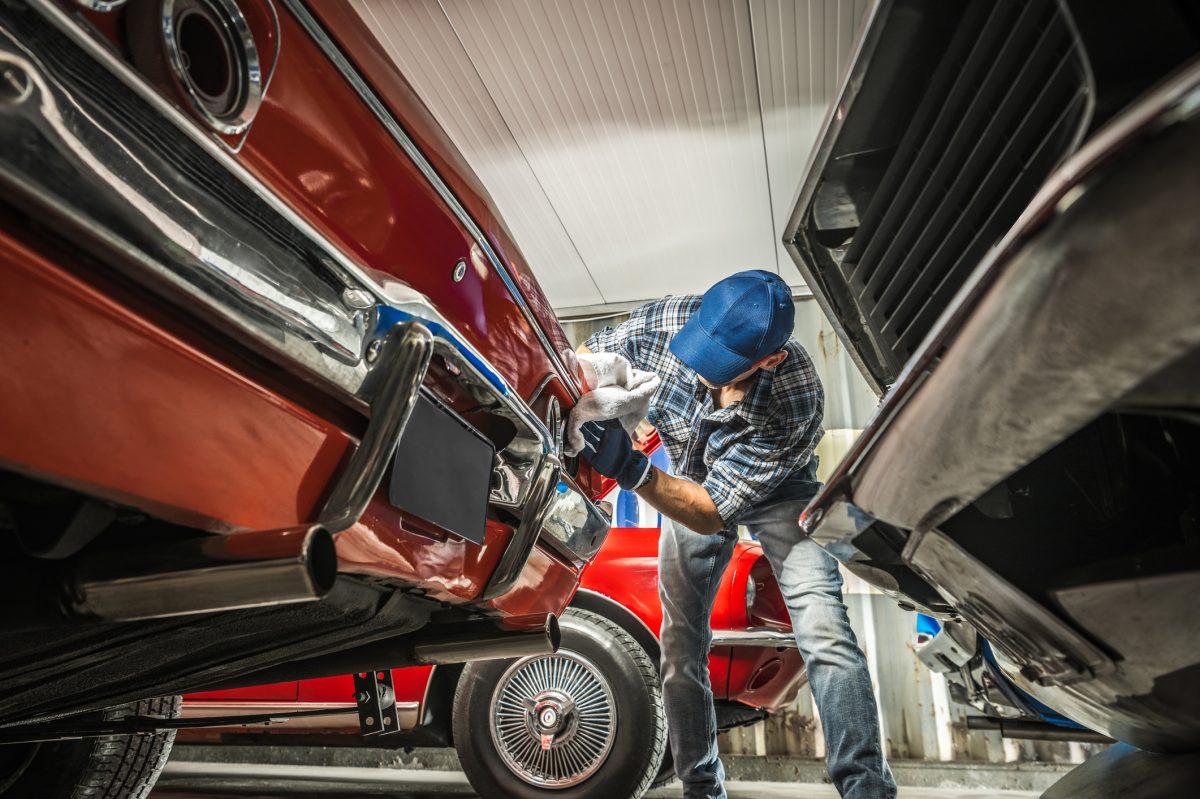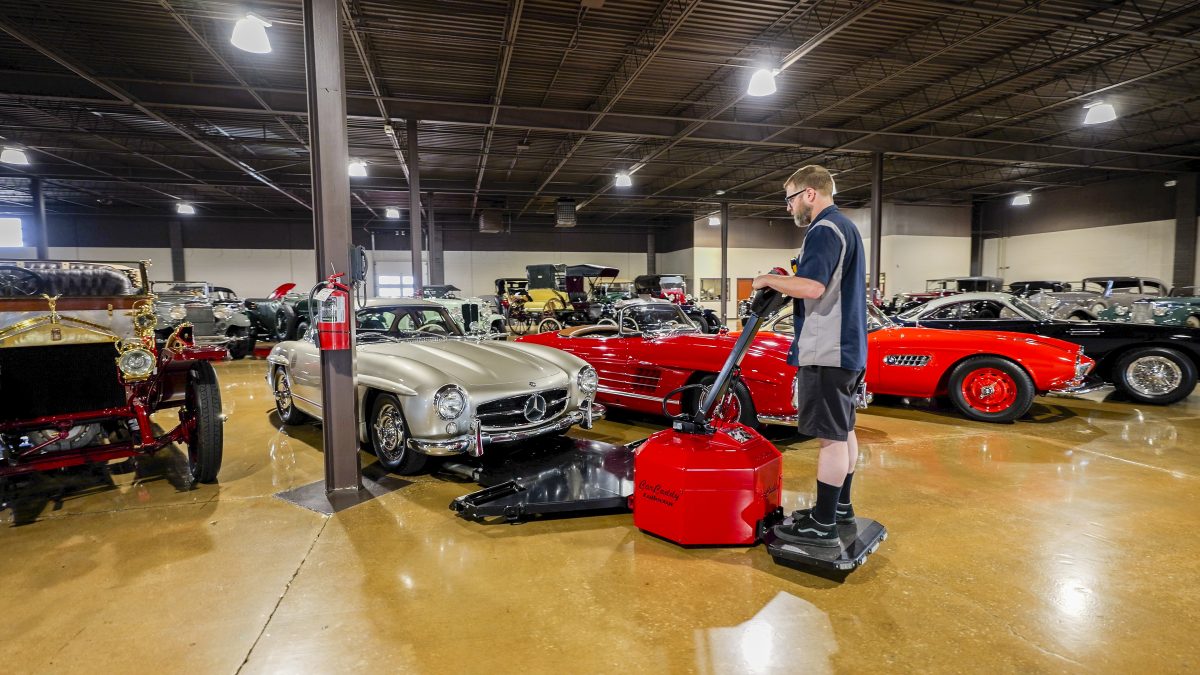
Managing a high-end vehicle collection, classic car consignment shop, or automotive museum brings a unique set of daily challenges. You need to maximize your available space, which often involves “puzzle-parking” cars to fit as much valuable inventory as possible into a tight garage or display area. Moving these vehicles safely and efficiently is critical to your daily operations.
Many facility owners rely on gas-powered equipment or bulky forklifts to relocate their inventory. These traditional machines are loud, difficult to maneuver in tight spaces, and worst of all, they leave unsightly black tire marks and exhaust residue across polished showroom floors. Constantly cleaning and repairing these high-end surfaces takes time away from your core business and cuts directly into your bottom line.
You need a solution that protects both your inventory and your facility. An electric car pusher offers the perfect balance of power and precision, allowing you to easily relocate vehicles without compromising your pristine display areas. We will show you exactly how a compact vehicle mover can streamline your operations, protect your investments, and keep your showroom looking flawless.
The Problem With Traditional Vehicle Movers
Every time you move a classic car or heavy vehicle using traditional gas-powered pushers, you risk damaging your property. Forklifts and standard warehouse movers feature heavy-duty industrial tires designed for rough concrete or asphalt. When these tires turn sharply on a glossy epoxy or polished concrete floor, they leave deep, dark scuff marks that require heavy scrubbing to remove.
Gas-powered equipment also creates a less obvious but equally damaging problem: exhaust residue. The fumes from gas engines eventually settle onto your floors and the vehicles themselves, creating a dull, greasy film. This forces your staff to spend extra hours detailing cars and mopping floors instead of focusing on sales, curation, or customer service.
Attempting to move cars manually is not a safe alternative. Pushing a heavy vehicle by hand puts your employees at risk of severe back and neck strains. You need a mechanical advantage, but you need one designed specifically for high-end automotive environments.
How the CarCaddy Protects Your Showroom Floors
The CarCaddy Collector’s Edition is a sleek, low-profile vehicle moving solution engineered specifically for museums, classic car shops, and private collectors. It eliminates the hazards of traditional movers while providing all the power you need to manage your inventory.
Non-Marking Tires and Casters
The most important feature for your facility is the drive system. The CarCaddy features a 36VDC drive system equipped with a specialized non-marking drive wheel. It also utilizes non-marking crown caster wheels. This means you can pivot, turn, and push vehicles across your most expensive showroom floors without leaving a single black streak behind.
Zero Exhaust and Clean Operation
Because this electric car pusher runs entirely on a 36-volt, 3-battery system, it produces zero emissions. You will never have to worry about greasy exhaust residue settling on your pristine floors or your classic cars. The external battery charger easily plugs in at the end of the day, ensuring the unit is always ready for a clean, quiet shift.
Complete Bumper and Body Protection
Floor protection is only half the battle; you also need to protect the vehicles. The CarCaddy features a low-profile design with variable roller adjustments for loading and unloading almost any vehicle. The hydraulic roller arms effortlessly pull two wheels of a vehicle up off the ground. You can safely maneuver the car without cumbersome straps, hooks, or rubber push pads bumping against fragile vintage bumpers.
Mastering the Puzzle of Tight Spaces
Space is premium real estate in any private collection or dealership. “Puzzle-parking” allows you to maximize that space, but it requires extreme precision. The CarCaddy is designed to give you total control in the tightest confines.
- Wagon Wheel Steering: This feature provides exceptional maneuverability, allowing you to navigate narrow aisles and sharp corners with ease.
- Controlled Speed: A high-tech speed controller with adjustable acceleration and neutral throttle braking gives you precise control. You can safely operate the unit at speeds of 0-3 mph in both forward and reverse.
- Ride-on Platform: The shock-assisted lighted rider platform flips up and down, allowing your staff to seamlessly switch between riding and walk-behind operations depending on the space available.
- Hi-Beam Headlights: LED lighting makes visibility easy for quick “grab and go” moves, even in dimly lit garage corners.
Built for High-End Collections and Boutique Dealerships
Performance is crucial, but aesthetics matter in a high-end showroom. You want your equipment to look as professional as the vehicles you sell or display. The CarCaddy Collector’s Edition is designed to look sleek and modern, featuring standard molded handlebars and an angled control panel.
It also comes in a variety of striking colors to match your brand or facility. Choose from the standard Ferrari Red, Baby Blue, Matte Black + Gold, Pink, Silver, or White. We can even custom-match a specific vehicle or collection color upon request.
Despite its stylish appearance, this car pushing machine is a true workhorse. It easily handles vehicles up to 7,000 lbs, accommodating a front axle weight of up to 3,000 lbs. Whether you are moving a lightweight vintage sports car or a heavy luxury sedan, the CarCaddy provides the reliable power you need.
Upgrade Your Showroom Operations Today
Your showroom floors are a direct reflection of your brand’s quality and professionalism. Stop wasting time and money cleaning up after outdated, dirty equipment. By investing in an electric car pusher designed specifically for high-end collections, you can protect your facility, keep your employees safe, and manage your inventory with total precision.
Contact our sales and engineering team today to learn more about the CarCaddy Collector’s Edition. We are ready to help you customize a vehicle moving solution that fits your exact needs and keeps your business running smoothly.