Beyond the Bumper: Why Historic Paints and Original Chrome Require a Tire-Lift Solution

Quick answer: Traditional push-pads and complex metal frames can easily damage delicate automotive paint, custom wraps, and vintage chrome trim. To prevent micro-abrasions and stress fractures, auto businesses should use an electric car pusher that features an under-car cradle design. This method safely grips only the rubber tires, leaving zero trace on the vehicle.

Operating a boutique auto dealership, restoration shop, or high-end garage means handling significant investments every single day. You take in vehicles that feature original chrome trim, rare fiberglass panels, and expensive custom vinyl wraps. Moving these cars around the shop floor safely is a top priority for your daily operations. You need to maximize efficiency without putting your clients’ assets at risk.

Many shops rely on outdated equipment to move dead vehicles. Employees often use manual pushing techniques or rely on generic equipment equipped with bulky push-pads. While these methods might seem cost-effective initially, they introduce a high risk of accidental damage. Even a minor scratch on a vintage vehicle can destroy your profit margin and damage your reputation with a loyal customer.

Upgrading your shop floor technology directly protects your bottom line. Investing in a specialized electric car pusher ensures that your staff can move vehicles efficiently and safely. By understanding exactly how traditional tools fail, you can make an informed decision that protects the delicate bodywork of every car in your care.

How does aging metal react to traditional car pushing machines?

Classic cars and high-end exotics require specialized handling. Vintage lacquer paint and original chrome trim simply cannot handle the pressure exerted by traditional push pads. Many legacy machines use large foam or rubber pads that press directly against the bumper or body panels to generate pushing force.

Over time, this direct contact causes severe problems for delicate materials. Even soft rubber pads can cause micro-abrasions on clear coats. The friction generated during movement grinds microscopic dirt particles directly into the paint. Furthermore, older fiberglass and aluminum bodies suffer under localized pressure. Pushing thousands of pounds of dead weight through a single contact point on a fiberglass bumper often creates hidden stress fractures.

Custom vinyl wraps present another major challenge. Modern wraps are thin and highly susceptible to peeling or tearing when subjected to dragging friction. A traditional car pushing machine that relies on a flat contact pad can easily catch the edge of a custom wrap, causing hundreds of dollars in damage in a matter of seconds.

Why is the under-car cradle approach safer for your vehicles?

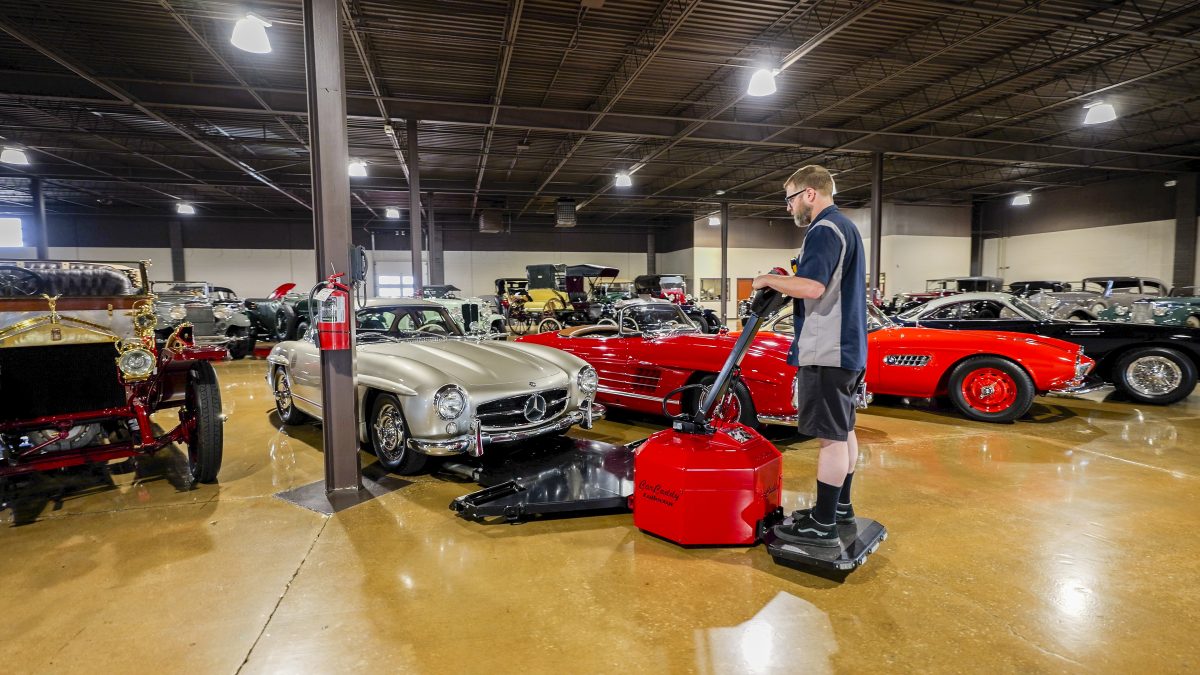
The safest way to move a vehicle is by utilizing the components designed to bear its weight. Our equipment, the CarCaddy, uses an innovative under-car cradle approach. Instead of pressing against painted panels or fragile chrome, this system grips only the rubber of the tires.

Tires are inherently durable and designed to handle the entire weight and rolling resistance of the car. By directing the pushing and pulling force exclusively through the tires, the electric car pusher completely bypasses the vehicle’s bodywork. You eliminate the risk of cracking fiberglass, scratching paint, or denting aluminum.

This approach provides a seamless, stress-free moving experience. Your staff can easily position the machine, secure the tires, and maneuver the vehicle through tight shop spaces. The under-car cradle design offers excellent control and visibility, allowing a single employee to move a heavy vehicle safely without relying on a team of technicians.

How do you move cars without straps or scratches?

Heavy industrial equipment often relies on complex tie-down systems. Many towing or moving devices require ratchets, hooks, or nylon straps near the rims to secure the load. These metal hooks and tight straps introduce a completely new set of risks to the vehicle’s wheels and lower body panels.

A dropped metal hook easily chips the paint on a high-end alloy wheel. Ratchet straps that vibrate against the lower rocker panels during transport cause severe clear-coat damage. Your customers expect their vehicles to remain pristine while in your shop, and relying on strap-heavy equipment makes that difficult to guarantee.

The CarCaddy Electric Car Pusher secures the vehicle effortlessly without needing a single strap or hook. The cradle mechanism pinches the tire securely from the front and back, locking the vehicle in place through mechanical leverage. This eliminates the need to route straps through delicate wheel spokes or around suspension components. You can move the car exactly where it needs to go, leaving zero trace that it was ever moved.

Next steps for upgrading your auto handling process

Protecting your clients’ assets should be the foundation of your shop’s standard operating procedures. Relying on outdated push-pads and strap-based towing equipment introduces unnecessary risk and liability into your business. Upgrading to a specialized electric car pusher protects your reputation and improves your operational efficiency.

Take a walk through your facility today and observe how your team currently handles dead vehicles. Calculate the potential cost of repairing a damaged custom wrap or repairing a cracked vintage fiberglass bumper. You will quickly see that investing in the right equipment delivers a strong return on investment. Choose a machine that uses an under-car cradle design, and give your staff the tools they need to succeed.

Frequently Asked Questions (FAQ)

What is the safest way to push a car with a dead battery?

The safest method is using an electric car pusher that features an under-car cradle design. This equipment grips only the tires, ensuring no pressure is applied to the delicate paint, fiberglass, or chrome trim of the vehicle.

Why do rubber push pads damage car paint?

Rubber push pads trap dirt and dust between the pad and the vehicle’s surface. When pushing force is applied, the pad shifts slightly, grinding these abrasive particles into the paint and causing permanent micro-abrasions.

Can an electric car pusher move vehicles with custom wraps?

Yes, provided you use a model that grips the tires rather than the bodywork. Pushing directly against a wrapped bumper with a traditional pad will often tear or peel the vinyl material.

Do I need multiple employees to operate a tire-gripping car pusher?

No. A high-quality electric car pusher is designed for single-user operation. One employee can safely attach the cradle to the vehicle’s tires and maneuver the car through tight spaces without assistance.

Get a free price quote today to upgrade your machinery that you use to move cars today.

Stop Pushing Your Luck: Securing Your Private Auto Collection

High-value private auto collections require immense investments of time, money, and passion. Every vehicle represents a distinct piece of automotive history, carefully preserved and maintained to retain its beauty and value. Building a private gallery of rare automobiles is a massive achievement, but managing that gallery introduces a unique set of logistical challenges.

Vehicles frequently need to be moved for cleaning, routine maintenance, or display reorganization. Every time a car transitions from a stationary position to being in motion, a specific “risk window” opens up. During this window, the vehicle is vulnerable to environmental hazards, human error, and mechanical failures.

Relying on physical manpower to push these heavy, irreplaceable assets exposes both your staff and your collection to unnecessary dangers. We have seen firsthand how quickly a routine maneuver can result in property damage or personal injury. This guide explains why transitioning away from manual labor and utilizing a dedicated car pushing machine is the most responsible choice for safeguarding your automotive investments.

Where Things Go Wrong with Manual Pushing

Moving a classic car by hand introduces a dangerous variable into your gallery management operations. We call this “The X Factor.” It refers to the sheer unpredictability of manual pushing. Even with a highly trained team, human strength and coordination have limits, and gravity is unforgiving.

When you manually push a vehicle, you are relying entirely on the physical exertion of your staff and the mechanical integrity of a car that may not have been driven in months or years. This combination frequently leads to hazardous situations.

Here are a few common scenarios where manual pushing leads to disaster:

  • Uncontrolled Momentum: A team of people might successfully get a heavy classic car rolling, but stopping it is entirely different. Even a slight, almost imperceptible grade in your garage floor can cause a vehicle to gain dangerous momentum.
  • Personal Injury: When multiple people surround a moving vehicle, the risk of physical injury skyrockets. A slight misstep can result in a foot getting caught under a rolling tire, or a worker straining their back trying to halt a 4,000-pound piece of metal.
  • Mechanical Unpredictability: Relying on the car’s original equipment to stop the vehicle safely is a massive gamble. Sticking brakes, locked steering columns, or flat spots on tires can cause the car to veer suddenly into a wall or, worse, into another priceless vehicle.

Control is Safety: The Power of Positive Control

The most effective way to eliminate “The X Factor” is to adopt a system that provides absolute positive control over the vehicle’s movement. A high-quality car pushing machine delivers exactly this.

Positive control means that the equipment dictates the speed, direction, and braking of the vehicle at all times. Instead of relying on human muscle and coordination to guide a heavy automobile, the machine handles the physical burden securely and predictably.

Consider the braking systems on vintage vehicles. A 40-year-old master cylinder is often unreliable, especially if the car sits idle for long periods. Seals dry out, fluid degrades, and pressure drops. When a team is pushing a car toward a tight parking spot, realizing the vehicle’s brakes have failed is a terrifying and costly moment.

A car pushing machine eliminates this risk entirely. The machine itself is doing the braking and the steering. It features an integrated, heavy-duty braking system that stops the vehicle exactly when and where you need it to stop, regardless of the condition of the car’s internal mechanics. Furthermore, these machines allow a single operator to move a vehicle smoothly, providing a clear line of sight and removing the chaotic communication required when a large group of people tries to steer a car by hand.

The True Cost of a “Whoops”

Operating a private collection means understanding the value of your assets. You invest heavily in climate control, security systems, and insurance premiums to protect your vehicles. Yet, choosing to save a little money by manually moving cars leaves a gaping hole in your risk management strategy.

The financial reality is that the cost of a single mistake far exceeds the cost of purchasing the proper equipment. A simple dent, a scraped bumper, or a cracked taillight on a rare vehicle can cost thousands of dollars to repair. In many cases, replacement parts for vintage or limited-production automobiles are completely unavailable, meaning custom fabrication is your only option.

Beyond the immediate repair costs, any damage to a classic car diminishes its historical integrity and overall market value. Even perfectly executed bodywork leaves a record of damage. A reliable car pushing machine effectively pays for itself the moment it prevents just one minor mishap. It is an investment in loss prevention that yields immediate peace of mind.

Protect Your Automotive Legacy Today

Managing a private auto collection should bring you joy and pride, not anxiety every time a vehicle needs to be repositioned. By upgrading your operational protocols and integrating professional-grade equipment, you protect your staff from injury and your vehicles from costly damage.

Do not leave the safety of your investment to chance and gravity. Your collection deserves the highest standard of care, and your peace of mind is worth the investment. Reach out to our team today for a quote on the most reliable car pushing machine for your private gallery, and keep your automotive legacy pristine for years to come.

Tight Spaces and Pristine Floors

Managing a high-end vehicle collection, classic car consignment shop, or automotive museum brings a unique set of daily challenges. You need to maximize your available space, which often involves “puzzle-parking” cars to fit as much valuable inventory as possible into a tight garage or display area. Moving these vehicles safely and efficiently is critical to your daily operations.

Many facility owners rely on gas-powered equipment or bulky forklifts to relocate their inventory. These traditional machines are loud, difficult to maneuver in tight spaces, and worst of all, they leave unsightly black tire marks and exhaust residue across polished showroom floors. Constantly cleaning and repairing these high-end surfaces takes time away from your core business and cuts directly into your bottom line.

You need a solution that protects both your inventory and your facility. An electric car pusher offers the perfect balance of power and precision, allowing you to easily relocate vehicles without compromising your pristine display areas. We will show you exactly how a compact vehicle mover can streamline your operations, protect your investments, and keep your showroom looking flawless.

The Problem With Traditional Vehicle Movers

Every time you move a classic car or heavy vehicle using traditional gas-powered pushers, you risk damaging your property. Forklifts and standard warehouse movers feature heavy-duty industrial tires designed for rough concrete or asphalt. When these tires turn sharply on a glossy epoxy or polished concrete floor, they leave deep, dark scuff marks that require heavy scrubbing to remove.

Gas-powered equipment also creates a less obvious but equally damaging problem: exhaust residue. The fumes from gas engines eventually settle onto your floors and the vehicles themselves, creating a dull, greasy film. This forces your staff to spend extra hours detailing cars and mopping floors instead of focusing on sales, curation, or customer service.

Attempting to move cars manually is not a safe alternative. Pushing a heavy vehicle by hand puts your employees at risk of severe back and neck strains. You need a mechanical advantage, but you need one designed specifically for high-end automotive environments.

How the CarCaddy Protects Your Showroom Floors

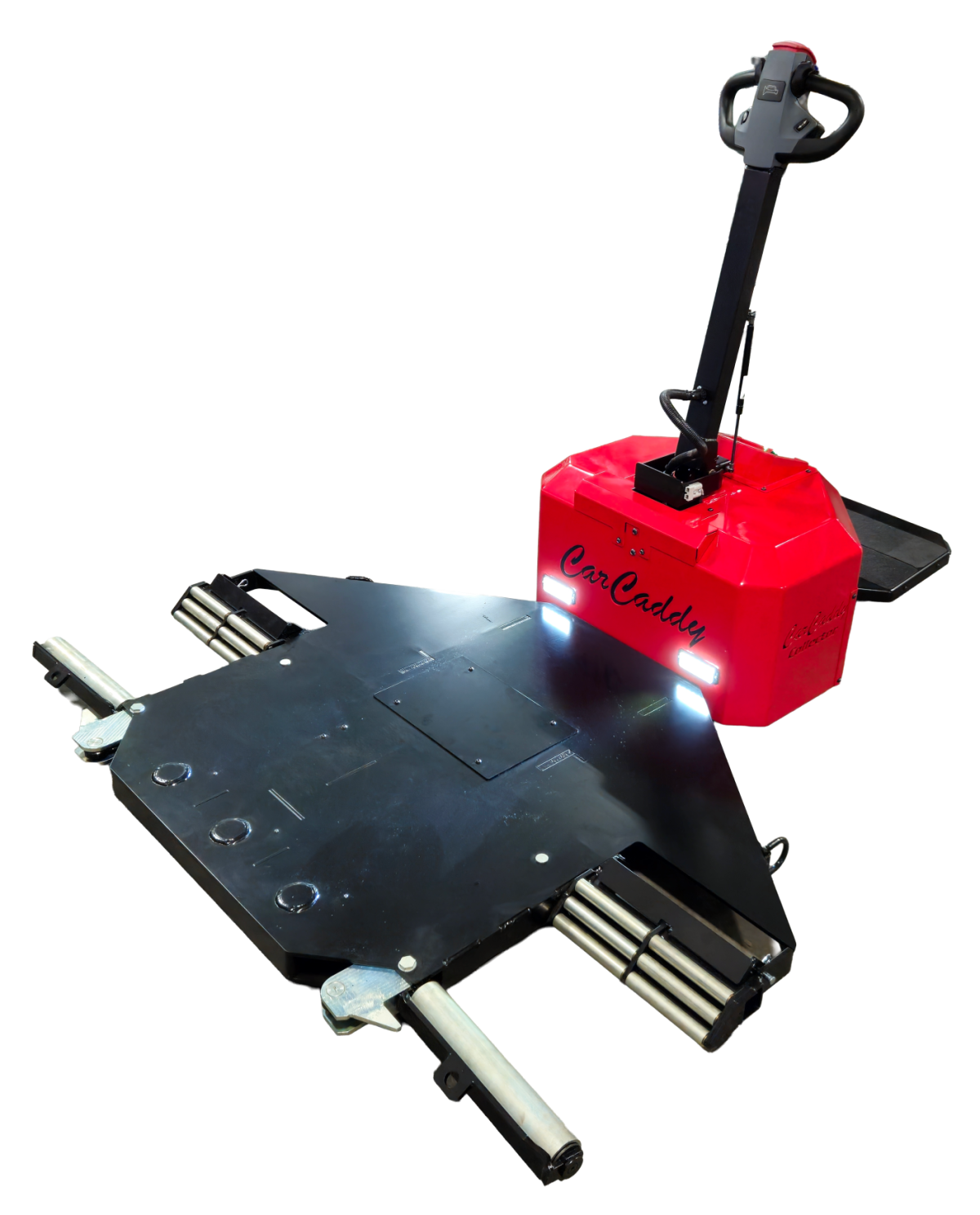
The CarCaddy Collector’s Edition is a sleek, low-profile vehicle moving solution engineered specifically for museums, classic car shops, and private collectors. It eliminates the hazards of traditional movers while providing all the power you need to manage your inventory.

Non-Marking Tires and Casters

The most important feature for your facility is the drive system. The CarCaddy features a 36VDC drive system equipped with a specialized non-marking drive wheel. It also utilizes non-marking crown caster wheels. This means you can pivot, turn, and push vehicles across your most expensive showroom floors without leaving a single black streak behind.

Zero Exhaust and Clean Operation

Because this electric car pusher runs entirely on a 36-volt, 3-battery system, it produces zero emissions. You will never have to worry about greasy exhaust residue settling on your pristine floors or your classic cars. The external battery charger easily plugs in at the end of the day, ensuring the unit is always ready for a clean, quiet shift.

Complete Bumper and Body Protection

Floor protection is only half the battle; you also need to protect the vehicles. The CarCaddy features a low-profile design with variable roller adjustments for loading and unloading almost any vehicle. The hydraulic roller arms effortlessly pull two wheels of a vehicle up off the ground. You can safely maneuver the car without cumbersome straps, hooks, or rubber push pads bumping against fragile vintage bumpers.

Mastering the Puzzle of Tight Spaces

Space is premium real estate in any private collection or dealership. “Puzzle-parking” allows you to maximize that space, but it requires extreme precision. The CarCaddy is designed to give you total control in the tightest confines.

  • Wagon Wheel Steering: This feature provides exceptional maneuverability, allowing you to navigate narrow aisles and sharp corners with ease.
  • Controlled Speed: A high-tech speed controller with adjustable acceleration and neutral throttle braking gives you precise control. You can safely operate the unit at speeds of 0-3 mph in both forward and reverse.
  • Ride-on Platform: The shock-assisted lighted rider platform flips up and down, allowing your staff to seamlessly switch between riding and walk-behind operations depending on the space available.
  • Hi-Beam Headlights: LED lighting makes visibility easy for quick “grab and go” moves, even in dimly lit garage corners.

Built for High-End Collections and Boutique Dealerships

Performance is crucial, but aesthetics matter in a high-end showroom. You want your equipment to look as professional as the vehicles you sell or display. The CarCaddy Collector’s Edition is designed to look sleek and modern, featuring standard molded handlebars and an angled control panel.

It also comes in a variety of striking colors to match your brand or facility. Choose from the standard Ferrari Red, Baby Blue, Matte Black + Gold, Pink, Silver, or White. We can even custom-match a specific vehicle or collection color upon request.

Despite its stylish appearance, this car pushing machine is a true workhorse. It easily handles vehicles up to 7,000 lbs, accommodating a front axle weight of up to 3,000 lbs. Whether you are moving a lightweight vintage sports car or a heavy luxury sedan, the CarCaddy provides the reliable power you need.

Upgrade Your Showroom Operations Today

Your showroom floors are a direct reflection of your brand’s quality and professionalism. Stop wasting time and money cleaning up after outdated, dirty equipment. By investing in an electric car pusher designed specifically for high-end collections, you can protect your facility, keep your employees safe, and manage your inventory with total precision.

Contact our sales and engineering team today to learn more about the CarCaddy Collector’s Edition. We are ready to help you customize a vehicle moving solution that fits your exact needs and keeps your business running smoothly.

Why Museums Trust Electric Movers for Vintage Cars

Curating a museum exhibition featuring classic automobiles is a demanding task. You spend months sourcing rare vehicles, verifying their provenance, and planning the perfect gallery layout. But when the time comes to actually place these priceless artifacts on the showroom floor, facility managers face a massive logistical hurdle.

Moving a vintage car indoors requires extreme care. These vehicles are heavy, fragile, and often lack functioning drivetrains. In the past, gallery staff relied on sheer physical strength to muscle these machines into position. That approach routinely put both the artifacts and the employees at high risk of injury or damage.

Fortunately, facility managers now have a much safer option. Upgrading to an electric vehicle move eliminates the physical strain and unpredictable movement associated with manual pushing. By reading this guide, you will learn exactly why top automotive museums and private collectors have fully transitioned to specialized electric pushers for their gallery operations.

The Hidden Risks of Manual Pushing

Relying on human strength to move a vintage car might seem straightforward, but it creates a multitude of unseen hazards. When a team of employees pushes a vehicle, they apply uneven pressure across the car’s exterior. Vintage bodywork is incredibly delicate. Thin aluminum panels, aged fiberglass, and decades-old paint easily buckle or crack under the localized weight of human hands.

Furthermore, manual pushing lacks consistent control. Gallery spaces are notoriously tight, featuring narrow corridors, fragile glass display cases, and expensive lighting fixtures. When a heavy car builds momentum, human muscle cannot easily stop it. A sudden slip by a staff member or a miscommunication during a sharp turn drastically increases the risk of a catastrophic collision.

By removing the human element from the physical pushing process, you protect the structural integrity of the vehicle. Specialized moving equipment attaches securely to the vehicle’s chassis or tires, distributing the load evenly and entirely avoiding contact with the fragile body panels.

Silent and Exhaust-Free Operation

Bringing vehicles inside a climate-controlled building introduces environmental concerns. You cannot simply start a classic car’s engine and drive it onto the display floor. Combustion engines produce toxic carbon monoxide and thick exhaust smoke. These emissions quickly contaminate the indoor air quality, posing a severe health hazard to your staff and future visitors.

Beyond human safety, exhaust fumes carry microscopic particulates and corrosive elements. When these particulates settle on nearby exhibits, they degrade sensitive fabrics, dry out historic leathers, and permanently stain delicate paints. Museums spend significant portions of their budget maintaining a pristine, temperature-controlled environment. Introducing exhaust fumes immediately compromises those preservation efforts.

Electric motors solve this problem completely. An electric mover produces zero emissions, ensuring your gallery air remains clean and your surrounding artifacts stay safe. Additionally, the electric motor is completely silent. Your staff can orchestrate a complex electric vehicle move during regular operating hours without disrupting the peaceful, quiet atmosphere your patrons expect.

Achieve Single-Operator Precision

Coordinating a manual car move typically creates a chaotic environment. It requires pulling multiple staff members away from their regular duties to act as pushers, spotters, and steerers. This “all-hands-on-deck” approach wastes valuable labor hours and leads to loud, stressful communication across the gallery floor.

Modern electric movers give you total control with minimal manpower. These compact machines connect directly to the vehicle and operate via a wireless remote or an ergonomic steering handle. One single curator can easily navigate a multi-million dollar vehicle through a crowded exhibit space.

This single-operator precision offers incredible maneuverability. You can creep the vehicle forward at a fraction of a mile per hour, make sharp adjustments, and bring the heavy machine to an immediate, controlled stop. This level of exactness ensures the car lands precisely on its display mark without the stress, shouting, and physical exertion of a manual move.

Frequently Asked Questions About Museum Movers

Are electric movers safe for all types of vintage tires?

Yes. Professional-grade electric movers are designed to accommodate everything from narrow brass-era wooden wheels to wide modern racing slicks. They gently cradle the tire or attach to the chassis, preventing any pinching, scuffing, or flat-spotting on historic rubber.

How much training does my staff need to operate one?

Very little. The controls are highly intuitive, usually consisting of a simple directional joystick and a variable speed dial. Most facility staff become fully proficient in operating the equipment safely within a single afternoon of training.

Can these machines handle inclines and ramps?

Absolutely. High-torque electric motors easily maintain traction and speed control when navigating loading ramps, transport trailers, and sloping gallery floors. The automatic braking systems also prevent the vehicle from rolling backward on an incline.

Secure Your Collection with the Right Tools

Your museum collection represents a massive financial and historical investment. Protecting that investment means utilizing the best available equipment for every stage of your operations. Continuing to move priceless vehicles by hand exposes your business to unnecessary liabilities, potential worker compensation claims, and irreversible damage to irreplaceable artifacts.

Switching to electric moving equipment streamlines your workflow, lowers your labor costs, and provides peace of mind. Your staff can work more efficiently, and your vehicles remain in pristine condition. Review your current gallery logistics today and consider investing in an electric mover tailored for your specific facility needs.

Maximize Space: A Collector’s Guide to High-Density Car Storage

As a private automotive collector, your vehicles are significant investments. Storing them safely while maximizing your available square footage is a constant priority. Private garages often lack the expansive, wide-open layouts found in commercial warehouses, meaning every square foot counts when you want to protect your assets and grow your collection.

Relying on a vehicle’s own power to maneuver it into a tight spot presents serious safety risks. A simple slip of the foot can result in thousands of dollars in property damage. You need a storage strategy that offers total control, protects your valuable inventory, and optimizes your floor plan without requiring costly facility expansions.

This guide provides practical, expert-driven strategies for high-density vehicle storage. You will learn how the right equipment can transform a cramped garage into an efficient, professional-grade facility that protects your bottom line.

The ‘Inch-Perfect’ Move: Precision Parking

Private garages are notoriously tight. When you drive a car into a parking space using its own engine, you are forced to leave a significant “buffer zone.” You need room to open the driver’s door, step out safely, and account for blind spots. These necessary buffer zones consume valuable floor space that could otherwise house additional vehicles.

An electric car pusher completely changes this dynamic. By allowing you to move a vehicle from the outside, you gain complete visibility and control over the entire parking process.

Consider the advantages of walking alongside your vehicle as you guide it:

  • 360-Degree Visibility: You can clearly see all four corners of the car, eliminating dangerous blind spots.
  • Zero Door-Ding Risk: Since you do not need to open the car doors once it is parked, you can position vehicles side-by-side with minimal clearance.
  • Complete Precision: Smooth, battery-powered acceleration allows you to park cars literally inches apart without fear of sudden jerks or collisions.

Using an electric car pusher empowers you to utilize your garage’s true capacity. You can safely pack your collection closely together, maximizing your return on the physical space you already own.

Eliminating Three-Point Turns in Tight Spaces

Most standard vehicle steering systems are simply not designed for complex indoor maneuvering. Trying to steer a classic car or a modern supercar into a 90-degree corner often requires endless, frustrating three-point turns. This process burns time, risks accidental impacts, and fills your enclosed garage with hazardous exhaust fumes.

A high-quality vehicle mover solves this problem by offering a 180-degree turning radius. Instead of fighting the car’s steering rack, the machine lifts or attaches to the wheels, allowing you to manipulate the vehicle precisely where it needs to go.

Pivot on a Dime

Because a vehicle mover operates independently of the car’s steering column, you can pivot a vehicle on its own axis. This unique capability allows a collector to slide a car into a tight corner that would be physically impossible to drive into. You can maneuver around support columns, tuck cars tightly against back walls, and organize your layout based on aesthetics rather than turning radius limitations.

By eliminating complex steering maneuvers, you keep your paint jobs safe and ensure your garage operates with maximum efficiency.

The Solo Curator: Managing Your Collection Independently

Building a substantial car collection is a rewarding endeavor, but managing the logistics of moving those cars can quickly become a headache. Traditionally, pushing a dead vehicle or carefully spotting a car into a tight corner required a team effort. You had to coordinate schedules with neighbors, friends, or hired staff just to rearrange your garage floor.

The right equipment puts the power back in your hands. You can operate an electric car pusher entirely by yourself, making you a fully independent curator of your own space.

No More Calling for Backup

An efficient storage strategy means you can manage a 20-car collection without relying on anyone else.

  • Instant Accessibility: Move any car, at any time, without waiting for a second set of hands.
  • Reduced Labor: Avoid the physical strain of manually pushing heavy vehicles.
  • Operational Privacy: Keep your collection management discreet and self-contained.

With a dedicated vehicle mover, you dictate the schedule. You are completely free to work on building your collection, rotating your displays, or preparing a car for transport entirely on your own terms.

Take Control of Your Garage Space

Your automotive collection deserves a professional, secure, and optimized environment. By eliminating buffer zones, utilizing equipment with a tight turning radius, and embracing independent management, you can drastically increase the capacity of your current garage.

Stop letting wasted space limit your passion. Invest in the right high-density storage solutions today, and ensure your facility operates safely, efficiently, and profitably for years to come.

Preserving the Past: Why Museums Trust Electric Car Pushers for “Dry” Vehicle Displays

Classic cars are massive investments. Museums and private collectors spend millions preserving automotive history. To protect these investments, curators keep display vehicles in a “dry” state. This means removing all fuel, vital fluids, and batteries. Keeping a car dry eliminates fire risks and prevents corrosive leaks.

But this creates a major logistical challenge. If a vehicle has no battery or fluids, you cannot simply start the engine to move it across a showroom floor. Facility managers must find a way to relocate these heavy assets without compromising their mechanical integrity or damaging surrounding exhibits. Electric car pushers offer a safe, efficient, and emissions-free solution for moving these permanent displays.

Why Museum Cars are Kept in Dry Storage

When a vehicle enters long-term storage or a museum gallery, standard maintenance rules change. Operating fluids degrade over time, causing severe problems for stationary assets.

Preventing Fire Hazards and Leaks

Gasoline goes bad, and sitting oil can sludge. Leaving combustible fluids inside an indoor public space is a massive fire hazard. Removing fuel, coolant, and brake fluid ensures a safe environment for your patrons and staff. It also prevents unexpected leaks from ruining expensive gallery flooring or creating slip-and-fall hazards.

Protecting Internal Mechanical Integrity

Automotive batteries are notorious for leaking corrosive acid when left unattended. For safety reasons, curators remove batteries completely while vehicles remain in the galleries. Draining the vital fluids also stops internal components from corroding over decades of inactivity. Keeping the vehicle completely dry guarantees the internal mechanics remain preserved in their current state.

The Risks of Traditional Vehicle Moving Methods

Moving a 4,000-pound metal machine without starting the engine limits your options. Many facilities attempt to solve this manually or by bringing in combustion-engine tow vehicles. Both methods carry severe risks for your business.

The Danger of Manual Pushing to Body Panels

Asking staff to physically push a classic car is a recipe for disaster. Human hands applying pressure to vintage metal and fiberglass often lead to structural damage. Dents appear when an object pushes the metal inward, ruining the pristine exterior of a valuable asset. Overexertion also poses significant risks to your workers, leading to potential injuries and expensive workers’ compensation claims.

How Engine Exhaust Destroys Indoor Air Quality

If you decide to tow the vehicle using a standard gas-powered tug, you introduce toxic fumes into your facility. Air quality within museums matters greatly because poor air quality damages exhibits. Museums are home to priceless artifacts ranging from textiles to historic canvases. Air pollutants and exhaust soot accelerate the deterioration of these objects. Chemical reactions from combustion emissions cause lasting damage to historical pieces, compromising the value of your entire collection.

The Benefits of Using an Electric Car Pusher

An electric car pusher is the only safe way to move permanent display vehicles. These battery-powered machines eliminate the physical strain on your staff and protect your priceless inventory.

Zero Emissions for Optimal Artifact Preservation

Electric vehicle movers operate on clean battery power, utilizing systems like a robust 36-volt drive. They produce zero exhaust. This maintains a pristine environment for your artifacts. Purified, moving air is essential for longevity. By keeping combustion engines out of your galleries, you protect sensitive materials from chemical degradation and keep your indoor air quality strictly controlled.

Preventing Physical Damage to Classic Cars

A high-quality electric car pusher features a low-profile design that slips easily under the chassis. It utilizes adjustable roller arms to lift the vehicle by the tires. This completely avoids contact with delicate bumpers or original body panels. You get precise control over the movement without risking a single dent or scratch to your valuable collection.

Improved Safety and Efficiency for Your Team

Employee safety directly impacts your operational budget. Motorized pushers handle the heavy lifting for your team. A single operator can safely move vehicles weighing up to 7,000 pounds. Features like neutral throttle braking and high-tech speed controllers ensure smooth acceleration and stopping. Your staff stays safe, and the vehicle remains fully secured during the transfer.

Choosing the Right Equipment for Your Collection

Not all vehicle movers are built the same. When selecting an electric car pusher for your museum or private shop, prioritize features tailored to high-value assets.

  • Non-marking tires: Look for non-marking drive wheels and caster wheels. You want to leave your showroom floors pristine and free of black rubber streaks.
  • Variable speed control: Ensure the unit has precise speed control. You need to navigate tight corners and narrow gallery aisles safely. Look for systems offering controlled 0 to 3 mph speeds in forward and reverse.
  • Low-profile loading: Pick a unit with variable adjustable arms for loading and unloading. This ensures compatibility with a wide range of vehicle body styles.
  • Enhanced visibility: Units equipped with hi-beam LED headlights allow operators to see clearly under the vehicle chassis, making the attachment process seamless and secure.

Protect Your Investment and Streamline Operations

Managing a classic car collection requires careful planning and the right tools. Moving dry, fluid-free vehicles manually puts your assets and your employees at unnecessary risk.

Invest in an electric car pusher to safeguard your inventory. You will maintain excellent indoor air quality, prevent costly body damage, and improve your operational efficiency. Let your staff focus on curating an incredible experience for your guests rather than struggling with heavy, dangerous equipment.

Review your current vehicle handling procedures today. Equip your team with the proper motorized solutions to keep your collection safe, pristine, and ready for display. Contact us today for more information and to get an estimate for your needs.