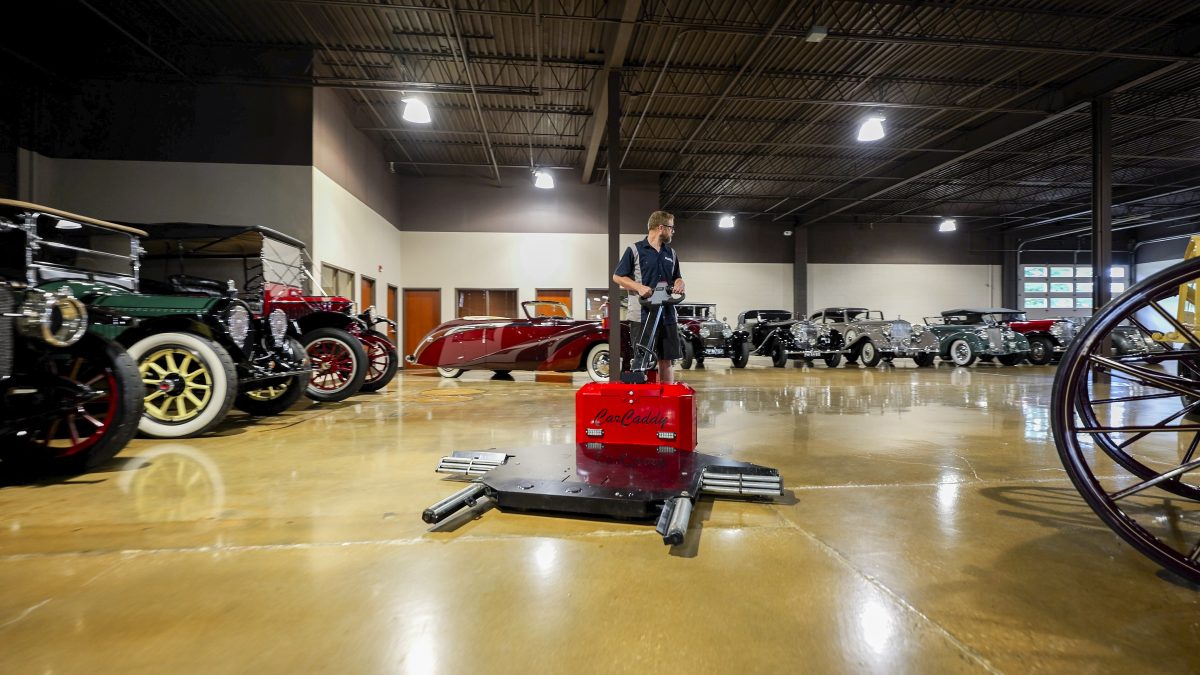
The Art of the Rotation: Keeping Private Collections Dynamic Without the Stress

February is often a time for anticipation. The worst of winter is (hopefully) behind us, and for the private car collector, thoughts turn to the garage. It’s the season for “refreshing” a collection—rotating the display, bringing the convertibles to the front, or perhaps making room for a new acquisition. 

However, for anyone with a packed garage, this excitement is quickly dampened by the logistical nightmare of “Garage Tetris.” Moving a single “blocked-in” vehicle often requires moving three or four others first. It’s a high-stress dance where inches matter, and the risk of “garage rash”—that heart-sinking moment when a fender brushes a wall or another bumper—is all too real. 

If you are managing a high-value collection, you know that pushing cars by hand isn’t just exhausting; it’s a liability. You need a better way to manage your floor plan. Enter the curator’s secret weapon: The CarCaddy Vehicle Puller. 

The “Maneuverability Factor”: A Curator’s Best Friend 

When we talk about managing a private collection or a museum floor, the primary challenge isn’t just the weight of the vehicles; it’s the lack of space. Most towing solutions are designed for open lots or spacious service bays. They are bulky, hard to turn, and often require hooking up to the frame or bumper—methods that are simply non-starters for vintage or pristine vehicles. 

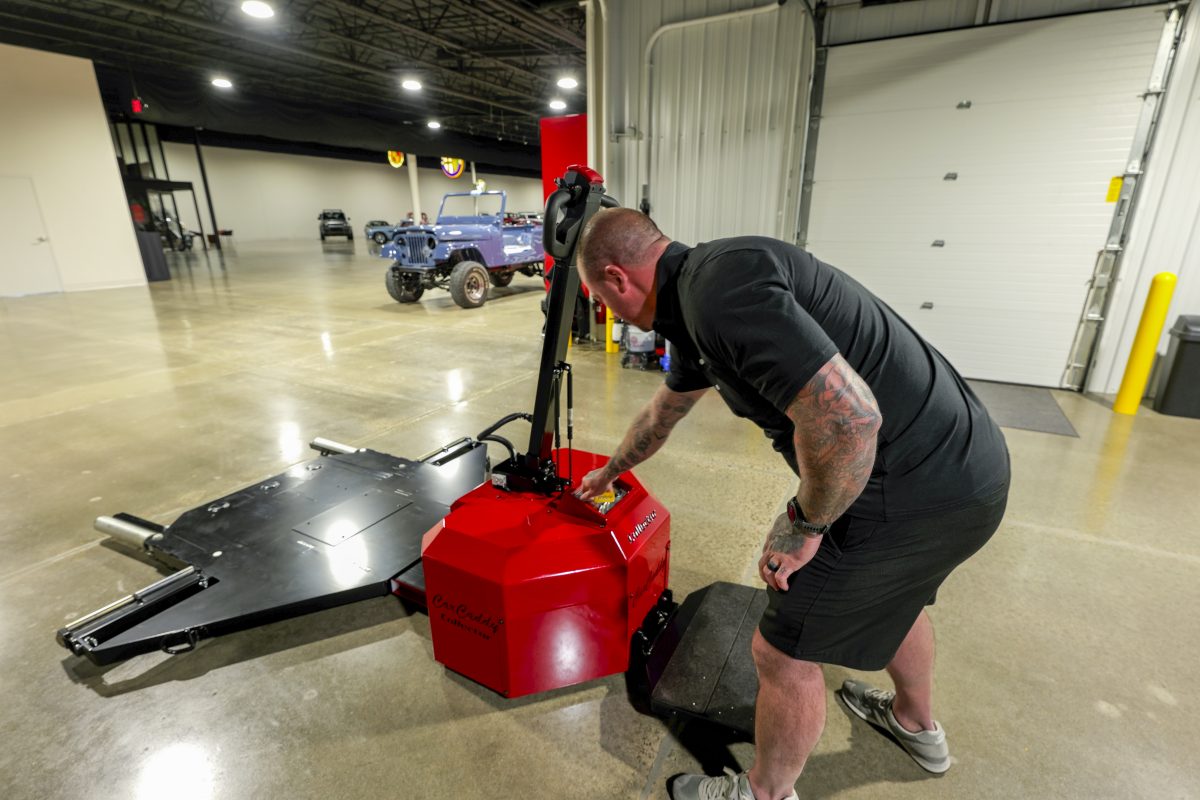
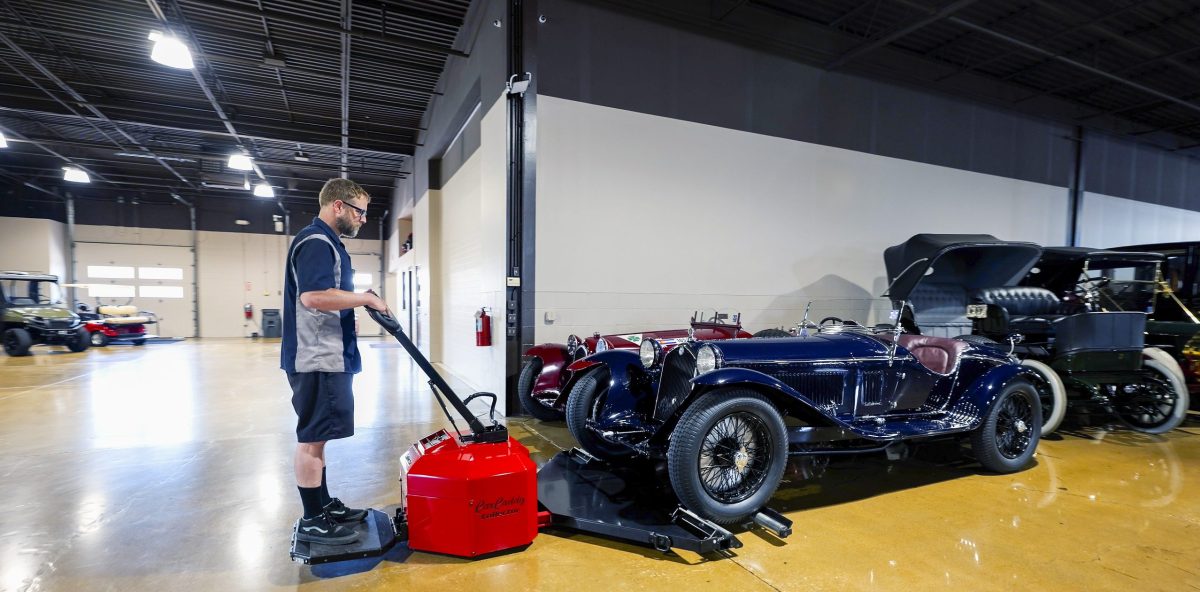
The CarCaddy Vehicle Puller changes the equation entirely. As an electric vehicle mover its standout feature is its maneuverability. This unit is designed to turn a vehicle 360 degrees within its own length. 

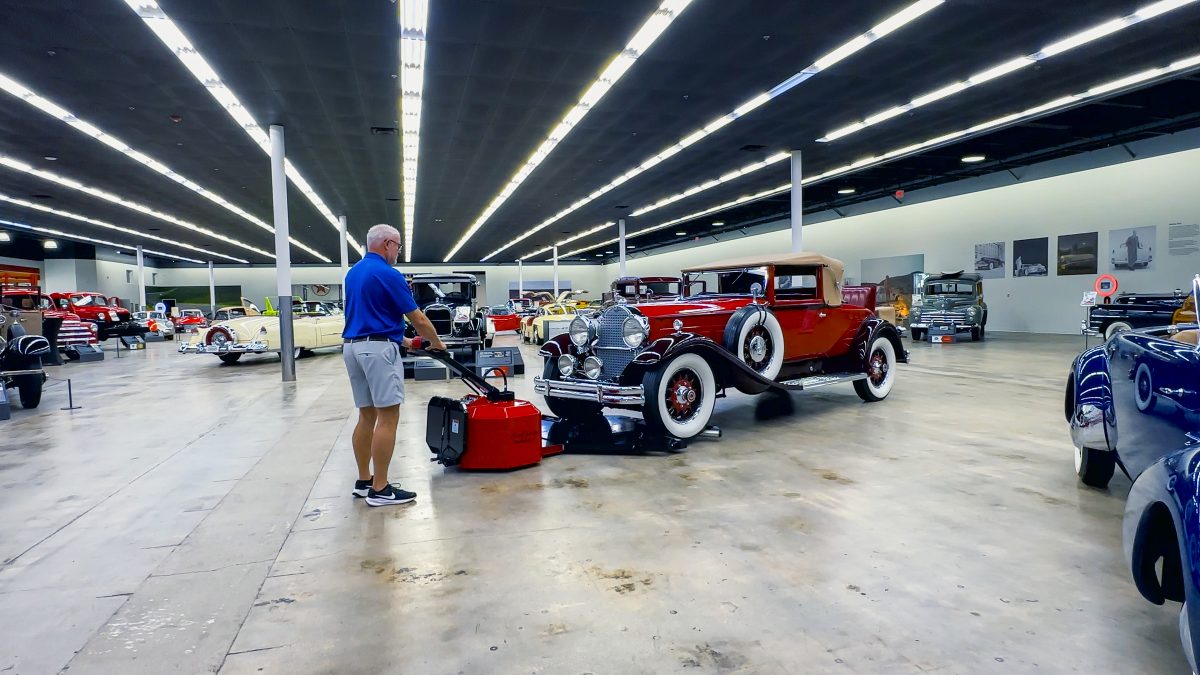
Imagine needing to extract a vintage Porsche tucked into the back corner of your facility. Traditionally, this would require a crew of people: one to steer, two or three to push, and another to spot the corners. With the CarCaddy, a single operator can lift the vehicle’s drive wheels and guide it through tight corridors with surgical precision. 

This isn’t just about convenience; it’s about autonomy. You no longer need to wait for a team to help you rotate your display. You can refresh your collection on your schedule, safely and efficiently. 

Why the CarCaddy is the Safe Choice for Your Collection 

Beyond maneuverability, the safety of the vehicle is paramount. We’ve all seen the damage caused by manual pushing—handprints on pristine paint, dents from pushing on body panels that weren’t designed for pressure, or strained backs from trying to overcome the inertia of a 5,000-lb sedan. 

The CarCaddy eliminates physical contact with the vehicle’s bodywork. 

Non-Contact Operation 

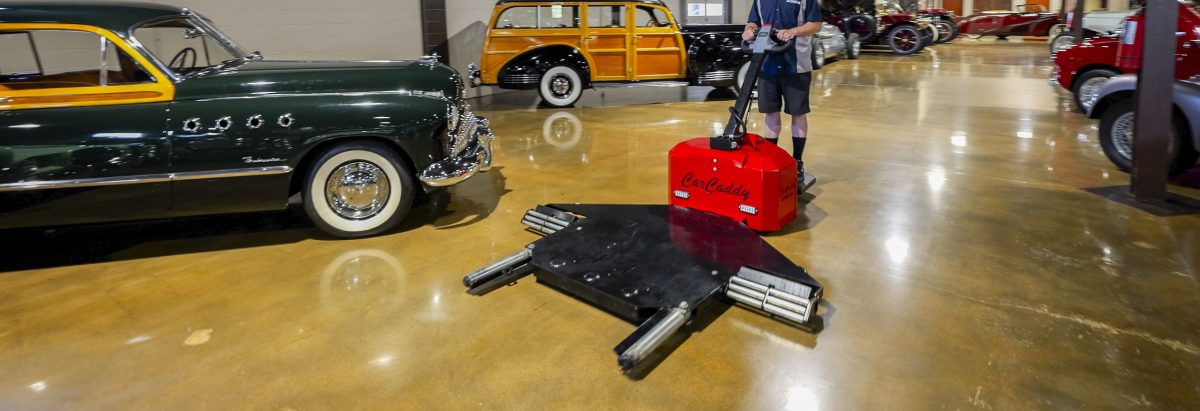
The CarCaddy utilizes a hydraulic roller arm system. These arms slide under the tires of the vehicle, lifting them slightly off the ground. The puller then moves the car by the tires alone. There are no hooks on the chassis, no straps on the suspension, and absolutely no pushing on the bumpers. For a collector, this peace of mind is invaluable. 

Ergonomics for the Operator 

We also have to consider the safety of the person moving the car. Pushing heavy vehicles is a leading cause of back injury in automotive environments. The CarCaddy does 100% of the heavy lifting and pulling. The operator simply walks behind (or rides on, with optional attachments) and guides the unit with ergonomic controls. 

Technical Specifications: Power Meets Precision 

The CarCaddy isn’t a generic tug; it’s a piece of precision engineering designed specifically for the automotive industry. Whether you are moving a lightweight racer or a heavy luxury sedan, there is a configuration that fits the bill. 

Here is a look at the specifications that make this tool indispensable for collectors: 

The Collector’s Edition (CarCaddy VP) 

Designed specifically for museums and private collections, this unit combines low-profile aesthetics with heavy-duty capability. 

  • Capacity: Moves vehicles up to 7,000 lbs. 
  • System: 36v (3-battery system) for long operating life between charges. 
  • Attachment Method: Hydraulic roller arms (adjustable) that scoop the tires. 
  • Dimensions: Low-profile design to fit under vehicles with lower ground clearance. 
  • Lighting: Integrated LED lighting to help visibility when operating underneath the vehicle or in dimmer storage corners. 
  • Control: Variable speed thumb control for smooth acceleration (0-3 mph), preventing jerky movements that could unsettle a vehicle. 
  • Aesthetics: Available in custom colors (like Ferrari Red, Matte Black, or Silver) to match the elegance of your showroom. 

How to Use the CarCaddy: A Simple Process 

Operating the CarCaddy is intuitive, allowing you to focus on the vehicle and the surroundings rather than fighting with the equipment. Here is the general workflow for moving a vehicle: 

  1. Position the Unit: Drive the CarCaddy up to the two wheels you intend to lift (usually the drive wheels). The WagonWheel steering allows you to align perfectly with the tires.

  2. Extend the Arms: Using the electronic controls, extend the hydraulic roller arms so they fit around the outside of the tires.

  3. Engage the Tires: Retract the arms. As they pull in, the rollers scoop under the tires, lifting them securely off the ground. The vehicle is now coupled to the CarCaddy without touching the body.
  4. Maneuver: Use the variable speed thumb control to slowly pull or push the vehicle. Because the drive wheels are lifted, you don’t need to worry about the vehicle’s transmission (though always ensure the parking brake is off for non-lifted wheels).
  5. Park and Release: Once the vehicle is in its new position, simply reverse the hydraulic process to lower the tires gently back to the floor. 

Elevate Your Garage Operations 

Your collection is a source of pride and joy. The process of managing it shouldn’t be a source of stress. By integrating the CarCaddy Vehicle Puller into your garage, you transform a strenuous, high-risk chore into a simple, one-person task. 

At DJ Products, we understand that every collection is unique. That’s why we offer American-made solutions that are customizable to your specific needs—whether you need specific tire rollers for vintage diameters or a custom color match for your branding. 

Don’t let the fear of moving cars keep your collection stagnant this spring. Refresh your display with confidence. Contact our sales engineers today to find the perfect CarCaddy model for your garage. 
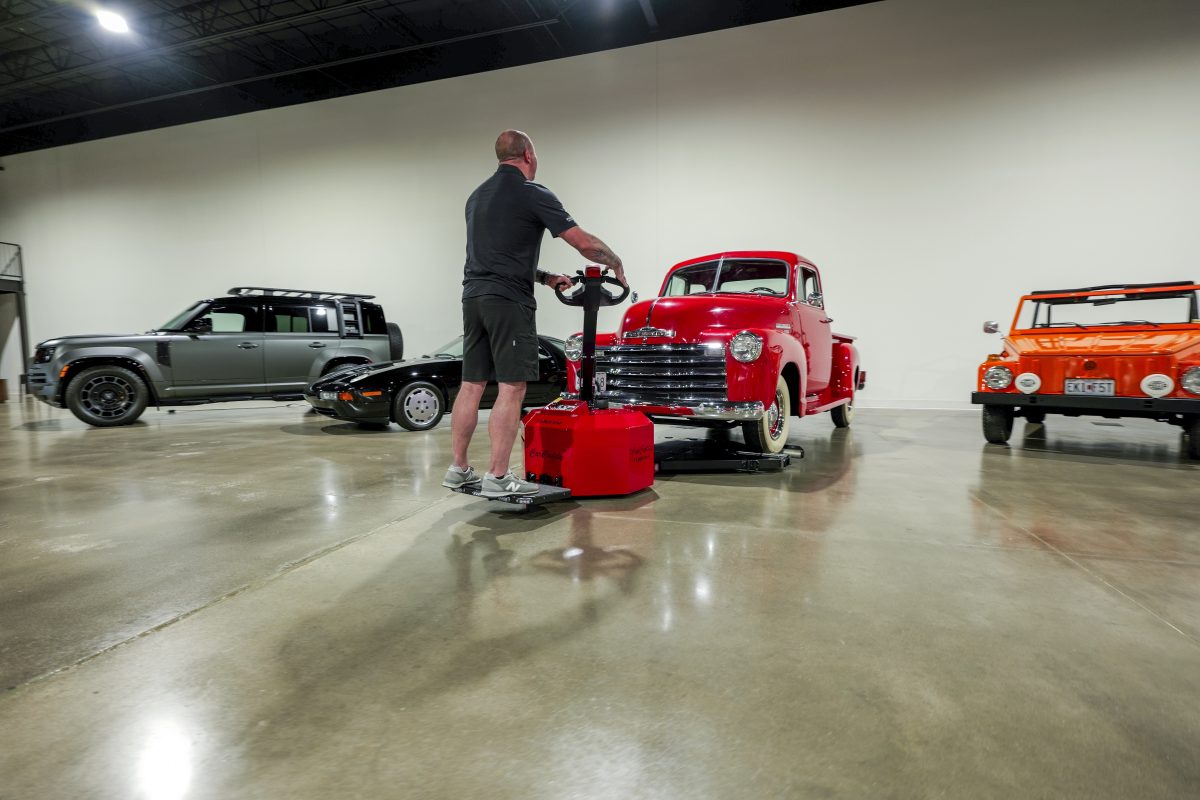
Choosing and Configuring Your Electric Vehicle Mover

Choosing an electric vehicle mover starts with the vehicles and the route, not a list of optional features. This guide helps you prepare an application review for the CarCaddy Vehicle Puller Collector’s Edition. It covers equipment selection and configuration rather than instructions for building a homemade mover.

Start with the vehicle and axle weights

The published CarCaddy specifications list a 7,000 lb. vehicle weight limit and a separate 3,000 lb. front axle weight limit. Check both figures for each vehicle you intend to move. A vehicle below the total weight limit still needs to meet the front axle limit.

Prepare a vehicle list with make, model, year, total weight and front axle weight. Include the vehicle’s condition and any changes that could affect its dimensions or weight. Share that information with the CarCaddy team before choosing equipment.

Confirm how the vehicle can be moved

Do not assume every electric vehicle, all-wheel-drive vehicle or vehicle with an electronic parking brake can be moved in the same way. Check the vehicle manufacturer’s instructions for the specific model and explain any locked wheels or non-running condition during the application review.

The current CarCaddy specification page lists roller arms. Ask the CarCaddy team which accessories, if any, are approved for your vehicle and intended use.

Describe the complete route

A museum display move and a repair-shop move can involve very different routes. Note the floor surface, doorway widths, turning space, thresholds and any inclines. Include photographs or measurements of the tightest areas when requesting an application review.

CarCaddy’s low-profile design and adjustable roller arms are shown on the product overview. Those features are useful context for a discussion, but they do not establish compatibility with every vehicle, ramp or loading operation. Confirm the proposed route and operating conditions before purchase.

Plan for use and charging

The published specification lists a 36V three-battery system, an external battery charger and a battery charge indicator. The forward/reverse speed range is 0–3 mph. These figures describe the equipment; they are not a promise of runtime or the number of moves per charge.

Tell the team how many moves you expect, their approximate distance and the time available for charging. A collector repositioning one display vehicle has a different usage pattern from a shop moving vehicles throughout the day. Ask for advice based on your actual workload.

Review operator features and the work area

Standard features include a safety stop switch, neutral throttle braking, adjustable acceleration/braking, LED lighting and a shock-assisted ride-on platform. These features do not replace operating instructions, operator training or a review of the work area. Lighting on the mover does not establish that a poorly lit route is suitable.

For examples of real applications, see the published customer testimonials. Treat those experiences as context for your own review, rather than a guarantee of the same result in another facility.

Confirm available options and next steps

Explore the custom color examples, then confirm current availability, configuration and pricing with the team. Prepare your vehicle list, route details and expected workload before you request a CarCaddy recommendation. That makes the conversation more useful than choosing a mover on weight capacity alone.

Cruisin’ Through the Crossroads: Classic Car Culture in Indiana

Indiana’s classic car culture connects automotive history with the people who keep older vehicles on the road and on display. Auburn and South Bend offer places to explore that history, while shows and cruise-ins provide opportunities to meet owners and see their cars outside a museum.

Use this guide as a starting point for a visit or a collection-focused trip. Check each organizer’s current information before you travel; schedules, entry rules and visitor arrangements can change.

Explore Indiana’s automotive history

In Auburn, the Auburn Cord Duesenberg Automobile Museum occupies the former Auburn Automobile Company showroom and offices. The Indiana Historical Bureau’s Auburn marker documents the company and the building’s connection to the Cord Corporation.

South Bend is another stop for automotive history. Visit Indiana’s museum road-trip guide highlights Auburn and Studebaker museums as destinations in northern Indiana. For a collector, these stops can also prompt questions about how cars are preserved, interpreted and arranged for visitors.

Choose an event that fits your interests

Street rods in Evansville

Frog Follies, organized by E’ville Iron Street Rods, takes place at the Vanderburgh 4-H Center in Evansville. The organizer identifies it as a pre-1949 street rod show. Check the official site for the current schedule and participation details instead of assuming that all classic vehicles are eligible.

Automotive heritage in Auburn

The Auburn Cord Duesenberg Festival celebrates the area’s automobile heritage with events that include the Parade of Classics and cruise-ins. Its official calendar is the place to confirm dates and individual events around the Labor Day period.

The James Dean connection in Fairmount

James Dean was born in Marion and raised in Fairmount. The Fairmount Historical Museum documents his life and displays belongings on loan from his family. That is a useful distinction when exploring the area: his Indiana connection includes both places, rather than Fairmount being his birthplace.

Make a useful plan before you go

For a museum visit, allow time to read the collection’s interpretation rather than treating it only as a photo stop. For a show, check spectator access, parking and the vehicle classes on display. If you want to participate, confirm registration and entry requirements directly with the organizer.

Local cruise-ins can offer a different experience from a large festival. Look for a current organizer listing and ask about the cars or clubs expected to attend. This avoids relying on unverified claims about a particular club’s history or an event’s attendance.

Moving vehicles in a private collection

Displaying classic vehicles also raises a practical question: how will a non-running car be repositioned within a garage, showroom or museum? The answer depends on the vehicle and the space, including weight, wheel movement and the route between displays.

The CarCaddy Vehicle Puller Collector’s Edition is a battery-powered option from DJ Products, Inc., based in Little Falls, Minnesota. Learn more about the manufacturer and review the vehicle and front axle weight limits before considering it for your collection.

The published customer examples show collection and shop applications. To discuss your own vehicles and layout, contact the CarCaddy team with the vehicle details and proposed route.

A Collector’s Guide to Winterizing Your Classic Cars

As the leaves turn and the air grows crisp, it’s a bittersweet sign for car enthusiasts. The driving season is ending, and it’s time to prepare your prized collection for winter hibernation. Proper winterization is not just about tucking your cars away; it’s a crucial process that protects your investment, preserves its condition, and ensures your vehicles are ready to hit the road when spring returns. Neglecting these steps can lead to costly damage from moisture, pests, and the simple toll of sitting idle.

This guide will walk you through the essential steps for preparing your classic cars and your garage for the colder months. We will cover vital maintenance tasks, the best products for protection, and how to create the perfect storage environment with a Powered Vehicle Mover.

Pre-Hibernation Maintenance Checklist

Before you put the cover on for the last time, a thorough maintenance routine is your first line of defense against winter’s effects.

A Deep Clean Inside and Out

Start with a comprehensive wash and wax. Dirt, bird droppings, and road grime can eat away at your paint if left to sit for months. Use a quality automotive soap and finish with a high-grade carnauba wax or a modern paint sealant. This protective layer acts as a barrier against moisture and dust.

Don’t forget the interior. Vacuum the carpets and seats thoroughly to remove any crumbs or debris that could attract pests. Clean and condition any leather surfaces with a dedicated leather conditioner to prevent them from drying out and cracking in the cool, dry air.

Fluid Management

Fluids are the lifeblood of your vehicle, and managing them correctly before storage is critical.

  • Oil Change: Old, used oil contains contaminants that can damage engine components over time. Perform a complete oil and filter change before storage. This ensures clean oil is circulating, protecting the engine’s internal parts from corrosion.
  • Fuel Tank: A common debate is whether to store a car with a full tank or an empty one. For winter storage, a full tank is best. This minimizes the air space in the tank, reducing the potential for condensation to form and cause rust. Add a quality fuel stabilizer to the full tank and run the engine for a few minutes to circulate it through the entire fuel system. This prevents the fuel from breaking down and gumming up the lines and carburetor.

Battery and Tire Care

Your battery and tires need special attention to survive the winter without issues.

  • Battery Care: A battery left connected in a vehicle will slowly discharge over the winter, potentially leading to a dead battery that won’t hold a charge come springtime. The best practice is to disconnect the battery and connect it to a battery tender or smart charger. These devices monitor the battery’s charge and deliver a slow, steady trickle to keep it in optimal condition.
  • Tire Pressure: To prevent flat spots from developing, inflate your tires to the maximum recommended pressure listed on the tire’s sidewall. As the temperature drops, tire pressure naturally decreases. Overinflating them slightly compensates for this and helps maintain their shape. If the car will be stored for an extended period, consider placing it on jack stands to take the weight completely off the tires.

Creating the Ideal Garage Environment

Your garage is more than just a parking spot; it’s your collection’s sanctuary. Optimizing this space is key to a successful winter storage strategy.

Climate Control is Key

The ideal storage environment is dry and maintains a stable temperature.

  • Humidity: Moisture is the enemy of classic cars, promoting rust and mildew. Aim for a humidity level below 50%. A good dehumidifier is a worthwhile investment for any serious collector. Set it to your desired level and let it run throughout the winter to keep the air dry.
  • Temperature: While a heated garage is a luxury, the main goal is to avoid extreme temperature swings. A consistent, cool temperature is better than fluctuating between freezing and warm. An insulated garage helps stabilize the internal climate.

Pest Prevention

Your garage can look like a cozy winter home to mice and other pests. They can cause significant damage by chewing through wires, upholstery, and insulation. Place mouse traps and deterrents, like mothballs or peppermint oil-soaked cotton balls, around the perimeter of the garage and near each vehicle’s tires. Avoid placing them inside the car, as the scent can be difficult to remove.

Efficiently Organizing Your Collection

A well-organized garage not only looks better but also makes managing your collection safer and easier. When you have multiple vehicles, moving them around can be a challenge, especially when they are not running.

Maximize Your Space with a Powered Vehicle Puller

Maneuvering cars in a tight space without starting them is essential for long-term storage. This is where specialized equipment becomes invaluable. The CarCaddy Vehicle Puller is an excellent example of a tool designed for this exact purpose. It allows a single person to move vehicles up to 7,000 lbs. easily and safely.

The Powered Vehicle Movers low-profile design allows it to slip under the front of a vehicle without causing damage to the bumper or body. You can effortlessly pull a car out to work on it or simply rearrange your garage layout without starting an engine and introducing harmful exhaust fumes into your clean storage environment. Investing in a tool like this turns a difficult, multi-person job into a simple, efficient task.

Protect with the Right Cover

Finally, protect your clean car with a high-quality, breathable car cover. Avoid using plastic tarps, as they trap moisture against the car’s surface, which can ruin the paint. A good cover will keep dust and debris off the vehicle while allowing air to circulate, preventing condensation buildup.

Prepare with a Powered Vehicle Mover

By following these winterization steps, you are doing more than just storing your cars. You are actively preserving their beauty, functionality, and value. When the snow melts and the roads clear, you’ll be able to pull off the covers, reconnect the batteries, and enjoy your pristine classic car collection without any unpleasant surprises. A little effort in the fall pays huge dividends in the spring. If you’re interested in making the most out of your garage make sure to contact our team at CarCaddy so we can get you the powered vehicle mover you need.

Parc Motor Club’s Comments on The CarCaddy Vehicle Puller

“When we were building the facility we knew that moving cars was going to be a challenge” – David Kern General Manager at Parc Motor Club

The team at Parc Motor Club, a high-end facility for car enthusiasts, shared their glowing experience with the our team at CarCaddy. Tasked with moving rare and valuable vehicles, they needed a solution that was efficient, safe, and reliable. The CarCaddy Vehicle Puller The Collectors Edition exceeded their expectations as it prevented the team from “needing to push or pull on the car… start the car and fouling the plugs” and has since become an essential part of their daily operations.

Key Features and Benefits Highlighted:

  • Ease of Use: The CarCaddy Vehicle Puller eliminated the need to start and stop vehicles, reducing wear and tear while ensuring a smooth, hands-free moving process.
  • Efficiency: With its impressive battery life, the CarCaddy Vehicle Puller could handle 10-12 hours of continuous use without needing a recharge.
  • Durability: Despite rigorous daily use, this car mover performed flawlessly, proving its reliability and robust build.

Addressing Initial Concerns:

Initially, the team encountered a minor issue with the unit’s maneuverability. However, our customer service team quickly resolved the problem with clear instructions, ensuring the unit was back in action within minutes. The follow-up support and proactive communication left a lasting impression, making the team feel valued and supported.

Parc Motor Club’s Final Thoughts on the CarCaddy Vehicle Puller

The CarCaddy Vehicle Puller not only streamlined car moving but also minimized the risk of damage to the priceless cars their customers entrusted to their care. Its sleek design and functionality even became a conversation starter among clients, further enhancing the club’s reputation as a top-tier facility.

The team at Parc Motor Club knew they needed a better car moving solution and the powered vehicle mover from CarCaddy was the solution. If you and your team are in need of a powerful and sleep vehicle moving solution that is priced below the competition make sure to contact our team at CarCaddy


Optimizing Your New Garage for Your Car Collection

A Blueprint for Perfection

Your car collection is more than just a hobby; it’s a testament to your passion for automotive history, design, and performance. Each vehicle deserves a home that not only protects it but also showcases its beauty. Transforming a standard garage into a collector’s haven is a project that combines practicality with personal style. It’s about creating a space where your prized possessions are secure, preserved, and ready for you to enjoy.

This guide will walk you through the essential steps to create the ultimate garage for your car collection. We will cover everything from foundational work like flooring and lighting to advanced solutions for climate control and space management. Get ready to build the garage your collection deserves.

Laying the Foundation: The Garage Floor

The floor is the literal foundation of your project. A standard concrete slab is often cracked, stained, and uneven—hardly a suitable surface for your automotive treasures. A proper floor is crucial for safety, cleanliness, and aesthetics.

Leveling and Repair

Start leveling the concrete floor by thoroughly cleaning the existing floor and inspecting it for damage. Fill any cracks or divots with a concrete patch or epoxy filler. For significant sloping or unevenness, you may need to apply a self-leveling compound to create a perfectly flat surface. This ensures your cars sit properly and makes moving them around much easier.

Sealing and Coating

Once the surface is repaired and level, the next step is to protect it. An epoxy floor sealer coating is the gold standard for collector garages. It creates a durable, seamless, and chemical-resistant surface that is easy to clean. Epoxy coatings come in a variety of colors and can include decorative flakes to add a personalized, high-end look. A professionally installed epoxy floor will resist hot-tire pickup, oil stains, and moisture, keeping your space pristine for years.

Let There Be Light: Optimizing Garage Lighting

Proper lighting is transformative. It not only makes the space safer and more functional for maintenance work but also dramatically enhances how your cars look. Poor, dim lighting can hide the very details and curves you love about your vehicles.

Aim for bright, even, and color-accurate illumination. LED lighting is the best choice, offering energy efficiency, long life, and excellent light quality. Install a combination of ambient and task lighting.

  • Ambient Lighting: Overhead panel lights or long tube fixtures spaced evenly across the ceiling will eliminate shadows and illuminate the entire garage.
  • Task Lighting: Place focused lights over workbenches and use wall-mounted fixtures to highlight the sides of your vehicles. This is especially useful for detailing and maintenance.

Consider a color rendering index (CRI) of 90 or higher. A high CRI means the light shows colors more accurately, just as they would appear in natural daylight. This ensures the true paint color of your cars always shines through.

The Perfect Environment: Climate Control

Extreme temperatures and humidity are enemies of a car collection. They can wreak havoc on paint, leather, rubber seals, and mechanical components. Installing a climate control system is a non-negotiable step for serious collectors.

A mini-split HVAC system is an excellent option for a garage. These ductless units are efficient and allow you to precisely control both temperature and humidity. Maintain a consistent temperature between 60-75°F (15-24°C) and keep relative humidity below 55%. This stable environment prevents rust, stops leather from cracking, and preserves the integrity of all materials. A well-ventilated space also prevents the buildup of fumes.

Smart Space Utilization and Organization

A cluttered garage is an inefficient and unsafe one. With multiple cars, tools, and supplies, maximizing every square foot is essential.

Vertical Storage and Cabinetry

Get everything you can off the floor. Install high-quality, closed cabinets to store tools, cleaning supplies, and spare parts. This not only organizes your equipment but also protects it from dust and creates a clean, uniform look. Use wall-mounted systems like slatwall or pegboard panels to hang frequently used tools for easy access. Overhead storage racks are perfect for seasonal items like tires or car covers.

Efficient Vehicle Maneuvering

One of the biggest challenges in a multi-car garage is moving vehicles without having to start them or perform a complicated multi-point turn. This is where specialized vehicle mover equipment becomes invaluable.

A CarCaddy Vehicle Puller is a game-changer for tight spaces. This electric, walk-behind tool allows a single person to effortlessly move vehicles up to 20,000 pounds. It operates silently and produces zero emissions, making it perfect for indoor use. Instead of starting an engine and filling your pristine garage with exhaust, you can simply attach the puller and guide your car into the perfect position. This makes organizing your display, accessing a car in the back, or positioning a vehicle on a lift simple and safe.

Security: Protecting Your Investment

A collection of valuable cars is a significant investment that requires robust security. A multi-layered security approach will give you peace of mind.

  • Secure Doors and Windows: Reinforce your main garage door and any entry points. Install high-quality locks and consider window bars or security film.
  • Alarm System: A monitored alarm system with sensors on all doors and windows is essential. Motion detectors add another layer of protection.
  • Surveillance Cameras: Install high-definition cameras covering both the interior and exterior of your garage. Modern systems allow you to monitor your collection from your smartphone anywhere in the world.

Finishing Touches: Accessories and Aesthetics

With the core elements in place, you can focus on the details that elevate your garage from a storage space to a personal showroom.

  • Workbench: A sturdy workbench with a durable top is essential for any maintenance or tinkering.
  • Lifts: If space and budget allow, a four-post storage lift can double your parking capacity by allowing you to stack cars vertically. A two-post lift is more suited for serious maintenance and repairs.
  • Decor: Personalize the space with automotive art, vintage signs, or framed posters. A comfortable seating area can turn the garage into a social space where you can relax and admire your collection with friends.
  • Maintenance Gear: Invest in a high-quality pressure washer, a wall-mounted vacuum system, and an air compressor to make cleaning and maintenance more convenient.

Conclusion: Building Your Dream Space

Creating the ideal garage for your car collection is a rewarding project that protects your investment and deepens your enjoyment of the automotive hobby. By focusing on a high-quality floor, professional-grade lighting, stable climate control, and smart organization, you build a foundation for success. Tools like the CarCaddy Vehicle Puller solve practical challenges, while thoughtful security and aesthetic touches complete the vision.

Your cars are a source of pride. It’s time they had a home that reflects that. Take these steps, and you will create a functional, beautiful, and secure space that you’ll be proud to call your own personal automotive sanctuary. And don’t forget to contact us and order your CarCaddy Vehicle Puller today!

CarCaddy Vehicle Puller: Your Questions Answered

Moving valuable vehicles requires precision, care, and the right equipment. The CarCaddy Vehicle Puller, Collector’s Edition, offers a specialized solution for maneuvering cars safely and efficiently. If you’re considering this powerful tool for your collection, museum, or business, you likely have some questions. We’ve compiled the most common ones to give you the answers you need.

This guide will walk you through the CarCaddy’s capabilities, from its technical specifications to its customization options. You’ll learn exactly how it can protect your vehicles while making your life easier.

Your CarCaddy Questions, Answered

What is the CarCaddy Vehicle Puller?

The CarCaddy Vehicle Puller is a ride-on, battery-powered mover designed to pull vehicles easily and without causing damage. Made in America, the Collector’s Edition is specifically engineered for moving high-value and vintage cars in environments like museums, private collections, consignment shops, and auto body shops. Its low-profile design and adjustable features allow it to handle a wide range of vehicles safely.

How much weight can the CarCaddy pull?

The CarCaddy is built to handle significant loads. It has the capacity to pull vehicles with a total weight of up to 7,000 lbs. and a front axle weight of up to 3,000 lbs. This makes it suitable for most cars, including many classic and luxury models.

How does the CarCaddy attach to a vehicle without causing damage?

The unit is designed for damage-free operation. The CarCaddy uses adjustable roller arms that gently cradle the front tire of the vehicle. This method avoids any contact with the vehicle’s bumper or body, preventing scratches, dents, or other damage. For added security, optional wheel bonnets with swivel hooks and a ratchet system are available to ensure the tire is held firmly in place during movement.

What are the standard features of the CarCaddy?

Every CarCaddy Vehicle Puller comes equipped with a robust set of features to ensure performance, safety, and ease of use.

Key Standard Features Include:

  • Powerful Drive System: A 36VDC drive system with a non-marking drive wheel.
  • Advanced Controls: A high-tech speed controller with adjustable acceleration and braking for smooth operation.
  • Safety Mechanisms: Features like neutral throttle braking and an emergency safety stop switch provide complete control.
  • User-Friendly Design: A shock-assisted ride-on platform that can be flipped up for walk-along use, molded handlebars, and an angled control panel.
  • Enhanced Visibility: LED lighting and high-beam headlights make it easy to see, even in dimly lit showrooms or garages.
  • Long-Lasting Power: A 3-battery system with a simple battery charge indicator and an external charger.

Are there optional features or upgrades available?

Yes, you can enhance your CarCaddy with several optional features to better suit your specific needs.

Available Optional Features:

  • Wheel Bonnets: These provide extra security with swivel hooks and a ratchet system to secure the vehicle’s tire.
  • AGM Batteries: Upgrade to Absorbed Glass Mat (AGM) batteries for a maintenance-free power source.
  • AWD Dolly Kit: This kit provides additional maneuverability for all-wheel-drive vehicles.

Can I customize the color of my CarCaddy?

Absolutely! The standard color is a classic Ferrari Red, but we understand the importance of aesthetics, especially when dealing with collector’s items. The CarCaddy is customizable to match a specific vehicle, collection, or brand identity. Some popular custom color choices include Baby Blue, Matte Black with Gold accents, Pink, Silver, and White. Let us know your vision, and we can make it happen.

Who is the ideal user for the CarCaddy Vehicle Puller?

The CarCaddy Collector’s Edition is perfect for anyone who needs to move valuable vehicles over shorter distances with great care. This includes:

  • Private Collectors: Easily rearrange your collection without starting the engines.
  • Museum Curators: Position exhibits perfectly without risk of damage.
  • Classic Car Consignment Shops: Move inventory around the showroom floor safely.
  • Auto Body and Detail Shops: Maneuver non-running vehicles between service bays.

Its sleek design and quiet electric operation make it a classy and practical addition to any high-end automotive environment.

How fast does the CarCaddy move?

The CarCaddy operates at a safe and manageable speed. It can travel from 0 to 3 mph in both forward and reverse, giving the operator precise control over the vehicle’s movement. The acceleration and braking are adjustable, so you can set the pace that feels most comfortable for you and the situation.

What kind of support is available if I need service or parts?

We pride ourselves on providing excellent customer support. Our technical service team is readily available to assist you with any questions or issues. We offer same-day parts shipping to ensure your CarCaddy is always ready to work when you are, minimizing any potential downtime.

A Smarter Way to Move Your Vehicles

The CarCaddy Vehicle Puller is more than just a tool; it’s an investment in protecting your valuable automotive assets. With its thoughtful design, robust safety features, and customizable style, it offers a superior solution for maneuvering vehicles with class and confidence.

If you have more questions or are ready to configure your own CarCaddy, contact our team today. We’re here to help you find the perfect vehicle moving solution for your needs.

5 Essential Tips for Maintaining Your Classic Car Collection

Owning a classic car is more than a hobby; it’s a passion. It’s the thrill of turning the key in a machine from a different era, the smell of aged leather, and the rumble of an engine that tells a story. Each vehicle is a rolling piece of history, a testament to design and engineering from a bygone time. But with this great joy comes a significant responsibility. Unlike modern cars, classics require a special kind of attention and meticulous care to keep them in pristine condition.

The challenges are unique. Parts can be scarce, the technology is less forgiving, and the effects of time are a constant battle. However, preserving these automotive treasures is a rewarding journey. This guide will walk you through five essential tips for maintaining your classic car collection, ensuring each vehicle remains a source of pride and joy for years to come. We’ll cover everything from routine checks to smart garage organization.

1. The Foundation: Regular Inspections and Fluid Checks

The most fundamental rule of classic car ownership is consistency. These machines weren’t designed to sit idle for months on end. Regular inspections are your first line of defense against the slow creep of decay. Make it a habit to check your cars at least once a month, even if you don’t plan on driving them.

Start with a visual inspection. Look for any signs of leaks under the car, check for cracks in hoses and belts, and examine the tires for flat spots or pressure loss. Pay close attention to the fluids. Classic cars can be particular about their oil, coolant, and brake fluid. Unlike modern synthetic oils, many older engines require conventional oils with specific additives, like zinc, to prevent premature wear on camshafts and lifters. Always use fluids that meet the original manufacturer’s specifications.

2. Protect Your Investment: Climate-Controlled Storage

One of the biggest enemies of a classic car is the environment. Extreme temperatures, humidity, and direct sunlight can wreak havoc on paint, rubber, upholstery, and metal. The ideal storage solution is a climate-controlled garage that maintains a consistent temperature and low humidity. This prevents moisture from settling on metal surfaces, which leads to rust, and it stops rubber seals and tires from drying out and cracking.

If a fully climate-controlled space isn’t an option, do your best to mitigate the risks. Use a high-quality, breathable car cover to protect the paint from dust and scratches while allowing moisture to escape. Avoid plastic tarps, as they can trap condensation and cause more harm than good. A good dehumidifier can also make a significant difference in a standard garage, helping to keep the air dry and protect your collection from corrosion.

3. The Heart of Authenticity: Sourcing the Right Parts

When a repair is needed, the hunt for parts begins. Maintaining the authenticity of your classic car often means tracking down original or period-correct components. This can be one of the most challenging yet rewarding aspects of the hobby. Using incorrect or poorly made reproduction parts can not only devalue your vehicle but also lead to performance issues or even damage.

Build a network of resources. Join owner’s clubs for your specific makes and models, connect with other collectors online, and identify reputable suppliers who specialize in classic parts. These communities are invaluable for finding rare components and getting advice from experienced enthusiasts. Sometimes, a new old stock (NOS) part isn’t available, and you’ll need to choose a high-quality reproduction. In these cases, research the manufacturer thoroughly and rely on recommendations from your network to ensure you’re getting a part that fits and functions correctly.

4. Keep Them Moving: Exercise is Key

Cars are meant to be driven. While you want to protect your classics from the hazards of the road, letting them sit for too long can cause a host of problems. Seals can dry out, carburetors can get gummed up, and batteries will lose their charge. Taking each car for a gentle drive of at least 15-20 miles once in a while can keep things moving freely.

This “exercise” does several important things. It gets the engine up to operating temperature, which burns off moisture in the crankcase and exhaust system. It circulates all the fluids, lubricates moving parts, and keeps the brakes from seizing. It also helps prevent flat spots from forming on the tires. A short, regular drive is one of the best forms of preventative maintenance you can perform.

5. A Vehicle Puller for Smart Organization in a Crowded Garage

As a collection grows, garage space quickly becomes a premium. Maneuvering vehicles in a tight space is not only frustrating but also risky. A slight miscalculation can lead to a dent or a scratch, turning a simple garage reshuffle into a costly repair. This is where modern innovation can help preserve automotive history.

An excellent tool for this challenge is the CarCaddy Vehicle Puller. This powered device is designed to move vehicles effortlessly and safely, even in the most confined spaces. Instead of starting the engine and carefully backing a car out, you can use the Vehicle Mover to pull or push it with precise control. Its compact design allows it to navigate tight corners, making it easy to reposition cars without the risk of accidental bumps. The CarCaddy is especially useful for moving non-running project cars or simply reorganizing your showroom to make space for a new acquisition. By eliminating the risk of accidental damage during movement, it helps preserve the integrity and value of your collection.

A Legacy of Care

I remember the first time I brought home my own classic—a 1967 Mustang that had been sitting for years. The initial excitement was quickly met with the reality of the work ahead. Every weekend spent turning wrenches, every hour spent searching for a specific piece of chrome trim, was a lesson in patience and dedication. It taught me that these cars are not just possessions; they are legacies we are entrusted to care for.

Maintaining a classic car collection is a labor of love. It requires diligence, knowledge, and a deep appreciation for the art of the automobile. By following these tips—from regular checks and proper storage to smart garage solutions—you are not just maintaining machines. You are preserving a piece of history, ensuring that the stories these beautiful cars tell can be enjoyed by generations to come.

A Guide to Operating Your Vehicle Puller Safely

Moving vehicles in tight spaces like car museums, car auction showrooms, or storage and repair facilities presents unique challenges. Whether it’s a priceless classic car or an expensive supercar, ensuring the safety of both the vehicle and the staff is paramount. Pushing a car by hand or attempting to drive it in tight quarters is not just inefficient; it’s risky. This is where a specialized vehicle mover becomes an indispensable tool.

Using a vehicle puller correctly is essential for preventing accidents and damage. This guide outlines the key safety protocols, training requirements, and maintenance checks necessary for operating these machines. By following these best practices, you can create a safer, more efficient environment for everyone.

Key Safety Precautions for Operation

Safe operation starts with a clear understanding of the equipment and its environment. Before pulling a car, operators must be aware of their surroundings and follow established procedures to minimize risks.

  • Clear the Path: Before moving any vehicle, ensure the intended path is completely clear of obstacles, debris, and personnel. A clean and open pathway prevents unexpected collisions and allows for smooth maneuvering.
  • Know Your Load: Understand the weight and dimensions of the vehicle being moved. Do not exceed the rated capacity of your vehicle mover, as this can lead to equipment failure and loss of control.
  • Maintain a Safe Speed: Operate the vehicle puller at a slow, controlled speed. Abrupt starts, stops, or sharp turns can destabilize the load and create a hazardous situation.
  • Stay Alert: The operator should always face the direction of travel and maintain a clear line of sight. Avoid distractions and remain focused on the task at hand to react quickly to any potential hazards.
  • Use Proper Signals: In busy environments, use clear hand signals or a spotter to communicate with other staff members. This is especially important when navigating blind spots or tight corners.

Essential Training

Although the CarCaddy Vehicle Puller does not require a certification, proper training is the cornerstone of safe vehicle mover operation. A basic understanding of how the vehicle mover operates and its major functions should be a priority for new users.

Elements of a Strong Training Program:

  • Hands-On Instruction: Operators should receive practical, hands-on training from an experienced supervisor. This includes learning how to correctly attach the vehicle puller to a car, maneuver it, and park it safely.
  • Understanding the Equipment: Training must cover the specific features of the vehicle mover being used, including its controls, emergency stop functions, and battery charging procedures.
  • Emergency Procedures: Operators must know what to do in case of an emergency, such as equipment malfunction or an unexpected obstacle. This includes how to safely stop the mover and secure the vehicle.
  • Regular Refresher Courses: Periodic refresher training helps reinforce safety standards and keeps operators updated on any new procedures or equipment features.

Regular Inspection and Maintenance

A well-maintained vehicle mover is a safe vehicle mover. Routine inspections and a consistent maintenance schedule are critical for identifying potential issues before they become serious safety hazards.

Daily Pre-Operation Checklist:

Before each use, operators should perform a quick inspection. This checklist should include:

  • Brakes: Test the brakes to ensure they are functioning correctly.
  • Controls: Check that all controls, including the emergency stop button, are responsive.
  • Battery: Verify that the battery is adequately charged for the tasks ahead.
  • Tires: Inspect tires for any signs of wear or damage.
  • Connections: Ensure that all connection points are secure and free of defects.

Although the CarCaddy Vehicle Puller is a low maintenance machine,  proactive maintenance program should also be in place for more in-depth service. This helps prolong the life of your equipment and ensures it operates reliably and safely, preventing unexpected downtime and accidents.

Utilizing Vehicle Movers in Challenging Environments

Car museums, private collections, and high-density storage facilities often present challenging environments with limited space. A vehicle mover is specifically designed to excel in these conditions.

In a museum setting, for instance, exhibits are changed frequently. An electric vehicle puller allows staff to rearrange priceless artifacts efficiently and with precision, minimizing risks. Manually pulling a car in such a delicate environment is precarious and can lead to costly damage.

Similarly, car collectors often have vehicles that don’t run. A vehicle mover provides a safe way to relocate these cars without risking injury or damage that can occur from pushing by hand.

Maximizing Space with Vehicle Movers

For car storage facilities, space is money. Using a vehicle puller allows you to position cars much closer together than would be possible if you needed to open a door to get a person inside. Many facilities report fitting up to 20% more vehicles after investing in a CarCaddy Vehicle Puller. This level of optimization allows a single employee to move a car quickly and safely, maximizing both space and operational efficiency.

Promote a Culture of Safety and Efficiency

Implementing a robust safety program for your vehicle movers does more than just prevent accidents. It fosters a culture of professionalism and care that protects your employees, your valuable vehicles, and your bottom line. By prioritizing training, maintenance, and safe operating procedures, you ensure your operations run smoothly and efficiently.

Ready to enhance the safety and efficiency of your facility? Contact us today and order your CarCaddy Vehicle Puller!

CarCaddy Vehicle Puller: The Collectors Edition VS The Competition

A Guide to Choosing the Right Vehicle Puller

Moving vehicles within a confined space like a workshop, showroom, or museum presents a unique set of challenges. It requires precision, safety, and efficiency to prevent damage and ensure a smooth workflow. An electric vehicle mover, or vehicle puller, is an essential tool for this task, allowing a single operator to move cars safely without starting the engine.

Choosing the right vehicle puller is crucial for maximizing productivity and protecting valuable assets. With different models available, it’s important to understand which features best suit your specific operational needs. This guide will walk you through the key factors to consider and compare two leading models to help you make an informed decision.

Factors to Consider When Choosing a Vehicle Puller

Before investing in a vehicle puller, evaluate your requirements based on these four key factors.

Vehicle Weight Capacity

The first and most important consideration is the weight of the vehicles you need to move. A puller must be rated to handle the maximum weight of your heaviest vehicles to operate safely. Overloading a machine can lead to equipment failure and dangerous situations. Check the puller’s specifications for both total vehicle weight and maximum axle weight capacity.

Operating Time

Consider how frequently you will use the vehicle puller. For operations that require moving cars throughout the day, a long battery life is essential. Look for models that offer extended operating times, such as 8-10 hours on a single charge. This minimizes downtime for recharging and keeps your workflow uninterrupted.

Maneuverability and Visibility

Workshops, showrooms, and storage facilities are often tight spaces. A good vehicle puller should offer excellent maneuverability to navigate these areas easily. Features like a tight turning radius and responsive steering are critical. The operator should also have a clear line of sight around the machine to ensure precise and safe movement, preventing accidental bumps or scrapes.

Safety Features

Safety is non-negotiable. Essential safety features include reliable braking systems, emergency stop switches, and good lighting for visibility in low-light conditions. Some models also include features like adjustable acceleration and neutral throttle braking, which gives the operator greater control and helps prevent sudden jerks or movements.

A Look at Top Vehicle Puller Models

To help you understand how these factors apply in practice, let’s compare two popular options on the market: the S3 and the CarCaddy Vehicle Puller.

S3 Electric Vehicle Mover

The S3 is a robust machine designed for businesses that need to move vehicles frequently over various distances, such as in testing labs, on production lines, or in large workshops.

  • Features and Benefits: The S3 can handle vehicles weighing up to 3,000 kg (approximately 6,600 lbs). One of its standout features is an impressive 10-hour operating time, ensuring it can last through a full workday with minimal maintenance requirements. Its low-profile design provides the operator with excellent visibility during loading and unloading.
  • Specialized Use: The S3 is also available with a hydraulic cylinder, which provides greater power and allows it to handle cars with very low ground clearance—a key feature for businesses dealing with sports cars or luxury vehicles.
  • Price: The S3 starts at around $50K. Its higher price point reflects its capabilities, and setting their price in an emerging market.

CarCaddy Vehicle Puller: The Collectors Edition

The CarCaddy Vehicle Puller is a versatile and cost-effective solution, ideal for car museums, private collections, and storage warehouses where vehicles are moved less frequently but still require careful handling.

  • Features and Benefits: The CarCaddy can pull vehicles up to 7,000 lbs (approximately 3,175 kg) with a front axle weight capacity of 3,000 lbs. It comes equipped with a range of standard features, including a variable speed twist grip, adjustable acceleration, and a shock-assisted ride-on platform for operator comfort. Its LED headlights improve visibility for easy alignment.
  • Specialized Use: A key advantage of the CarCaddy is its low-profile design with adjustable roller arms, which allows for easy loading and unloading without damaging a vehicle’s bumper or body. This makes it particularly suitable for handling valuable and classic cars.
  • Price: The CarCaddy Vehicle Puller starts at around $30K, making it a more accessible option for smaller businesses or private collectors who need a reliable machine without the scaled up price tag.

Special Features That Make a Difference

Certain features can significantly enhance the functionality of a vehicle puller for specific applications.

  • Hydraulic Cylinders: As seen with the S3, hydraulic systems can provide the extra power needed for lower-clearance vehicles, ensuring the mover can securely lift the wheels without damaging the vehicle’s undercarriage.
  • Adjustable Arms: The CarCaddy’s adjustable roller arms are a prime example of a feature designed for versatility. This allows the operator to customize the grip for different wheelbases and vehicle types, ensuring a secure and damage-free move every time.

Find the Right Mover for Your Needs

Choosing the right vehicle puller comes down to balancing your operational needs with your budget.

If your business involves continuous, heavy-duty vehicle movement and you regularly handle vehicles with low ground clearance, the power and extended operating time of the S3 and CarCaddy Vehicle Puller make either a worthy investment.

For car collectors, museums, or service centers that need a reliable, safe, and versatile machine for less frequent use, the CarCaddy Vehicle Puller offers an excellent balance of features and affordability. Its focus on preventing damage to the vehicle body makes it a trusted choice for handling valuable automobiles.

Investing in the right equipment streamlines your operations, protects your assets, and ensures a safer work environment.

Ready to improve your vehicle handling process? Request a custom quote today to customize your CarCaddy Vehicle Puller.