How Boutique Dealerships Move Cars Efficiently with an Electric Car Pusher

Imagine this scene: A high-profile buyer steps onto the pristine epoxy floor of your boutique showroom, eyes a rare vintage convertible tucked deep in the back corner, and asks to hear it run. Or perhaps a museum curator needs to rotate a 1930s classic into a new spotlight exhibit before the doors open to the public at 9:00 AM.

What happens next in far too many high-end facilities is a quiet, organized panic. Sales directors drop their phone calls, master technicians emerge from the shop, and three or four grown adults gather around a multi-ton piece of automotive history. With heels digging into polished floors and palms cautiously pressed against delicate body panels, the crew engages in a synchronized grunting routine just to nudge the vehicle a few feet to the left.

It is awkward, inefficient, and fraught with unnecessary risk. In an environment dedicated to automotive perfection, manual pushing is an outdated habit that drains valuable labor hours and threatens the very vehicles you are trying to protect.

The Hidden Costs of the Manual Push

Moving stalled, display-only, or high-value vehicles manually might seem like a harmless, zero-cost routine, but the hidden expenses quickly add up across four main areas:

  • Wasted High-Value Labor: Every time four staff members spend 15 to 20 minutes coordinating, pushing, and repositioning a car, you lose more than an hour of cumulative productivity. That is time your sales team could spend engaging luxury clients, your curators could spend managing archives, or your technicians could spend performing high-level maintenance.

  • Priceless Paint and Panel Hazards: Human hand pressure is remarkably unpredictable. Pushing on trunk lids, classic fenders, or vintage chrome bumpers can cause micro-dents, paint stress cracks, or at the very least, oil-laden fingerprints on concours-quality finishes.

  • Physical Strain and Workplace Hazards: Polished showroom and garage floors offer little traction. Slipping while attempting to push a 4,000-pound automobile places severe strain on backs, knees, and shoulders, opening your operation up to costly injury risks.

  • Compromised Professionalism: Watching a team of suits or museum staff sweat and push a vehicle across a display floor destroys the white-glove aura luxury buyers and private collectors expect.

The One-Person Solution: Precision Meets Elegance

There is a far sleeker, safer way to manage high-end vehicle logistics. By replacing muscle power with a dedicated electric vehicle mover, moving heavy automobiles becomes an effortless, single-operator task.

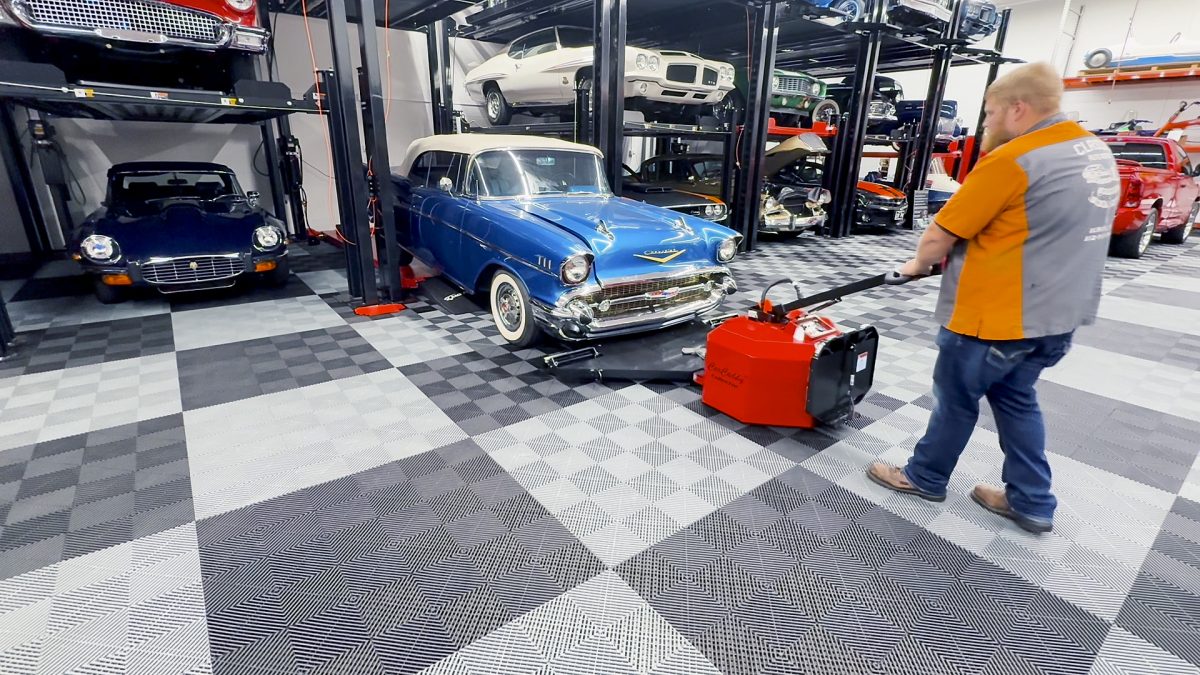
The CarCaddy vehicle mover is engineered specifically to eliminate the chaos of moving vehicles in tight indoor spaces. Rather than relying on brute force or crude pushing setups, a single operator can maneuver everything from lightweight classic roadsters to heavy full-sized luxury sedans with millimeter precision.

By taking the physical burden entirely out of vehicle handling, a single team member can clear pathways, reconfigure showroom floors, or stage museum exhibits in a fraction of the time. The rest of your team stays right where they belong—focused on closing sales, assisting clients, and preserving your inventory.

Why Traditional Pushers Fall Short for Rare Automobiles

When looking for equipment to assist with moving cars, many facility managers initially consider a standard car pushing machine. However, conventional push-style units are often designed for high-volume auto body shops and scrap yards—not pristine environments housing million-dollar assets.

Standard pushers rely on heavy rubber pads that push directly against a vehicle’s front or rear bumper. On a vintage luxury car or custom classic, applying direct pushing force against delicate bodywork or delicate bumper brackets is a recipe for expensive damage.

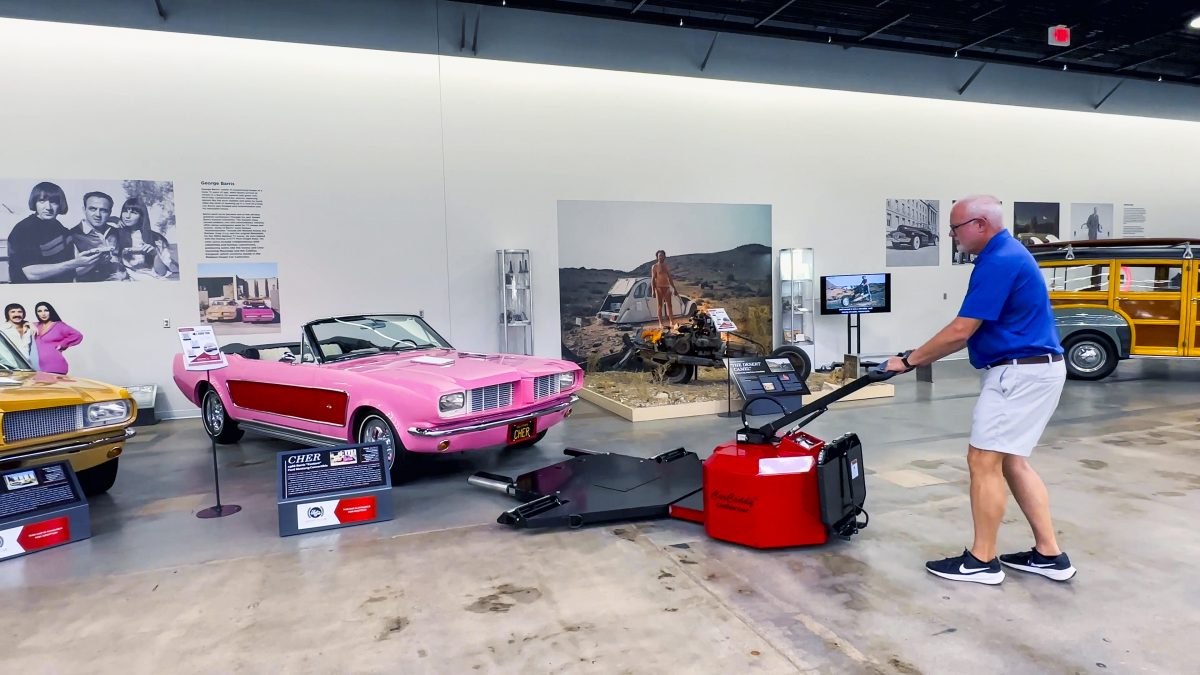
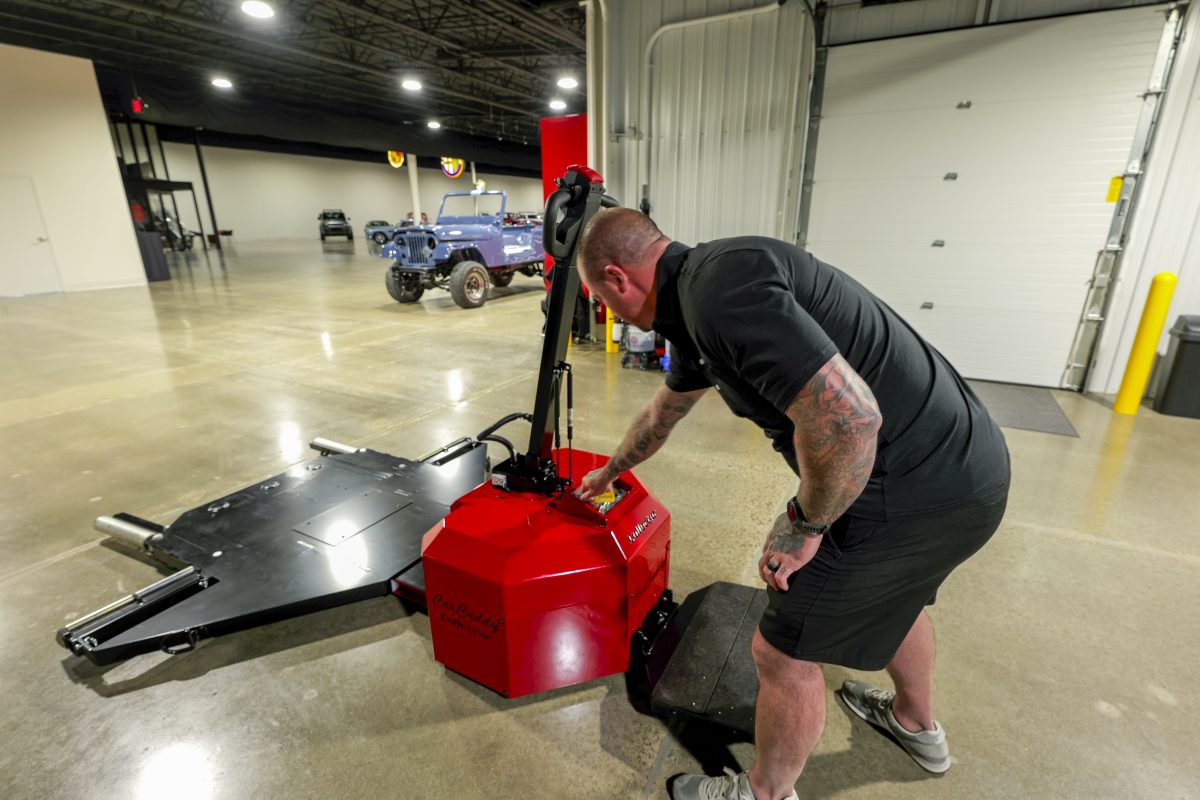
The CarCaddy takes a fundamentally safer approach. Instead of pushing against paint and bodywork, this advanced electric car pusher gently engages the vehicle’s tires, securely loading them onto a low-profile platform. Because the machine interacts strictly with the rubber tires—the exact parts designed to bear the vehicle’s weight—your bodywork, custom paint, and original trim remain entirely untouched.

Clean, Quiet, and Tailored for Indoor Vaults

Indoor display spaces present unique environmental challenges. The absolute last thing you want near original leather interiors, delicate headliners, and high-value artwork is a cloud of harsh exhaust fumes or dripping fluids from cold-starting an engine indoors. Cold-starting historic engines solely to move a vehicle a few yards also causes unnecessary engine wear and condensation build-up.

As a fully battery-powered solution, the CarCaddy electric vehicle mover produces zero emissions and operates with whisper-quiet precision. Its smooth, controlled acceleration and intuitive steering allow operators to glide vehicles past glass display cases, structural columns, and tight display rows without jerkiness or sudden movements.

Furthermore, the CarCaddy features a compact design with an exceptionally tight turning radius. When the job is done, it tucks neatly away in a corner or storage bay, taking up minimal floor space in your garage or facility.

Elevating Your Operational Standards

Whether you manage a world-class automotive museum, curate a sprawling private collection, or run a high-end boutique dealership, your operational equipment should reflect the high standards of the vehicles in your care. Eliminating manual pushing streamlines daily facility workflow, protects your valuable staff from physical injury, and safeguards priceless vehicle bodywork from accidental damage.

Ready to upgrade your showroom flow, explore detailed specifications, and see how our equipment performs in real-world collection environments? Visit our website at www.carcaddyvehiclepuller.com to review complete product specs, watch demonstration videos, and explore our specialized lineup.

About CarCaddy & DJ Products

CarCaddy is proudly manufactured by DJ Products, Inc., an industry leader in ergonomic, battery-powered material handling solutions. For decades, DJ Products has engineered custom motorized equipment designed to eliminate manual push-pull strain across specialized industries worldwide. Every CarCaddy is built in the USA with heavy-duty steel construction, intuitive user controls, and long-lasting battery power to handle your toughest moving challenges safely and reliably.

Don’t let manual vehicle moving slow down your operations or put your collection at risk. Contact the CarCaddy team today and complete our quick online contact form to connect directly with one of our experienced product engineers. We will analyze your specific space, flooring, and vehicle types to recommend the exact CarCaddy solution for your facility.

Preparing for Special Exhibits: Moving Display Cars Safely and Fast

Running a world-class automotive museum or managing a prestigious private collection means more than curating great cars—it means moving display cars regularly. Rotating seasonal exhibits, setting up special events, and repositioning featured vehicles are part of the job. And every time you rearrange the floor, you’re navigating a logistical puzzle that puts irreplaceable machinery at risk. 

The challenge isn’t just getting a 4,000-pound classic from Point A to Point B. It’s doing so without scuffing a bumper, cracking a heritage tile, or filling your gallery with exhaust fumes. For museum managers, collection owners, and boutique dealerships, that challenge demands a smarter approach—one built specifically for the job. 

Why Exhibit Transitions Are Harder Than They Look 

Automotive museums are dynamic environments. Seasonal exhibits come and go. Special loan vehicles arrive and depart. Featured cars rotate to keep regular visitors engaged and attract new ones. Behind every smooth exhibit changeover is a logistical operation that most visitors never see—and never should. 

The floor alone presents serious risk. Many automotive museums are housed in historic buildings with original hardwood, polished concrete, or decorative tile surfaces that took decades to develop their patina. Rolling a multi-ton vehicle across those surfaces without the right equipment is a gamble few curators are willing to take. Add in the proximity of adjacent display pieces—signage, barriers, neighboring vehicles—and the margin for error shrinks fast. 

Then there’s the air quality issue. Starting an engine indoors to reposition a car, even briefly, introduces carbon monoxide and hydrocarbons into an enclosed space. For staff working through a multi-hour exhibit reconfiguration, that’s a health and safety concern. For conservation, combustion byproducts are equally unwelcome around leather interiors, rubber seals, and original paintwork. 

Traditional methods—push teams, shop dollies, improvised rigging—carry their own risks. Uneven force applied to a bumper or body panel can cause damage that’s both cosmetic and costly. On a vehicle valued at six or seven figures, that’s not a risk worth taking. 

Protecting What Matters Most During Heavy Reconfigurations 

When your exhibit floor holds vehicles worth hundreds of thousands—or millions—of dollars, the equipment you use moving display cars has to match that standard. That means: 

  • Zero engine operation indoors. No idling, no exhaust, no risk to staff or vehicles. 
  • Controlled, even force. Movement that doesn’t stress bumpers, push rods, or body panels. 
  • Floor-friendly contact points. Non-marking wheels that protect heritage surfaces. 
  • Precision handling. The ability to navigate tight spaces between display cars without incident. 

This is where purpose-built vehicle movers earn their place on the exhibit floor. 

The CarCaddy Advantage for Event and Museum-Grade Moves 

The CarCaddy Vehicle Puller—Collector’s Edition is engineered for exactly this kind of work. American-made and purpose-designed for environments where precision and protection are non-negotiable, CarCaddy moves vehicles up to 7,000 lbs. safely, efficiently, and without contact with the bumper or body of the vehicle. 

For museum managers and collection owners, several features stand out immediately. 

A zero-emission electric drive system. CarCaddy runs on a 36V three-battery system, meaning no combustion, no exhaust, and no air quality concerns during multi-vehicle reconfigurations. Your staff can work through a full exhibit transition without cracking open a door. 

Non-marking wheels throughout. The non-marking drive wheel and crown caster wheels protect delicate flooring surfaces—critical in heritage buildings where the floor itself is part of the exhibit. 

Variable roller arms and low-profile design. The adjustable roller arms load and unload cleanly on almost any vehicle, while the low-profile chassis keeps things stable and controlled, even on vehicles with minimal ground clearance. 

Rider and walkie operation. The lighted ride-on platform flips up and down, giving operators the flexibility to ride during longer moves or walk alongside for precision maneuvering in tight spaces. Hi-beam headlights make vehicle acquisition fast, even in dim gallery lighting. 

Speed that keeps doors open on schedule. Exhibit transitions that once required large crews and extended downtime can be completed faster and with fewer people. That matters when your opening time is fixed and your audience is waiting. 

Neutral throttle braking and adjustable acceleration. These features give operators fine control over every move—no sudden lurches, no momentum-driven contact with surrounding displays. 

The Collector’s Edition also happens to look the part. Available in Ferrari Red, Matte Black with Gold, Baby Blue, Pink, Silver, and White, CarCaddy can be customized to complement a specific vehicle or collection aesthetic. For a museum environment, that’s a detail worth noting. 

Exhibit Turnover Speed Is a Competitive Advantage 

The faster you can safely reconfigure your exhibit floor, the more flexibility you have to take on special loans, rotating features, and event-based displays. Museums and dealerships that rely on slow, labor-intensive repositioning methods are limited in what they can offer—and how often they can offer it. 

A reliable vehicle mover like CarCaddy compresses the time between “closed for transition” and “open to visitors.” Fewer staff hours. Less risk at every step. And a professional result that reflects the quality of the collection itself. 

For boutique dealerships managing high-value inventory in tight showroom spaces, the same logic applies. Moving a consignment vehicle from storage to the floor shouldn’t require a production. CarCaddy makes it a two-person operation—or less. 

The Right Tool for Moving Display Cars Protects Your Investment at Every Stage 

Every move you make on an exhibit floor is a risk-management decision. The vehicles you’re moving represent years of acquisition, restoration, and preservation. The floor beneath them, the displays around them, and the staff moving them all deserve the same level of care. 

CarCaddy was built for these moving display car moments—the exhibit transitions, the event setups, the last-minute repositioning that comes with running a world-class facility. Purpose-built, electric-powered, and designed to move valuable vehicles without drama or damage. 

Ready to see how CarCaddy fits your operation? 

Visit carcaddyvehiclepuller.com to review full specifications and explore the Collector’s Edition in detail. Then complete the contact form to connect directly with one of CarCaddy’s product engineers. They’ll walk you through the right configuration for your facility, your vehicles, and your team—so your next exhibit transition goes exactly as planned.