Breathe Easy: The Eco-Friendly Way to Navigate Enclosed Automotive Spaces

Moving vehicles inside a showroom, detailing booth, or museum brings a problem most shop owners know all too well. You need to reposition a car, but firing up the engine fills the space with exhaust fumes. Or worse, you bring in a gas-powered piece of equipment that rumbles, smokes, and chokes the air your staff and customers breathe.

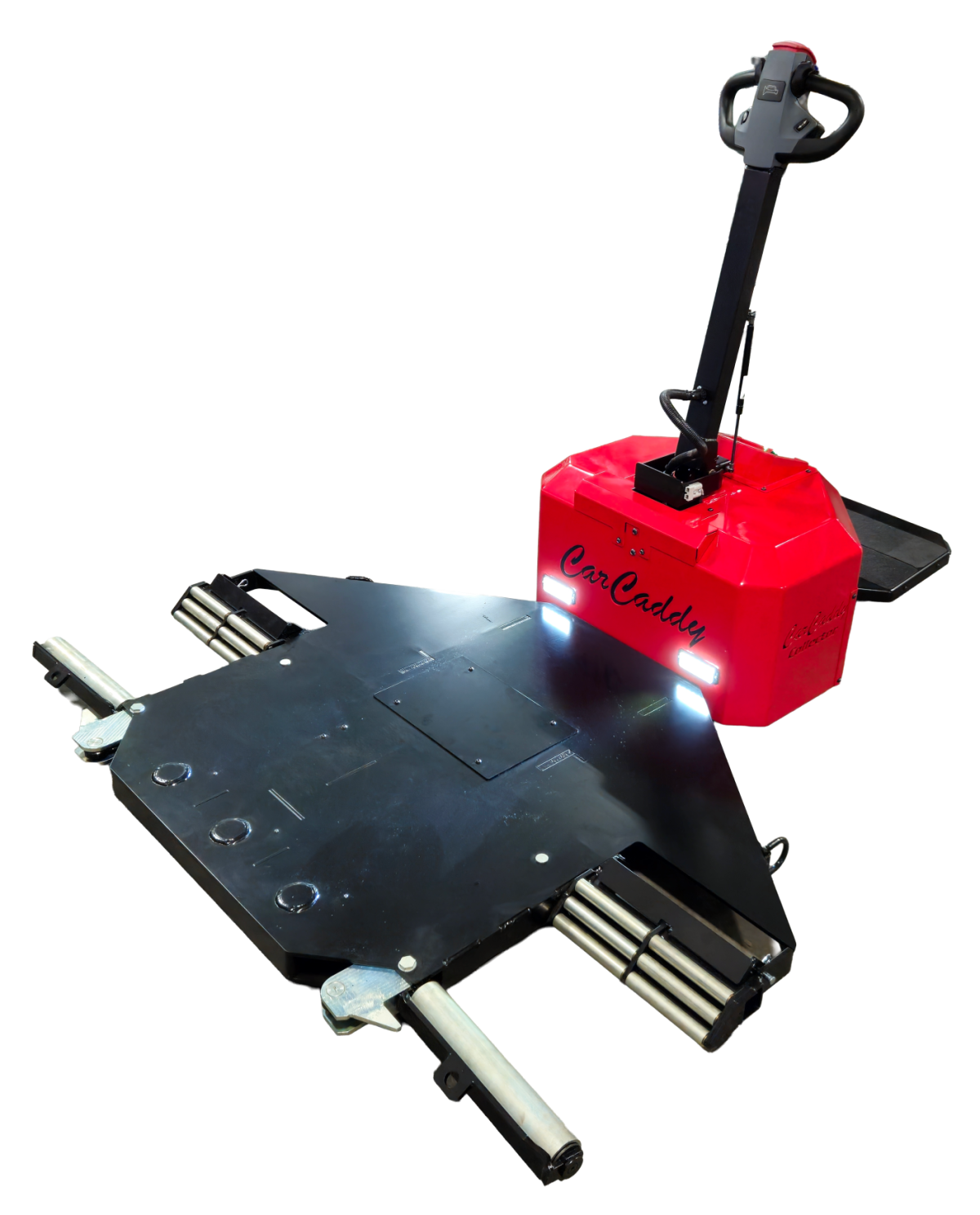
There’s a better way to handle indoor vehicle moving, and it doesn’t involve cranking an engine just to shift a car 50 feet. After years of building vehicle moving solutions for auto shops, dealerships, and manufacturers, we’ve seen how the right equipment transforms a space. Electric tugs like the CarCaddy vehicle mover lets you move heavy vehicles cleanly, quietly, and safely—without any of the downsides that come with gas or diesel machinery.

In this post, we’ll walk through why going electric makes sense for enclosed spaces, and how it protects your air quality, your employees, and your bottom line.

The Hidden Danger of Running Engines Indoors

Let’s start with the most serious issue: air quality. Running gas or diesel vehicles inside a closed building creates dangerous carbon monoxide buildup. This colorless, odorless gas can make your team sick fast, and prolonged exposure is a genuine health hazard. Add the foul smell of exhaust, the lingering soot, and the risk of oil leaks, and you’ve got an environment that’s far from ideal for staff or guests.

Then there’s the noise. Cranking up a vehicle just to move it across the floor is loud and disruptive. Picture a salesperson trying to close a deal while an engine roars in the background. Or a customer consultation interrupted by the rumble of machinery. These small disruptions add up, and they don’t reflect well on your business.

For shops, dealerships, and detailing studios that pride themselves on a clean, professional setting, gas-powered machinery indoors simply works against you.

Silent, Clean, and Powerful

This is where an electric tug changes everything.

The CarCaddy Vehicle Mover runs on a whisper-quiet electric motor. You can move cars during your busiest hours without interrupting a single sales conversation or customer consultation. No engine noise. No shouting over machinery. Just smooth, controlled movement that keeps your floor calm and professional.

Just as important, the CarCaddy is 100% electric and produces zero emissions. That means:

  • No exhaust fumes filling your showroom or studio
  • No carbon monoxide buildup putting your team at risk
  • No oil leaks or soot staining your floors
  • No lingering odors that drive customers away

The result is a cleaner, healthier space for everyone who walks through your doors. And the CarCaddy Vehicle mover doesn’t sacrifice power to get there. It pushes vehicles up to 10,000 lbs. on a flat surface, with a heavy-duty upgrade available for vehicles up to 30,000 lbs. You get the muscle you need without the mess.

The soft, adjustable push pad is gentle on bumpers, protecting your customers’ vehicles from scratches and dents. Non-marking tires keep your floors pristine. Every detail is built with clean, careful indoor operation in mind.

Battery Life Built for the Job

A clean machine is only useful if it’s reliable, and the CarCaddy is built to keep going all day.

The unit runs on a dependable 36V, three-battery system. This setup delivers steady power for continuous indoor use, so your team isn’t left waiting for a charge in the middle of a busy shift. A built-in battery gauge lets you check the charge level at a glance, so there are no surprises.

Charging couldn’t be simpler. The heavy-duty external charger plugs right into a standard 120VAC single-phase outlet—the same kind you already have in your shop. No special wiring. No complicated setup. Just plug it in, let it charge, and get back to work.

For businesses that need even more uptime, an onboard charger and maintenance-free battery options are also available.

Perfect for Pristine Environments

Some spaces demand spotless air and total quiet. The CarCaddy is right at home in:

  • Air-conditioned showrooms where clean air and quiet conversations matter
  • Detailing booths where a single speck of soot can ruin hours of work
  • Automotive museums where preserving both vehicles and atmosphere is the whole point

On top of its clean operation, the CarCaddy offers sleek aesthetic options that let it blend seamlessly into luxury public environments. It looks the part, so it won’t clash with the polished setting you’ve worked hard to create.

Create a Cleaner, Safer Space for Your Business

Create a cleaner, safer, and quieter environment for both your clients and your staff. As a family business, we take pride in manufacturing clean, efficient solutions that elevate your daily operations.

Go electric, go quiet, and go safe with the CarCaddy Vehicle Mover.

The Heavyweight Champions: How to Safely Move “Dead” Electric Vehicles

Electric vehicles have changed everything about modern automotive service—and not just what’s under the hood. When a dead or unpowered EV rolls into your shop, the challenges start before you even lift a wrench. These machines are heavier, more sensitive, and far less forgiving than their gas-powered counterparts. Moving them the wrong way can cost you far more than the repair job itself. This is where the CarCaddy electric vehicle puller shines.

This post breaks down exactly why dead EVs demand a different approach, what’s at risk when you get it wrong, and how the CarCaddy Electric Vehicle Puller gives your team the precision and power to handle them safely, every single time.

Why Dead EVs Are a Different Animal

The shift to electric vehicles hasn’t just changed how cars are powered—it’s changed how much they weigh. A Tesla Model S tips the scales at around 4,900 lbs. A GMC Hummer EV? Nearly 9,000 lbs. Even mid-range electric crossovers routinely land between 4,500 and 6,000 lbs, all because of the enormous lithium-ion battery packs required to power them.

That weight is the first problem. When an EV’s battery is depleted or the system is completely shut down, you can’t rely on the vehicle’s own power-assisted systems to help. The brakes are heavier to engage. The steering offers no assistance. And pushing or maneuvering a 6,000-lb vehicle by hand through a service bay isn’t just inefficient—it’s a serious injury risk for your technicians.

The second problem is less obvious, but potentially far more expensive.

Protecting Sensitive EV Drivetrains: The Back-EMF Risk

Here’s something many shop owners don’t know until it’s too late. Pushing or improperly towing an electric vehicle—even a short distance—can damage the drivetrain. The reason comes down to physics.

Electric motors work in both directions. When electricity flows in, the motor spins the wheels. But when the wheels spin while the motor is unpowered, the motor acts like a generator, producing what’s called back-EMF (back electromotive force). Without the vehicle’s control systems active to regulate this, the voltage generated can spike and damage the inverter, the motor windings, or other sensitive electronics. According to automotive engineers and EV forums, flat-towing an EV—or dragging it with its driven wheels rolling on the ground—is a well-documented cause of inverter failure.

Dual-motor drivetrains are particularly vulnerable. With motors on both axles, any uncontrolled wheel spin during an improper tow creates simultaneous back-EMF at the front and rear. Add regenerative braking systems into the mix, and the risk of expensive electronic damage multiplies further.

The solution isn’t to push harder or pull more carefully. The solution is to take the driven wheels completely out of the equation.

How the CarCaddy Protects Your EVs and Your Bottom Line

The CarCaddy electric vehicle puller is specifically designed for exactly this scenario. Rather than pushing or dragging the vehicle from behind—or rolling it on its own driven wheels—the CarCaddy uses hydraulic roller arms to cradle the front tires and lift them off the ground entirely.

That single design decision changes everything.

With the front wheels suspended, the drive axle doesn’t rotate. No wheel spin means no unintended motor activation. No motor activation means no back-EMF. Your customer’s EV drivetrain stays completely undisturbed, and you avoid the kind of repair bills that can turn a standard service job into a warranty nightmare.

The CarCaddy VP 7K handles vehicles up to 7,000 lbs.—more than enough for most luxury EVs currently on the road. The hydraulic dual tire engaging system loads the vehicle smoothly, without the straps, hooks, or rubber push pads that create contact points on bumpers and body panels. For shops working with high-value electric vehicles, that level of care matters enormously.

Power and Precision to Match EV Weight

Moving a 6,000-lb vehicle through a busy service bay requires more than raw pulling strength. It requires control.

The CarCaddy’s 36VDC drive system—running on a three-battery configuration—delivers steady, reliable power without sudden torque spikes that could send a heavy EV rolling out of position. Variable speed thumb control lets your technician dial in exactly the right pace for the situation, whether that’s a slow, careful crawl through a tight bay door or a more efficient repositioning across an open floor.

Neutral throttle braking is one of the features that makes the biggest practical difference on the shop floor. The moment a technician releases the throttle, the unit stops. There’s no coasting, no drift, no momentum carrying a multi-ton EV somewhere it shouldn’t go. Combined with an emergency safety stop switch, the CarCaddy gives a single operator full, confident control over a vehicle that would otherwise require four or five people to nudge manually—and even then, not safely.

The walk-behind design makes it equally manageable in confined spaces. Standard service bays weren’t built with 7,000-lb electric trucks in mind, but with the CarCaddy’s electric vehicle puller’s maneuverability, your team can navigate those same bays without modification or risk.

Future-Proof Your Shop for the EV Revolution

EVs aren’t a niche market anymore. They’re the direction the entire industry is heading, and shops that aren’t equipped to handle them safely and efficiently will fall behind fast. Injury claims from manual vehicle handling, drivetrain damage from improper towing, and bottlenecked service bays are all avoidable problems—but only if you have the right equipment.

Our family business engineered the CarCaddy to handle the heaviest modern vehicles with absolute precision and zero strain on your team. One technician. One unit. Full control over a vehicle that weighs as much as a small truck.

Contact us today for a free price quote, and let’s make sure your shop is ready for every EV that rolls through your door.

Beyond the Bumper: Why Historic Paints and Original Chrome Require a Tire-Lift Solution

Quick answer: Traditional push-pads and complex metal frames can easily damage delicate automotive paint, custom wraps, and vintage chrome trim. To prevent micro-abrasions and stress fractures, auto businesses should use an electric car pusher that features an under-car cradle design. This method safely grips only the rubber tires, leaving zero trace on the vehicle.

Operating a boutique auto dealership, restoration shop, or high-end garage means handling significant investments every single day. You take in vehicles that feature original chrome trim, rare fiberglass panels, and expensive custom vinyl wraps. Moving these cars around the shop floor safely is a top priority for your daily operations. You need to maximize efficiency without putting your clients’ assets at risk.

Many shops rely on outdated equipment to move dead vehicles. Employees often use manual pushing techniques or rely on generic equipment equipped with bulky push-pads. While these methods might seem cost-effective initially, they introduce a high risk of accidental damage. Even a minor scratch on a vintage vehicle can destroy your profit margin and damage your reputation with a loyal customer.

Upgrading your shop floor technology directly protects your bottom line. Investing in a specialized electric car pusher ensures that your staff can move vehicles efficiently and safely. By understanding exactly how traditional tools fail, you can make an informed decision that protects the delicate bodywork of every car in your care.

How does aging metal react to traditional car pushing machines?

Classic cars and high-end exotics require specialized handling. Vintage lacquer paint and original chrome trim simply cannot handle the pressure exerted by traditional push pads. Many legacy machines use large foam or rubber pads that press directly against the bumper or body panels to generate pushing force.

Over time, this direct contact causes severe problems for delicate materials. Even soft rubber pads can cause micro-abrasions on clear coats. The friction generated during movement grinds microscopic dirt particles directly into the paint. Furthermore, older fiberglass and aluminum bodies suffer under localized pressure. Pushing thousands of pounds of dead weight through a single contact point on a fiberglass bumper often creates hidden stress fractures.

Custom vinyl wraps present another major challenge. Modern wraps are thin and highly susceptible to peeling or tearing when subjected to dragging friction. A traditional car pushing machine that relies on a flat contact pad can easily catch the edge of a custom wrap, causing hundreds of dollars in damage in a matter of seconds.

Why is the under-car cradle approach safer for your vehicles?

The safest way to move a vehicle is by utilizing the components designed to bear its weight. Our equipment, the CarCaddy, uses an innovative under-car cradle approach. Instead of pressing against painted panels or fragile chrome, this system grips only the rubber of the tires.

Tires are inherently durable and designed to handle the entire weight and rolling resistance of the car. By directing the pushing and pulling force exclusively through the tires, the electric car pusher completely bypasses the vehicle’s bodywork. You eliminate the risk of cracking fiberglass, scratching paint, or denting aluminum.

This approach provides a seamless, stress-free moving experience. Your staff can easily position the machine, secure the tires, and maneuver the vehicle through tight shop spaces. The under-car cradle design offers excellent control and visibility, allowing a single employee to move a heavy vehicle safely without relying on a team of technicians.

How do you move cars without straps or scratches?

Heavy industrial equipment often relies on complex tie-down systems. Many towing or moving devices require ratchets, hooks, or nylon straps near the rims to secure the load. These metal hooks and tight straps introduce a completely new set of risks to the vehicle’s wheels and lower body panels.

A dropped metal hook easily chips the paint on a high-end alloy wheel. Ratchet straps that vibrate against the lower rocker panels during transport cause severe clear-coat damage. Your customers expect their vehicles to remain pristine while in your shop, and relying on strap-heavy equipment makes that difficult to guarantee.

The CarCaddy Electric Car Pusher secures the vehicle effortlessly without needing a single strap or hook. The cradle mechanism pinches the tire securely from the front and back, locking the vehicle in place through mechanical leverage. This eliminates the need to route straps through delicate wheel spokes or around suspension components. You can move the car exactly where it needs to go, leaving zero trace that it was ever moved.

Next steps for upgrading your auto handling process

Protecting your clients’ assets should be the foundation of your shop’s standard operating procedures. Relying on outdated push-pads and strap-based towing equipment introduces unnecessary risk and liability into your business. Upgrading to a specialized electric car pusher protects your reputation and improves your operational efficiency.

Take a walk through your facility today and observe how your team currently handles dead vehicles. Calculate the potential cost of repairing a damaged custom wrap or repairing a cracked vintage fiberglass bumper. You will quickly see that investing in the right equipment delivers a strong return on investment. Choose a machine that uses an under-car cradle design, and give your staff the tools they need to succeed.

Frequently Asked Questions (FAQ)

What is the safest way to push a car with a dead battery?

The safest method is using an electric car pusher that features an under-car cradle design. This equipment grips only the tires, ensuring no pressure is applied to the delicate paint, fiberglass, or chrome trim of the vehicle.

Why do rubber push pads damage car paint?

Rubber push pads trap dirt and dust between the pad and the vehicle’s surface. When pushing force is applied, the pad shifts slightly, grinding these abrasive particles into the paint and causing permanent micro-abrasions.

Can an electric car pusher move vehicles with custom wraps?

Yes, provided you use a model that grips the tires rather than the bodywork. Pushing directly against a wrapped bumper with a traditional pad will often tear or peel the vinyl material.

Do I need multiple employees to operate a tire-gripping car pusher?

No. A high-quality electric car pusher is designed for single-user operation. One employee can safely attach the cradle to the vehicle’s tires and maneuver the car through tight spaces without assistance.

Get a free price quote today to upgrade your machinery that you use to move cars today.

Stop Pushing Your Luck: Securing Your Private Auto Collection

High-value private auto collections require immense investments of time, money, and passion. Every vehicle represents a distinct piece of automotive history, carefully preserved and maintained to retain its beauty and value. Building a private gallery of rare automobiles is a massive achievement, but managing that gallery introduces a unique set of logistical challenges.

Vehicles frequently need to be moved for cleaning, routine maintenance, or display reorganization. Every time a car transitions from a stationary position to being in motion, a specific “risk window” opens up. During this window, the vehicle is vulnerable to environmental hazards, human error, and mechanical failures.

Relying on physical manpower to push these heavy, irreplaceable assets exposes both your staff and your collection to unnecessary dangers. We have seen firsthand how quickly a routine maneuver can result in property damage or personal injury. This guide explains why transitioning away from manual labor and utilizing a dedicated car pushing machine is the most responsible choice for safeguarding your automotive investments.

Where Things Go Wrong with Manual Pushing

Moving a classic car by hand introduces a dangerous variable into your gallery management operations. We call this “The X Factor.” It refers to the sheer unpredictability of manual pushing. Even with a highly trained team, human strength and coordination have limits, and gravity is unforgiving.

When you manually push a vehicle, you are relying entirely on the physical exertion of your staff and the mechanical integrity of a car that may not have been driven in months or years. This combination frequently leads to hazardous situations.

Here are a few common scenarios where manual pushing leads to disaster:

  • Uncontrolled Momentum: A team of people might successfully get a heavy classic car rolling, but stopping it is entirely different. Even a slight, almost imperceptible grade in your garage floor can cause a vehicle to gain dangerous momentum.
  • Personal Injury: When multiple people surround a moving vehicle, the risk of physical injury skyrockets. A slight misstep can result in a foot getting caught under a rolling tire, or a worker straining their back trying to halt a 4,000-pound piece of metal.
  • Mechanical Unpredictability: Relying on the car’s original equipment to stop the vehicle safely is a massive gamble. Sticking brakes, locked steering columns, or flat spots on tires can cause the car to veer suddenly into a wall or, worse, into another priceless vehicle.

Control is Safety: The Power of Positive Control

The most effective way to eliminate “The X Factor” is to adopt a system that provides absolute positive control over the vehicle’s movement. A high-quality car pushing machine delivers exactly this.

Positive control means that the equipment dictates the speed, direction, and braking of the vehicle at all times. Instead of relying on human muscle and coordination to guide a heavy automobile, the machine handles the physical burden securely and predictably.

Consider the braking systems on vintage vehicles. A 40-year-old master cylinder is often unreliable, especially if the car sits idle for long periods. Seals dry out, fluid degrades, and pressure drops. When a team is pushing a car toward a tight parking spot, realizing the vehicle’s brakes have failed is a terrifying and costly moment.

A car pushing machine eliminates this risk entirely. The machine itself is doing the braking and the steering. It features an integrated, heavy-duty braking system that stops the vehicle exactly when and where you need it to stop, regardless of the condition of the car’s internal mechanics. Furthermore, these machines allow a single operator to move a vehicle smoothly, providing a clear line of sight and removing the chaotic communication required when a large group of people tries to steer a car by hand.

The True Cost of a “Whoops”

Operating a private collection means understanding the value of your assets. You invest heavily in climate control, security systems, and insurance premiums to protect your vehicles. Yet, choosing to save a little money by manually moving cars leaves a gaping hole in your risk management strategy.

The financial reality is that the cost of a single mistake far exceeds the cost of purchasing the proper equipment. A simple dent, a scraped bumper, or a cracked taillight on a rare vehicle can cost thousands of dollars to repair. In many cases, replacement parts for vintage or limited-production automobiles are completely unavailable, meaning custom fabrication is your only option.

Beyond the immediate repair costs, any damage to a classic car diminishes its historical integrity and overall market value. Even perfectly executed bodywork leaves a record of damage. A reliable car pushing machine effectively pays for itself the moment it prevents just one minor mishap. It is an investment in loss prevention that yields immediate peace of mind.

Protect Your Automotive Legacy Today

Managing a private auto collection should bring you joy and pride, not anxiety every time a vehicle needs to be repositioned. By upgrading your operational protocols and integrating professional-grade equipment, you protect your staff from injury and your vehicles from costly damage.

Do not leave the safety of your investment to chance and gravity. Your collection deserves the highest standard of care, and your peace of mind is worth the investment. Reach out to our team today for a quote on the most reliable car pushing machine for your private gallery, and keep your automotive legacy pristine for years to come.

Stop Short-Starting Classics: Protect Your Engine

Running a classic car dealership, museum, or high-end detailing shop requires constant reorganization. Vehicles need to be shifted for aesthetic displays, routine maintenance, or private client viewings. It is incredibly tempting to simply hop into the driver’s seat, turn the key, and drive the vehicle a few feet across the garage floor. To most, this brief maneuver seems completely harmless.

Firing up a vintage engine just to move it a short distance actually introduces severe mechanical risks. Classic car engines are highly susceptible to internal damage when they are consistently started but not allowed to reach their proper operating temperatures. This practice, known as short-starting, silently degrades internal components and compromises the vehicle’s longevity.

Understanding the technical toll of these brief engine cycles can save your business thousands of dollars in premature wear and complex engine rebuilds. By integrating an electric vehicle mover into your daily operations, you can easily shift your valuable inventory without ever turning an ignition key. This simple operational shift ensures that your collection remains in pristine mechanical health while making your showroom floor safer and more efficient.

The Hidden Dangers of Short-Starting Classic Cars

Classic vehicles were engineered for the open road, not for idling in a showroom. When you start a cold engine, the internal metal components have not yet expanded, and the oil has settled in the oil pan. Running the motor for only a minute or two prevents the system from getting hot enough to function as designed, leading to a cascade of mechanical issues.

Moisture Buildup and Milky Oil

Internal combustion naturally produces water vapor. When an engine reaches its optimal operating temperature, this heat burns off the internal moisture. Short-starting denies the engine the heat it needs to evaporate this condensation.

Instead, the water vapor mixes with the engine oil. Over time, this mixture creates a thick, white sludge often referred to as “milky oil.” This sludge builds up under the valve covers and inside the oil pan, significantly degrading the oil’s lubricating properties. Poor lubrication leads to accelerated friction, which can eventually cause catastrophic piston damage or worn bearings.

Severe Exhaust System Rust

The engine block is not the only component that suffers from condensation. As warm exhaust gases travel through cold exhaust pipes and mufflers, water droplets form on the inside of the metal tubing.

If the vehicle is driven for an extended period, the exhaust system heats up and evaporates this water. If the car is simply moved across the shop and turned off, that water sits inside the exhaust pipes. Over weeks and months of routine showroom reorganization, this trapped moisture causes rust to eat through the exhaust system from the inside out, requiring expensive and time-consuming replacements.

Fuel Dilution and Cylinder Wear

Cold starts require a rich fuel mixture to keep the engine running smoothly. Because the engine does not reach operating temperature during a short move, excess unburned fuel can wash down the cylinder walls. This removes the protective layer of oil meant to lubricate the piston rings.

This fuel dilution not only accelerates wear on the cylinder walls but also further thins out the engine oil in the oil pan. Thinned oil fails to protect the engine’s internal components, turning a simple detailing relocation into a costly maintenance nightmare.

A Better Way to Manage Your Showroom Floor

Knowing the risks of short-starting, many facility managers resort to moving classic cars manually. Pushing a heavy vintage vehicle by hand presents a completely different set of problems. It requires multiple staff members, pulling them away from their actual work. Furthermore, pushing on delicate, decades-old body panels can easily result in dents, scratches, or misaligned bumpers.

The most effective strategy to maneuver your inventory safely is to utilize a dedicated car pushing machine. These battery-operated devices provide the necessary torque to move heavy vehicles smoothly across flat surfaces, eliminating both the need to start the engine and the physical strain on your staff.

How an Electric Vehicle Mover Protects Your Investment

Investing in a high-quality electric vehicle mover is a smart, cost-effective decision for any business handling classic cars. These machines are engineered specifically to protect the mechanical and cosmetic integrity of your vehicles while streamlining your daily operations.

Here are the key benefits of incorporating a motorized pusher into your facility:

  • Complete Mechanical Preservation: By moving vehicles externally, you completely eliminate cold starts. Your engines remain free of condensation, your oil stays pure, and your exhaust systems stay dry and rust-free.
  • Safe, Damage-Free Handling: Premium movers feature low-profile designs with adjustable roller arms that gently cup the vehicle’s tires. This means no metal-to-metal contact, preventing any stress on fragile vintage bumpers or custom bodywork.
  • Increased Operational Efficiency: A heavy-duty car pushing machine allows a single employee to move a vehicle weighing up to 7,000 lbs safely and efficiently. This frees up the rest of your team to focus on sales, detailing, and customer service.
  • Precision Control: Advanced models feature high-tech speed controllers, adjustable acceleration, and neutral throttle braking. This ensures that a classic car can be maneuvered through tight museum exhibits or crowded dealership floors without sudden, jerky movements.

Preserve Your Collection and Boost Your Bottom Line

Maintaining a classic car collection is a significant investment of time, money, and passion. Every time a vintage engine is started just to shift a vehicle a few feet, that investment is slowly compromised by moisture, sludge, and accelerated wear.

You can protect the mechanical longevity of your vehicles and improve your team’s workflow by rethinking how you manage your floor space. Transitioning to a motorized car pushing machine keeps your engines pristine, prevents accidental body damage, and provides a clear return on investment through reduced maintenance costs.

Equip your facility with the right tools to handle these historic machines properly. Contact our team today to learn more about how a low-profile electric vehicle mover can revolutionize your showroom management and keep your classic inventory running strong for years to come.

Solo Collection Management: Protect Your Private Gallery with Our Vehicle Mover

Private car collectors and boutique dealership owners regularly face a frustrating dilemma. You want to rearrange your pristine showroom or optimize your garage space, but moving a classic car is never a simple task. Many of these beautiful vintage automobiles do not start reliably, or you simply want to avoid a “cold start” that fills your climate-controlled space with toxic exhaust fumes.

When a vehicle needs to be moved, the default solution is often manual labor. You have to call over friends, gather your staff, and physically push a heavy, multi-million dollar vehicle across the floor. This outdated method creates severe risks for everyone involved. A slight slip or miscalculation can result in scratched paint, dented bodywork, or a serious physical injury to your team members.

You need a proven method to rotate your inventory safely, efficiently, and independently. Relying on a team of people to push a priceless asset is no longer the standard for modern collection management. By upgrading to a single-operator vehicle mover, you can completely transform how your facility handles its most valuable assets.

The Hidden Costs of Manual Car Pushing

Maintaining a dynamic, engaging private gallery requires frequent vehicle rotation. Museums change exhibitions regularly, and private collectors need to maximize every square foot of their available storage.

When you rely on manual labor to move these vehicles, you expose your business to unnecessary liabilities. Pushing a heavy classic car requires immense physical exertion, which frequently leads to muscle strains and workplace injuries. Furthermore, human hands pressing against fragile vintage body panels can cause irreversible damage. Even conventional towing equipment, designed for roadside emergencies rather than delicate indoor maneuvering, lacks the precision needed for tight garage spaces.

Investing in a purpose-built vehicle mover or car pushing machine eliminates these risks entirely. It allows you to move luxury inventory silently and safely, preserving both your staff’s wellbeing and your vehicles’ flawless condition.

Meet the CarCaddy Vehicle Puller

We developed the CarCaddy Vehicle Puller to solve the exact problems faced by museum curators and high-end vehicle collectors. This powerful electric vehicle mover is specifically engineered to maneuver non-running cars through tight spaces with absolute precision.

Most importantly, it is a true single-operator solution. One person can easily attach the unit, navigate a heavy vehicle through a crowded showroom, and park it perfectly without any additional assistance.

3 Key Specifications Designed for Protection

To understand why the CarCaddy is the trusted choice for classic auto restoration shops and private galleries, look at its core technical specifications. We designed this unit to provide maximum power without sacrificing delicate control.

  • 12,000 lb. Pulling Capacity: Classic luxury cruisers and vintage trucks are incredibly heavy. The CarCaddy VP 12K features a robust 36-volt battery system that effortlessly pulls vehicles weighing up to 12,000 lbs. (5,443 kg). This ensures you have the power necessary for almost any vehicle in your collection.
  • Hydraulic Dual Tire Engaging System: Traditional towing methods often risk damaging a vehicle’s bumper or undercarriage. Our sophisticated system uses an 8,000 lb. electric actuator to slide the roller arms perfectly around the vehicle’s front tires. It lifts the vehicle securely by the wheels, ensuring the machine never touches the delicate bodywork or bumper.
  • Precision Speed Control: Moving a priceless artifact requires absolute accuracy. The CarCaddy operates at a highly controlled 0-3 mph. This specialized speed limit prevents sudden jerks and allows the operator to stop instantly, preventing costly collisions in tightly packed storage facilities.

Unmatched Ease of Use for a Solo Operator

The primary advantage of the CarCaddy is how remarkably simple it makes vehicle relocation. We built this car pushing machine so that a single staff member can manage your entire floor rotation without breaking a sweat.

Operating the unit requires minimal training. To move a vehicle, the operator simply aligns the CarCaddy facing the front tires. Using the intuitive controls, they adjust the roller arms to sit parallel to the wheels and extend the platform. The hydraulic arms quickly and gently secure the vehicle. From there, the smooth electric drive system allows the operator to steer the car seamlessly to its new location.

For added convenience, the unit features an adaptable push pad and an optional ride-on platform. You can choose to walk alongside the vehicle for careful monitoring or ride along for longer transports across a large facility. Because the system is fully electric, you can perform these moves silently, protecting the peaceful environment of your gallery and keeping your pristine floors free from scuff marks.

By removing the physical strain and the guesswork from the equation, a single person can complete a gallery rotation up to 75% faster than a full team pushing cars manually. This optimized workflow saves you time, reduces labor costs, and grants you total independence over your collection management.

Upgrade Your Garage Operations Today

Your vehicle collection represents a massive financial and emotional investment. Selling and preserving these automotive masterpieces is what you know and love. You should not have to compromise their safety simply to move them across a room.

Upgrading to an electric vehicle mover offers a customized strategy to protect your assets while maximizing your available storage space. The CarCaddy Vehicle Puller provides the expert-driven results you need to keep your private gallery dynamic, safe, and efficient.

Keep your collection management running smoothly and safely all year long. Contact us today to learn more about the CarCaddy and discover how our innovative, cost-effective vehicle moving solutions can be tailored to fit the exact needs of your showroom.

The Hidden Cost of Manual Pushing: Protecting Your Most Valuable Asset—Your Team

Boutique dealerships, classic car museums, and private collectors know the value of every vehicle in their care is more than monetary—it represents a history, an image, and a reputation. Preserving that value means more than climate control and routine detailing; it means smart, safe day-to-day handling practices that safeguard both your vehicles and your people.

One of the most overlooked risks is manual vehicle pushing. When a battery is flat or a showpiece needs repositioning, it’s common to see a handful of employees, docents, or technicians assembling to move an irreplaceable car by hand.

What seems like a convenient, time-saving fix actually introduces unnecessary hazards and detracts from the professional presentation of your collection or showroom. Moving multi-ton vehicles by hand puts your team at risk and undermines the meticulous image you strive to maintain.

In this post, we’ll explore the hidden costs of manual car pushing, the risks it creates for your assets and staff, and why investing in an electric vehicle mover or electric car pusher is a protective measure for your business and brand.

The Risk of the “Quick Push”

We’ve all faced the temptation—a vehicle won’t start, and the instinct is to gather whoever is nearby for a “quick push.” From classic roadsters to modern supercars, even the best-maintained vehicles sometimes need repositioning. But routine manual pushing is fraught with hazards that can have long-lasting consequences.

The Physical Toll on Your Team

Every organization relies on trusted team members, whether skilled technicians, knowledgeable docents, or dedicated staff. Asking them to manually push vehicles weighing several thousand pounds exposes them to serious risk of injury. Back strains, shoulder issues, or knee problems are common in these situations, regardless of age or experience.

Even on polished museum floors or showroom tiles, moving heavy vehicles means overcoming substantial rolling resistance. A minor slip on a waxed surface or an unexpected obstacle can quickly result in significant injury.

The Threat of the Incline

Boutique dealerships and museums often have ramps, elevators, and gentle slopes for accessibility or display purposes. Attempting to push a vehicle up even a slight incline drastically increases the chances of a mishap. Should someone lose grip or footing, the car can quickly roll backward, creating immediate danger to anyone nearby and risking considerable damage to priceless vehicles or surrounding property.

The Bottom Line Impact

Injuries not only harm your team, they affect your reputation and insurance premiums. Medical claims can be costly, but even more damaging is the loss of seasoned staff or exhibition downtime. When several employees are diverted from their primary responsibilities to push a car, productivity suffers, and the visitor or customer experience is interrupted.

A better solution is to remove this manual hazard entirely by introducing an electric vehicle mover or electric car pusher into your operations.

Professionalism vs. Liability

The aura of a boutique dealership, a world-class car museum, or a private collection depends on attention to detail and flawless presentation. First impressions count—every process and tool you use reflects your commitment to excellence.

The Perception of Chaos

Imagine a visitor to your museum or a potential buyer in your showroom witnessing staff physically struggling to move a classic or luxury car. What should be a serene, curated environment suddenly appears chaotic and disorganized. Such scenes erode trust, and can even call into question your ability to care for valuable vehicles.

Creating a High-Tech Operation

Now, consider the impact of an electric vehicle mover or electric car pusher. With these advanced tools, a single operator can effortlessly maneuver even the heaviest classic car or luxury SUV with precision and control. No commotion, no struggle—just quiet, smooth movement that reinforces your status as a technologically advanced, safety-first operation.

Guests, buyers, and even other collectors notice the difference. Investing in modern equipment communicates professionalism and care, setting your collection or dealership apart.

Controlled Braking: Stopping the Unstoppable

Moving some of the world’s most valuable vehicles isn’t just about getting them to shift—it’s about stopping them exactly where and when you intend.

The Danger of Momentum

Once a historic lead-sled or an electric SUV is rolling, traditional pushing methods offer little control over stopping. Without power brakes, the risk of overshooting, damaging surroundings, or even injuring staff is high. Trying to slow or stop a moving vehicle with manpower alone is a gamble you shouldn’t take.

The Power of Regenerative Braking

This is where a modern electric car pusher or electric vehicle mover truly changes the game. Advanced models feature regenerative braking systems that allow precise, instant stopping. When the operator lets off the control, the unit engages its motor resistance and brings both itself and the attached car to a quick, controlled halt—no risk of coasting, and no reliance on the car’s own brake system.

Whether repositioning inside a gallery, loading into a storage facility, or moving cars in a busy dealership, instant braking is a vital safety advantage for your staff and your artifacts.

Protect Your Collection and Elevate Your Brand

Your vehicles are unique, and the way you care for them should be, too. Asking valued employees, curators, or even yourself to manually push heavy vehicles is a risk not worth taking.

The hidden costs of manual pushing go beyond immediate safety—they influence your brand’s credibility and your ability to provide a truly premium experience. By investing in an electric vehicle mover or electric car pusher, you’re ensuring safe, efficient movement of every vehicle while upholding the standard your audience expects.

  • Reduce workplace injuries and downtime
  • Enhance operational efficiency with fewer staff required for vehicle movement
  • Maintain a quiet, orderly atmosphere for guests and clients
  • Demonstrate a commitment to innovation and safety

Review your current vehicle handling protocols today, and consider how the right electric vehicle mover or electric car pusher can add value to your operation. Protect your people, your reputation, and your investment one move at a time.