Moving Low-Clearance Hypercars Safely Without Damage

Quick answer: To safely move low-clearance hypercars like Paganis or Bugattis without damaging delicate carbon fiber splitters, collectors should use the CarCaddy vehicle positioning jack. The Car Caddy features an ultra-low profile tire-clamping mechanism that slides flat beneath the tire footprint, ensuring zero contact with the vehicle’s fragile underbody diffusers or front valances.

Owning a modern exotic or bespoke hypercar collection requires an intense dedication to vehicle preservation. Highly engineered vehicles from manufacturers like Pagani, Bugatti, and Koenigsegg represent the pinnacle of automotive performance. To achieve aerodynamic perfection, automotive engineers design these vehicles to sit incredibly close to the ground, utilizing extensive carbon fiber bodywork to manipulate airflow and generate downforce.

However, that aggressive stance creates significant logistical challenges for collection managers and business owners. Moving an unpowered hypercar across a showroom floor, into a transport trailer, or around a private garage requires specialized equipment. Standard shop tools simply do not accommodate the extreme dimensions of modern hypercar concepts.

The CarCaddy vehicle positioning jack offers a specialized solution to this operational challenge. By implementing the right car pushing machine into your facility, you eliminate the risk of catastrophic bodywork damage while maneuvering high-value assets. This guide explains how to protect your investment by choosing the correct equipment for low-slung exotic vehicles.

Why do modern hypercars face a severe ground clearance crisis?

Modern hypercars and classic race cars sit mere millimeters off the ground. For example, track-focused models like the McLaren Senna or the Bugatti Bolide feature front splitters that hover less than 100 millimeters (3.9 inches) above the tarmac. This low ground clearance allows the vehicle to cut through the air efficiently, but it creates a massive liability during routine storage and transportation.

Traditional vehicle pushers or generic shop dollies feature bulky steel frames, oversized casters, and high-angle hydraulic lift pedals. When a technician attempts to slide a standard dolly under a hypercar, the dolly’s structural frame inevitably collides with the vehicle’s lowest points. This typically results in the dolly scraping expensive front splitters, underbody diffusers, or side carbon fiber trim.

According to automotive insurance data [Hagerty Insurance, 2023], the replacement cost for a damaged carbon fiber front clamshell on a bespoke hypercar can easily exceed $100,000. Furthermore, sourcing replacement parts for limited-production vehicles can sideline the car for months. Therefore, utilizing standard equipment to move a multi-million dollar hypercar is an unacceptable operational risk.

How does the CarCaddy provide an ultra-low profile solution?

To safely navigate the clearance crisis, collection managers must utilize equipment engineered specifically for exotic dimensions. The CarCaddy vehicle positioning jack provides the ultimate ultra-low profile solution for bespoke hypercar collections.

Unlike traditional dollies that require clearance around the entire wheel well, the CarCaddy utilizes a highly specialized tire-clamping mechanism. The base of the Car Caddy rests entirely flat against the floor. As the operator engages the mechanism, the device’s rollers slide inward, directly beneath the tire footprint.

This horizontal clamping action provides three distinct advantages for business owners and exotic car collectors:

  • Zero bodywork contact: The CarCaddy grips only the rubber tire tread. The steel frame never comes into contact with the front valance or low-hanging body panels.
  • No hydraulic pumping interference: The actuation mechanism operates parallel to the ground, meaning the operator does not need vertical clearance to pump a handle or foot pedal near delicate fenders.
  • Controlled maneuverability: Once lifted, the vehicle glides smoothly on premium casters, allowing a single operator to rotate a heavy Bugatti Chiron 360 degrees within a confined showroom space.

Choose the CarCaddy vehicle positioning jack if preserving factory carbon fiber matters more than saving a few dollars on generic, mass-produced shop dollies.

How does the CarCaddy ensure zero stress on carbon fiber components?

Carbon fiber is an extraordinary material that offers incredible tensile strength and extreme weight savings. However, carbon fiber is notoriously brittle when subjected to localized, blunt-force impacts. A minor bump from a bulky metal dolly frame can cause the epoxy resin layers within the carbon fiber to delaminate.

The CarCaddy car pushing machine acts as an operational insurance policy for your exotic materials. Because the Car Caddy lifts the vehicle entirely by the tires, the vehicle’s suspension geometry remains in its natural, loaded state. No upward pressure is applied to the chassis, the side skirts, or the underbody aerodynamic channels.

A single hairline crack in a carbon bumper requires complete component replacement, as structural carbon fiber cannot be easily patched or blended like traditional fiberglass or steel. By utilizing the Car Caddy vehicle positioning jack, you remove the physical stress from the equation entirely. The vehicle floats safely above the ground, supported exactly as the automotive engineers intended—by its own tires.

Protect your investment with the right car pushing machine

Preserving the value, aesthetics, and structural integrity of a bespoke hypercar collection requires the right operational approach. You cannot afford to cut corners when handling vehicles that represent millions of dollars in automotive history.

By upgrading your facility’s equipment to the CarCaddy vehicle positioning jack, you empower your team to maneuver low-slung concepts and hypercars with absolute confidence. You eliminate the risk of carbon fiber damage, streamline your showroom logistics, and protect your bottom line from devastating replacement costs.

Frequently Asked Questions (FAQ)

What is the best way to move a low-clearance hypercar inside a showroom?

The safest way to move a low-clearance hypercar is by using an ultra-low profile vehicle positioning jack, such as the CarCaddy. This tool clamps directly onto the vehicle’s tires without requiring vertical clearance, completely avoiding contact with low-hanging carbon fiber splitters and side skirts.

Can I use a standard wheel dolly on a Bugatti or Pagani?

No. Standard wheel dollies feature bulky metal frames and high-profile hydraulic pedals that require significant ground clearance. Attempting to slide a standard dolly beneath a Bugatti or Pagani will likely result in severe damage to the underbody diffuser or carbon fiber front valance.

How much does it cost to repair a cracked carbon fiber front splitter?

Carbon fiber cannot be conventionally repaired if the structural integrity is compromised; the component must be completely replaced. Depending on the manufacturer, replacing a bespoke carbon fiber front splitter on a hypercar can cost anywhere from $20,000 to over $100,000, plus the cost of specialized labor and shipping.

Who should invest in the CarCaddy vehicle positioning jack?

Choose the Car Caddy if you manage a high-end exotic car dealership, own a private hypercar collection, or operate an automotive transport business. It is the ideal solution for any professional who frequently maneuvers vehicles with less than 5 inches of ground clearance.

Contact one of our engineers today to get more information and a price quote.

Spring into Car Show Season for Minnesota

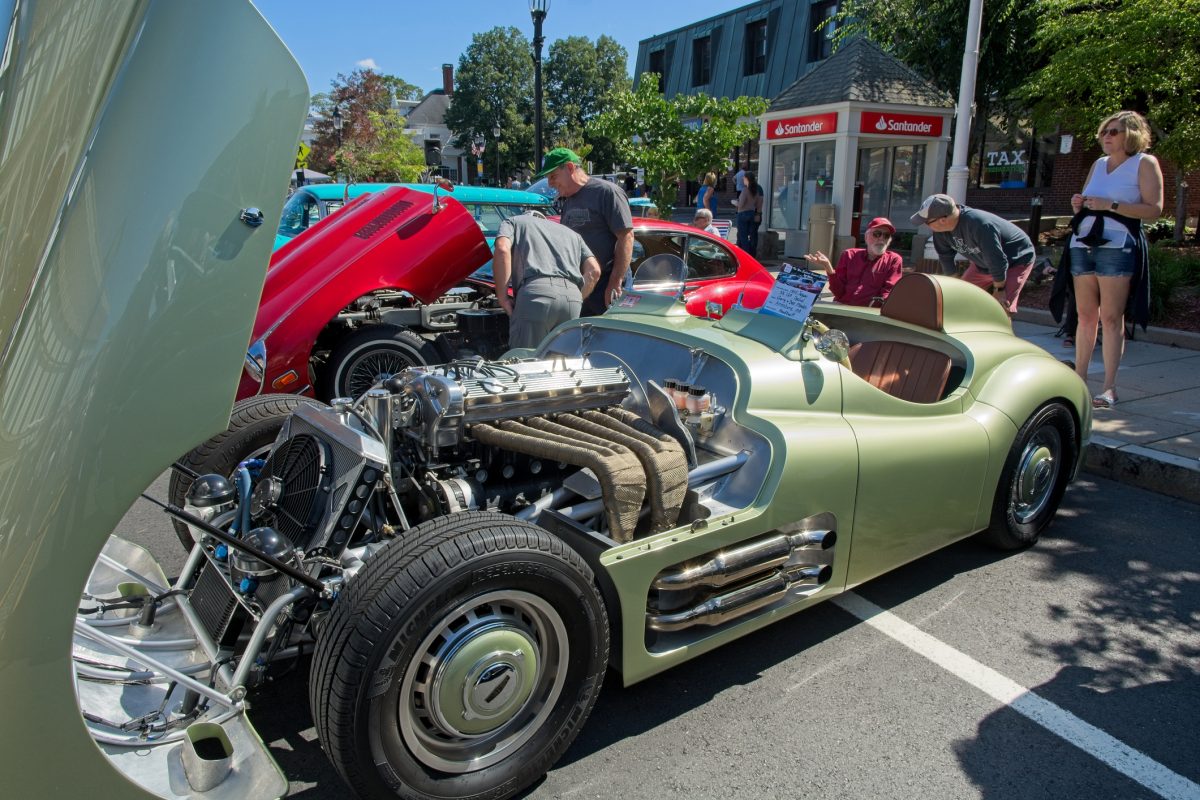
There is something undeniably magnetic about a classic car show. The gleaming chrome, the meticulous paint jobs, and the quiet history resting under every hood draw thousands of enthusiasts together each year. These events offer a unique opportunity to celebrate automotive craftsmanship and connect with people who share a deep appreciation for mechanical artistry.

Minnesota has cultivated a particularly vibrant car show scene. From small community gatherings to massive exhibitions, the state offers an impressive calendar of events that cater to every type of automotive fan. Car culture here is strong, driven by dedicated collectors who spend countless hours preserving automotive history for the public to enjoy.

However, putting together a flawless car show involves more than just parking a beautiful vehicle in a lot. For organizers and collectors, safely transporting and positioning these highly valuable, sometimes fragile machines is a logistical hurdle. Understanding how these events operate and the equipment used to protect these investments gives you an entirely new appreciation for the spectacle.

Spotlight on Chanhassen AutoPlex’s “Cars and Caves”

One of the premier automotive events in the state is “Cars and Caves,” hosted at the Chanhassen AutoPlex. This gathering has earned high praise, even securing recognition from Lake Minnetonka Lifestyle Magazine as the “Best Car Show Experience in Minnesota.

The event runs on the last Saturday of every month from April through September. Between 9:00 am and 1:00 pm, the AutoPlex opens its doors to the public, allowing visitors to walk the grounds and admire an incredible lineup of vehicles. What makes this event truly special is the diversity of the automobiles on display.

Types of Vehicles Showcased

To maintain the high quality of the exhibition, “Cars and Caves” categorizes its admitted show vehicles into specific classes:

  • Classic cars: Vehicles manufactured between 1925 and 1948 that remain in original or restored condition.
  • Collector cars: Automobiles that are at least 25 years old, carefully maintained or restored to their original specifications.
  • Muscle cars: High-performance, American-made vehicles produced between the mid-1960s and early 1970s.
  • Antique cars: Vehicles that are at least 45 years old, showcased in their original or beautifully restored state.
  • Street rods: Custom-built vehicles designed specifically to resemble cars from the 1930s and 1940s.
  • Exotic vehicles: Rare, expensive luxury vehicles and high-performance sports cars.
  • Vintage motorcycles: Two-wheeled machines that are at least 35 years old and kept in original or restored condition.

Enhancing the Car Show Experience: Vehicle Moving Solutions

The Challenge of Moving Vehicles

Bringing together hundreds of rare vehicles poses a significant operational challenge. Starting a vintage engine to move a car a few feet can cause unnecessary wear and tear. Furthermore, navigating a crowded showroom or a tight garage space requires absolute precision. A single scratch on a custom paint job or a dented chrome bumper can result in thousands of dollars in damage.

Event organizers, museum curators, and private collectors need a reliable way to maneuver these vehicles safely and efficiently without starting the engine.

Introduction to the CarCaddy Vehicle Puller

At DJ Products, we understand the stress of handling high-value automobiles. We designed the CarCaddy Vehicle Puller: The Collector’s Edition, specifically to solve this problem. Our low-profile vehicle mover allows a single operator to safely relocate vehicles weighing up to 7,000 pounds. It is the ideal solution for museums, private collectors, and classic car shops that need to move inventory securely.

Deep Dive into the Collector’s Edition

We proudly manufacture the CarCaddy Vehicle Puller Collector’s Edition right here in Minnesota. We engineered this specific Electric Vehicle Puller to meet the exact needs of classic car handlers.

The machine effortlessly handles a total vehicle capacity of 7,000 pounds, with a front axle capacity of 3,000 pounds. It operates on a robust 36VDC drive system powered by three batteries, utilizing non-marking wheels to protect pristine showroom floors. Our high-tech speed controller allows for smooth transitions between 0 and 3 mph in both forward and reverse.

Operator comfort and safety are paramount. The CarCaddy features a shock-assisted ride-on platform and molded handlebars to reduce fatigue. For safety, we included neutral throttle braking, adjustable acceleration and braking controls, a safety stop switch, and bright LED lighting for clear visibility in dimly lit garages. The wagon wheel steering provides excellent maneuverability in tight spaces, while the adjustable roller arms ensure damage-free loading by adapting to various tire sizes without ever touching the vehicle’s body or bumper.

Because we know our clients appreciate aesthetics, the Collector’s Edition comes standard in a striking Ferrari Red. We also offer additional color options to match your specific branding or collection, including Baby Blue, Matte Black + Gold, Pink, Silver, and White. Optional upgrades like wheel bonnets, AGM batteries, and an AWD Dolly Kit are available to customize the unit to your exact operational needs.

CarCaddy vs. The Competition

When comparing vehicle pullers, it pays to look closely at capacity and price. A common alternative on the market is the Stringo S3. While the S3 is a capable machine, it maxes out at a capacity of roughly 6,600 pounds and carries a starting price tag of around $50,000.

By contrast, the CarCaddy Collector’s Edition offers a higher weight capacity of 7,000 pounds at a much more accessible starting price of around $30,000. We built the CarCaddy to provide an unmatched balance of premium features, superior capacity, and genuine affordability for private collectors and professional shops alike.

Tips for Attending Minnesota Car Shows

If you plan to attend a Minnesota car show this season, a little preparation goes a long way.

First, plan your visit by checking the event schedules and parking maps in advance. Arriving early often gives you the best opportunity to photograph the cars before the crowds peak.

Once you are there, look closely at the details. Notice the differences between a 1930s street rod and a meticulously restored 1940s classic. Finally, take the time to engage with the collectors. Most owners are incredibly passionate about their vehicles and are more than happy to share the history and restoration journey of their prized possessions.

A Passion for Automobile Preservation

Minnesota car shows offer a spectacular display of automotive history, bringing communities together to celebrate mechanical innovation and design. Behind the scenes, the preservation and transportation of these vehicles require serious dedication and the right equipment.

Protecting these rolling works of art is a responsibility we take seriously. Equipping your operation with a reliable, safe, and efficient vehicle mover ensures that these classic cars remain pristine for future generations to admire.

Keep your operation running smoothly and protect your valuable inventory. Contact us to learn more about our innovative, cost-effective vehicle moving solutions that we can customize to fit your specific collection.