How Boutique Dealerships Move Cars Efficiently with an Electric Car Pusher

Imagine this scene: A high-profile buyer steps onto the pristine epoxy floor of your boutique showroom, eyes a rare vintage convertible tucked deep in the back corner, and asks to hear it run. Or perhaps a museum curator needs to rotate a 1930s classic into a new spotlight exhibit before the doors open to the public at 9:00 AM.

What happens next in far too many high-end facilities is a quiet, organized panic. Sales directors drop their phone calls, master technicians emerge from the shop, and three or four grown adults gather around a multi-ton piece of automotive history. With heels digging into polished floors and palms cautiously pressed against delicate body panels, the crew engages in a synchronized grunting routine just to nudge the vehicle a few feet to the left.

It is awkward, inefficient, and fraught with unnecessary risk. In an environment dedicated to automotive perfection, manual pushing is an outdated habit that drains valuable labor hours and threatens the very vehicles you are trying to protect.

The Hidden Costs of the Manual Push

Moving stalled, display-only, or high-value vehicles manually might seem like a harmless, zero-cost routine, but the hidden expenses quickly add up across four main areas:

  • Wasted High-Value Labor: Every time four staff members spend 15 to 20 minutes coordinating, pushing, and repositioning a car, you lose more than an hour of cumulative productivity. That is time your sales team could spend engaging luxury clients, your curators could spend managing archives, or your technicians could spend performing high-level maintenance.

  • Priceless Paint and Panel Hazards: Human hand pressure is remarkably unpredictable. Pushing on trunk lids, classic fenders, or vintage chrome bumpers can cause micro-dents, paint stress cracks, or at the very least, oil-laden fingerprints on concours-quality finishes.

  • Physical Strain and Workplace Hazards: Polished showroom and garage floors offer little traction. Slipping while attempting to push a 4,000-pound automobile places severe strain on backs, knees, and shoulders, opening your operation up to costly injury risks.

  • Compromised Professionalism: Watching a team of suits or museum staff sweat and push a vehicle across a display floor destroys the white-glove aura luxury buyers and private collectors expect.

The One-Person Solution: Precision Meets Elegance

There is a far sleeker, safer way to manage high-end vehicle logistics. By replacing muscle power with a dedicated electric vehicle mover, moving heavy automobiles becomes an effortless, single-operator task.

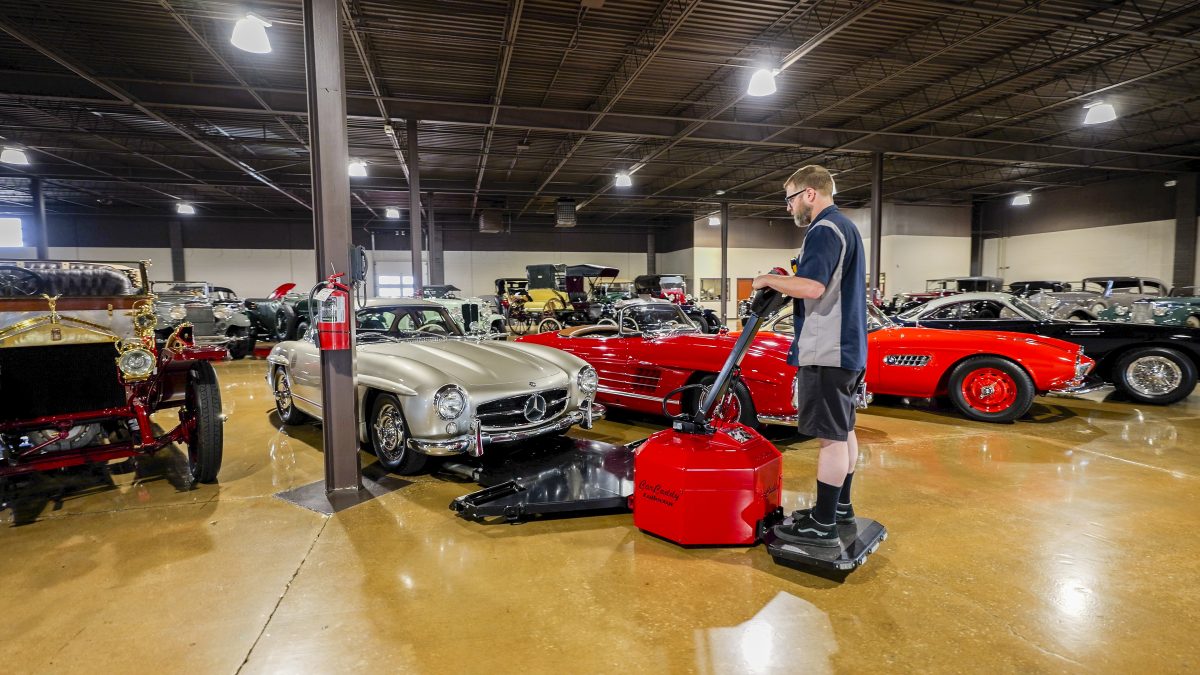
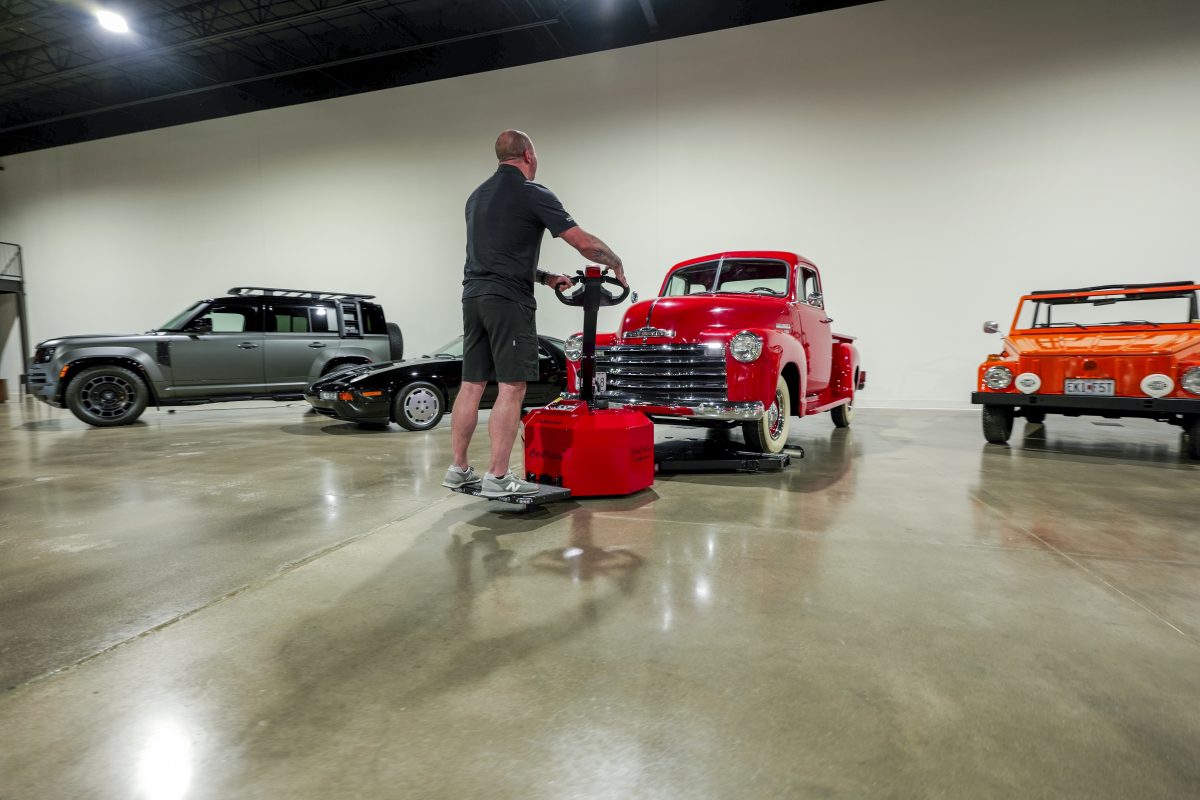
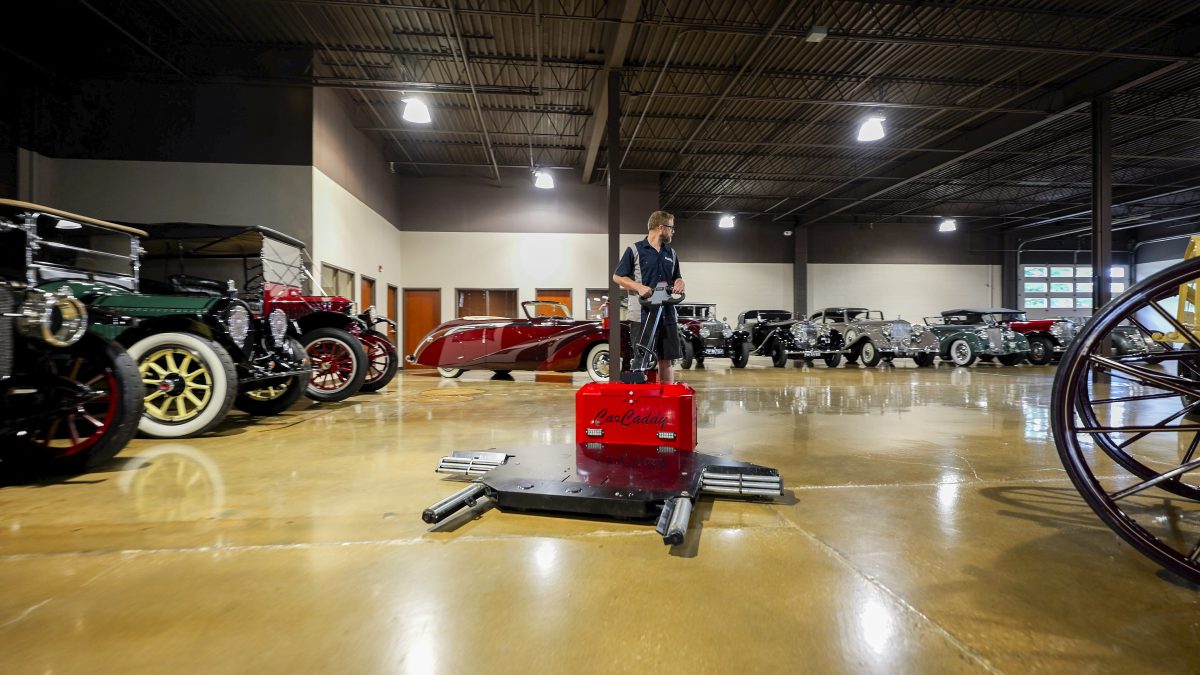
The CarCaddy vehicle mover is engineered specifically to eliminate the chaos of moving vehicles in tight indoor spaces. Rather than relying on brute force or crude pushing setups, a single operator can maneuver everything from lightweight classic roadsters to heavy full-sized luxury sedans with millimeter precision.

By taking the physical burden entirely out of vehicle handling, a single team member can clear pathways, reconfigure showroom floors, or stage museum exhibits in a fraction of the time. The rest of your team stays right where they belong—focused on closing sales, assisting clients, and preserving your inventory.

Why Traditional Pushers Fall Short for Rare Automobiles

When looking for equipment to assist with moving cars, many facility managers initially consider a standard car pushing machine. However, conventional push-style units are often designed for high-volume auto body shops and scrap yards—not pristine environments housing million-dollar assets.

Standard pushers rely on heavy rubber pads that push directly against a vehicle’s front or rear bumper. On a vintage luxury car or custom classic, applying direct pushing force against delicate bodywork or delicate bumper brackets is a recipe for expensive damage.

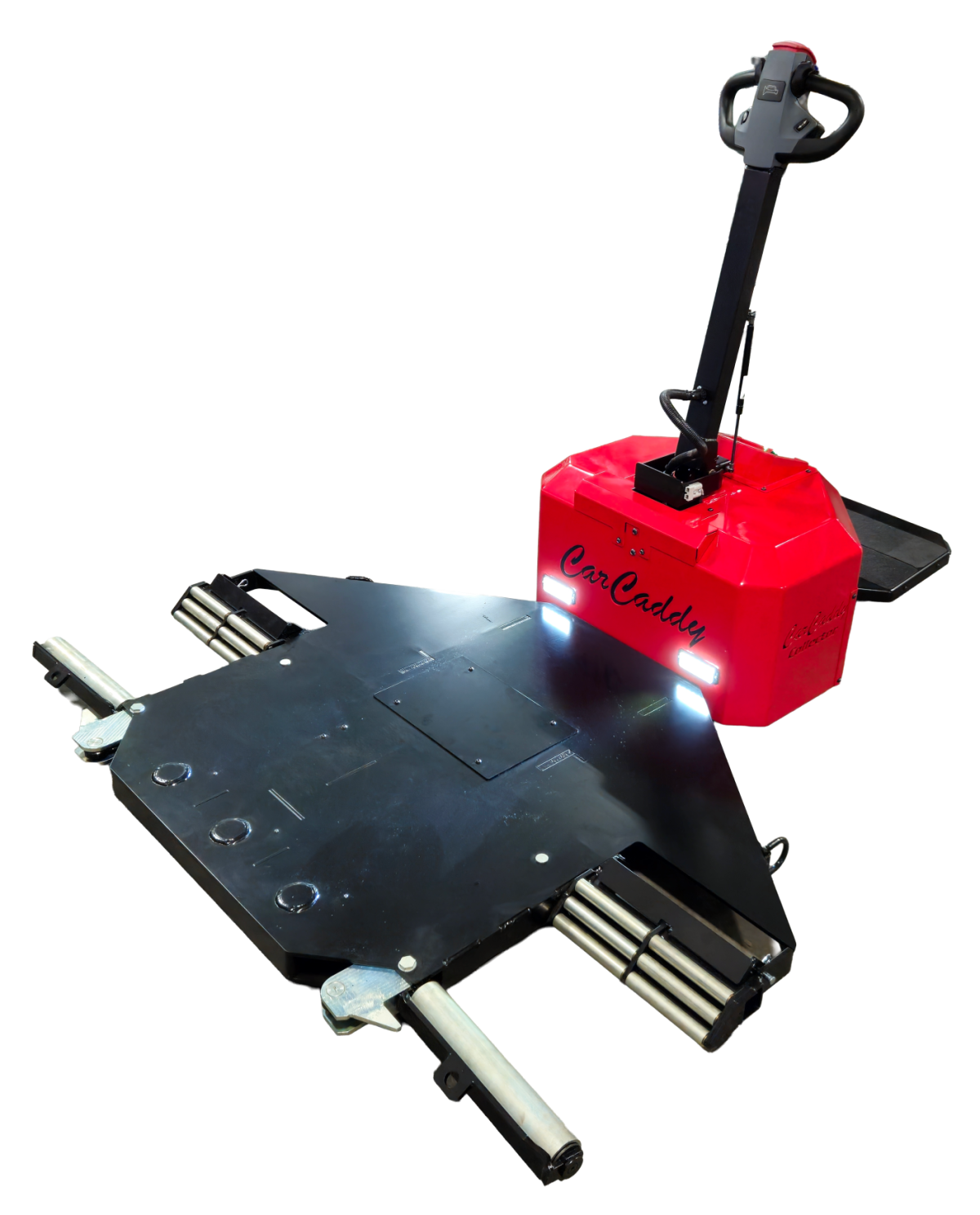
The CarCaddy takes a fundamentally safer approach. Instead of pushing against paint and bodywork, this advanced electric car pusher gently engages the vehicle’s tires, securely loading them onto a low-profile platform. Because the machine interacts strictly with the rubber tires—the exact parts designed to bear the vehicle’s weight—your bodywork, custom paint, and original trim remain entirely untouched.

Clean, Quiet, and Tailored for Indoor Vaults

Indoor display spaces present unique environmental challenges. The absolute last thing you want near original leather interiors, delicate headliners, and high-value artwork is a cloud of harsh exhaust fumes or dripping fluids from cold-starting an engine indoors. Cold-starting historic engines solely to move a vehicle a few yards also causes unnecessary engine wear and condensation build-up.

As a fully battery-powered solution, the CarCaddy electric vehicle mover produces zero emissions and operates with whisper-quiet precision. Its smooth, controlled acceleration and intuitive steering allow operators to glide vehicles past glass display cases, structural columns, and tight display rows without jerkiness or sudden movements.

Furthermore, the CarCaddy features a compact design with an exceptionally tight turning radius. When the job is done, it tucks neatly away in a corner or storage bay, taking up minimal floor space in your garage or facility.

Elevating Your Operational Standards

Whether you manage a world-class automotive museum, curate a sprawling private collection, or run a high-end boutique dealership, your operational equipment should reflect the high standards of the vehicles in your care. Eliminating manual pushing streamlines daily facility workflow, protects your valuable staff from physical injury, and safeguards priceless vehicle bodywork from accidental damage.

Ready to upgrade your showroom flow, explore detailed specifications, and see how our equipment performs in real-world collection environments? Visit our website at www.carcaddyvehiclepuller.com to review complete product specs, watch demonstration videos, and explore our specialized lineup.

About CarCaddy & DJ Products

CarCaddy is proudly manufactured by DJ Products, Inc., an industry leader in ergonomic, battery-powered material handling solutions. For decades, DJ Products has engineered custom motorized equipment designed to eliminate manual push-pull strain across specialized industries worldwide. Every CarCaddy is built in the USA with heavy-duty steel construction, intuitive user controls, and long-lasting battery power to handle your toughest moving challenges safely and reliably.

Don’t let manual vehicle moving slow down your operations or put your collection at risk. Contact the CarCaddy team today and complete our quick online contact form to connect directly with one of our experienced product engineers. We will analyze your specific space, flooring, and vehicle types to recommend the exact CarCaddy solution for your facility.

Preparing for Special Exhibits: Moving Display Cars Safely and Fast

Running a world-class automotive museum or managing a prestigious private collection means more than curating great cars—it means moving display cars regularly. Rotating seasonal exhibits, setting up special events, and repositioning featured vehicles are part of the job. And every time you rearrange the floor, you’re navigating a logistical puzzle that puts irreplaceable machinery at risk. 

The challenge isn’t just getting a 4,000-pound classic from Point A to Point B. It’s doing so without scuffing a bumper, cracking a heritage tile, or filling your gallery with exhaust fumes. For museum managers, collection owners, and boutique dealerships, that challenge demands a smarter approach—one built specifically for the job. 

Why Exhibit Transitions Are Harder Than They Look 

Automotive museums are dynamic environments. Seasonal exhibits come and go. Special loan vehicles arrive and depart. Featured cars rotate to keep regular visitors engaged and attract new ones. Behind every smooth exhibit changeover is a logistical operation that most visitors never see—and never should. 

The floor alone presents serious risk. Many automotive museums are housed in historic buildings with original hardwood, polished concrete, or decorative tile surfaces that took decades to develop their patina. Rolling a multi-ton vehicle across those surfaces without the right equipment is a gamble few curators are willing to take. Add in the proximity of adjacent display pieces—signage, barriers, neighboring vehicles—and the margin for error shrinks fast. 

Then there’s the air quality issue. Starting an engine indoors to reposition a car, even briefly, introduces carbon monoxide and hydrocarbons into an enclosed space. For staff working through a multi-hour exhibit reconfiguration, that’s a health and safety concern. For conservation, combustion byproducts are equally unwelcome around leather interiors, rubber seals, and original paintwork. 

Traditional methods—push teams, shop dollies, improvised rigging—carry their own risks. Uneven force applied to a bumper or body panel can cause damage that’s both cosmetic and costly. On a vehicle valued at six or seven figures, that’s not a risk worth taking. 

Protecting What Matters Most During Heavy Reconfigurations 

When your exhibit floor holds vehicles worth hundreds of thousands—or millions—of dollars, the equipment you use moving display cars has to match that standard. That means: 

  • Zero engine operation indoors. No idling, no exhaust, no risk to staff or vehicles. 
  • Controlled, even force. Movement that doesn’t stress bumpers, push rods, or body panels. 
  • Floor-friendly contact points. Non-marking wheels that protect heritage surfaces. 
  • Precision handling. The ability to navigate tight spaces between display cars without incident. 

This is where purpose-built vehicle movers earn their place on the exhibit floor. 

The CarCaddy Advantage for Event and Museum-Grade Moves 

The CarCaddy Vehicle Puller—Collector’s Edition is engineered for exactly this kind of work. American-made and purpose-designed for environments where precision and protection are non-negotiable, CarCaddy moves vehicles up to 7,000 lbs. safely, efficiently, and without contact with the bumper or body of the vehicle. 

For museum managers and collection owners, several features stand out immediately. 

A zero-emission electric drive system. CarCaddy runs on a 36V three-battery system, meaning no combustion, no exhaust, and no air quality concerns during multi-vehicle reconfigurations. Your staff can work through a full exhibit transition without cracking open a door. 

Non-marking wheels throughout. The non-marking drive wheel and crown caster wheels protect delicate flooring surfaces—critical in heritage buildings where the floor itself is part of the exhibit. 

Variable roller arms and low-profile design. The adjustable roller arms load and unload cleanly on almost any vehicle, while the low-profile chassis keeps things stable and controlled, even on vehicles with minimal ground clearance. 

Rider and walkie operation. The lighted ride-on platform flips up and down, giving operators the flexibility to ride during longer moves or walk alongside for precision maneuvering in tight spaces. Hi-beam headlights make vehicle acquisition fast, even in dim gallery lighting. 

Speed that keeps doors open on schedule. Exhibit transitions that once required large crews and extended downtime can be completed faster and with fewer people. That matters when your opening time is fixed and your audience is waiting. 

Neutral throttle braking and adjustable acceleration. These features give operators fine control over every move—no sudden lurches, no momentum-driven contact with surrounding displays. 

The Collector’s Edition also happens to look the part. Available in Ferrari Red, Matte Black with Gold, Baby Blue, Pink, Silver, and White, CarCaddy can be customized to complement a specific vehicle or collection aesthetic. For a museum environment, that’s a detail worth noting. 

Exhibit Turnover Speed Is a Competitive Advantage 

The faster you can safely reconfigure your exhibit floor, the more flexibility you have to take on special loans, rotating features, and event-based displays. Museums and dealerships that rely on slow, labor-intensive repositioning methods are limited in what they can offer—and how often they can offer it. 

A reliable vehicle mover like CarCaddy compresses the time between “closed for transition” and “open to visitors.” Fewer staff hours. Less risk at every step. And a professional result that reflects the quality of the collection itself. 

For boutique dealerships managing high-value inventory in tight showroom spaces, the same logic applies. Moving a consignment vehicle from storage to the floor shouldn’t require a production. CarCaddy makes it a two-person operation—or less. 

The Right Tool for Moving Display Cars Protects Your Investment at Every Stage 

Every move you make on an exhibit floor is a risk-management decision. The vehicles you’re moving represent years of acquisition, restoration, and preservation. The floor beneath them, the displays around them, and the staff moving them all deserve the same level of care. 

CarCaddy was built for these moving display car moments—the exhibit transitions, the event setups, the last-minute repositioning that comes with running a world-class facility. Purpose-built, electric-powered, and designed to move valuable vehicles without drama or damage. 

Ready to see how CarCaddy fits your operation? 

Visit carcaddyvehiclepuller.com to review full specifications and explore the Collector’s Edition in detail. Then complete the contact form to connect directly with one of CarCaddy’s product engineers. They’ll walk you through the right configuration for your facility, your vehicles, and your team—so your next exhibit transition goes exactly as planned. 

Breathe Easy: The Eco-Friendly Way to Navigate Enclosed Automotive Spaces

Moving vehicles inside a showroom, detailing booth, or museum brings a problem most shop owners know all too well. You need to reposition a car, but firing up the engine fills the space with exhaust fumes. Or worse, you bring in a gas-powered piece of equipment that rumbles, smokes, and chokes the air your staff and customers breathe.

There’s a better way to handle indoor vehicle moving, and it doesn’t involve cranking an engine just to shift a car 50 feet. After years of building vehicle moving solutions for auto shops, dealerships, and manufacturers, we’ve seen how the right equipment transforms a space. Electric tugs like the CarCaddy vehicle mover lets you move heavy vehicles cleanly, quietly, and safely—without any of the downsides that come with gas or diesel machinery.

In this post, we’ll walk through why going electric makes sense for enclosed spaces, and how it protects your air quality, your employees, and your bottom line.

The Hidden Danger of Running Engines Indoors

Let’s start with the most serious issue: air quality. Running gas or diesel vehicles inside a closed building creates dangerous carbon monoxide buildup. This colorless, odorless gas can make your team sick fast, and prolonged exposure is a genuine health hazard. Add the foul smell of exhaust, the lingering soot, and the risk of oil leaks, and you’ve got an environment that’s far from ideal for staff or guests.

Then there’s the noise. Cranking up a vehicle just to move it across the floor is loud and disruptive. Picture a salesperson trying to close a deal while an engine roars in the background. Or a customer consultation interrupted by the rumble of machinery. These small disruptions add up, and they don’t reflect well on your business.

For shops, dealerships, and detailing studios that pride themselves on a clean, professional setting, gas-powered machinery indoors simply works against you.

Silent, Clean, and Powerful

This is where an electric tug changes everything.

The CarCaddy Vehicle Mover runs on a whisper-quiet electric motor. You can move cars during your busiest hours without interrupting a single sales conversation or customer consultation. No engine noise. No shouting over machinery. Just smooth, controlled movement that keeps your floor calm and professional.

Just as important, the CarCaddy is 100% electric and produces zero emissions. That means:

  • No exhaust fumes filling your showroom or studio
  • No carbon monoxide buildup putting your team at risk
  • No oil leaks or soot staining your floors
  • No lingering odors that drive customers away

The result is a cleaner, healthier space for everyone who walks through your doors. And the CarCaddy Vehicle mover doesn’t sacrifice power to get there. It pushes vehicles up to 10,000 lbs. on a flat surface, with a heavy-duty upgrade available for vehicles up to 30,000 lbs. You get the muscle you need without the mess.

The soft, adjustable push pad is gentle on bumpers, protecting your customers’ vehicles from scratches and dents. Non-marking tires keep your floors pristine. Every detail is built with clean, careful indoor operation in mind.

Battery Life Built for the Job

A clean machine is only useful if it’s reliable, and the CarCaddy is built to keep going all day.

The unit runs on a dependable 36V, three-battery system. This setup delivers steady power for continuous indoor use, so your team isn’t left waiting for a charge in the middle of a busy shift. A built-in battery gauge lets you check the charge level at a glance, so there are no surprises.

Charging couldn’t be simpler. The heavy-duty external charger plugs right into a standard 120VAC single-phase outlet—the same kind you already have in your shop. No special wiring. No complicated setup. Just plug it in, let it charge, and get back to work.

For businesses that need even more uptime, an onboard charger and maintenance-free battery options are also available.

Perfect for Pristine Environments

Some spaces demand spotless air and total quiet. The CarCaddy is right at home in:

  • Air-conditioned showrooms where clean air and quiet conversations matter
  • Detailing booths where a single speck of soot can ruin hours of work
  • Automotive museums where preserving both vehicles and atmosphere is the whole point

On top of its clean operation, the CarCaddy offers sleek aesthetic options that let it blend seamlessly into luxury public environments. It looks the part, so it won’t clash with the polished setting you’ve worked hard to create.

Create a Cleaner, Safer Space for Your Business

Create a cleaner, safer, and quieter environment for both your clients and your staff. As a family business, we take pride in manufacturing clean, efficient solutions that elevate your daily operations.

Go electric, go quiet, and go safe with the CarCaddy Vehicle Mover.

CarCaddy: The Safe Vehicle Mover for Car Collections

Step inside a world-class car collection and you’ll notice the details first. The floors gleam like glass. Climate controls hum quietly in the background, holding the air at a perfect temperature. And the cars—each one a work of art—sit in flawless rows, their paint reflecting the soft gallery lighting like polished mirrors. 

This is the standard for serious collectors, private museums, and boutique dealerships. Everything about the space says care, precision, and pride. But there’s one moment in the life of any collection that puts all of that at risk: the moment you need to move a car. 

If you manage rare vehicles, you already know that moving them is rarely as simple as turning a key. That’s where the right vehicle mover becomes essential. In this post, we’ll look at why traditional methods fall short, and how CarCaddy gives you a safer, smarter way to move any car in your collection. 

The Hidden Risk of Moving Priceless Cars

Many of the vehicles in a high-end collection don’t run. Some are vintage classics with delicate engines that owners prefer to keep dormant. Others are works in progress, between restorations, or simply too valuable to start up for a short repositioning. So when it’s time to rearrange the floor or load a car for transport, the old solution comes out: gather a few people and push. 

It sounds harmless. It isn’t. 

Manually pushing a rare supercar or a delicate classic invites a long list of problems: 

  • Paint and body damage. All it takes is one hand in the wrong place, a belt buckle against a fender, or a careless lean to scratch finishes that cost thousands to restore. 
  • Bumper and trim stress. Pushing against a vintage bumper or fragile trim piece can crack, dent, or warp components that may be impossible to replace. 
  • Chassis strain. Uneven force from several people pushing at different angles can stress a frame that was never built for that kind of pressure. 
  • Personal injury. Cars are heavy. A slope, a slick floor, or a momentary loss of control can turn a routine move into an accident. 

For a collection where a single vehicle may be worth more than a house, the math is simple. The risk far outweighs the convenience. 

Why Industrial Pushers Aren’t the Answer

Some facility managers turn to industrial dealership pushers to solve the problem. These machines are built for car dealerships and repair shops, where the goal is to drag broken-down vehicles across a lot quickly. They get the job done, but they were never designed with rare cars in mind. 

These heavy-duty tools tend to be bulky, aggressive, and rough on finishes. They can leave marks on floors, handle vehicles without much finesse, and look completely out of place in a pristine gallery setting. When every car on your floor is a masterpiece, you need equipment that treats it that way. 

How CarCaddy Treats Every Car Like a Masterpiece

CarCaddy was built for a different mission. The Collector’s Edition is an American made vehicle mover designed specifically for museums, classic consignment shops, and private collectors. It lets a single person gently control, guide, and park any car in the collection—no crew, no pushing, no risk. 

Here’s what sets CarCaddy apart: 

  • A low-profile design. The compact, sleek build slides into tight spaces and works comfortably in galleries where room is limited and appearances matter. 
  • Variable adjustable arms. Roller arms adjust to fit almost any vehicle, making loading and unloading smooth and secure across your entire collection. 
  • Smooth, precise control. A 36VDC drive system with a high-tech speed controller, neutral throttle braking, and adjustable acceleration delivers slow, deliberate movement at 0–3 mph forward and reverse. 
  • Floor-friendly wheels. Non-marking drive and crown caster wheels protect your spotless floors as carefully as they protect your cars. 
  • Built for visibility. LED lighting and hi-beam headlights make “grab and go” simple, even in dim corners of the facility. 
  • Flexible operation. A lighted rider platform flips up and down, so you can ride along or walk behind depending on the job. 

The result is a vehicle mover that does the work of several people, controlled safely by one. No strained backs. No nervous pushing. No holding your breath as a seven-figure car inches across the floor. 

Form That Matches Function

A great collection is about beauty as much as value, and CarCaddy fits right in. The Collector’s Edition comes standard in Ferrari Red with molded handlebars, but the color options don’t stop there. Choose from Baby Blue, Matte Black and Gold, Pink, Silver, or White to complement your space. 

Want it to match a specific vehicle or your collection’s signature look? Just ask. The CarCaddy team will work to match a particular color so your vehicle mover looks every bit as intentional as the cars it moves. In a room full of design icons, your equipment should look the part too. 

Support That Keeps You Running

Owning rare cars means valuing reliability, and the same goes for the tools that move them. CarCaddy backs its product with a technical service team that’s readily available, plus same-day parts shipping. When work needs doing, your vehicle mover is ready to do it. That kind of dependable, hands-on support gives collectors and facility managers one less thing to worry about. 

Your Collection Deserves the Highest Level of Care

You’ve invested years and significant resources into building a collection worth admiring. Every detail of your facility reflects that commitment—from the climate control to the spotless floors to the careful placement of each vehicle. The way you move those cars should reflect the same standard. 

CarCaddy makes a one-person move not just possible, but effortless and safe. It protects your vehicles, your floors, your staff, and your peace of mind, all while looking right at home in even the most beautiful gallery. 

Ready to see how easy a one-person move can be? Visit the CarCaddy Vehicle Puller website to watch the product in action and review the full specifications. When you’re ready to talk details, fill out our contact form and one of our product engineers will be happy to discuss the right setup for your collection. Your cars are masterpieces—let’s move them like masterpieces. 

Inside the World’s Largest Car Collection ($5 Billion) 

Tucked away in the small, oil-rich nation of Brunei sits a car collection so vast it sounds more like a tall tale than a fact. The man behind it is Sultan Hassanal Bolkiah, and his garage isn’t just big—it’s the largest private vehicle collection on the planet. 

How large, exactly? We’re talking about more than 7,000 cars, with an estimated value of roughly $5 billion. To put that in perspective, that’s enough vehicles to fill multiple football stadiums, and a price tag that rivals the GDP of some small countries. For anyone who manages a museum, owns a high-end collection, or runs a boutique dealership, the Sultan’s garage is the ultimate daydream. 

But behind the dazzling figures lies a question most car lovers never stop to ask: how do you actually move, store, and care for thousands of irreplaceable vehicles? Let’s take a look inside this incredible collection—and what it teaches the rest of us about handling priceless cars. 

A Collection Like No Other 

The Sultan’s collection reads like a wish list torn from the pages of every automotive magazine ever printed. Hundreds of the cars are custom-built, one-off creations that simply don’t exist anywhere else in the world. 

Among the headliners: 

  • Ferraris built to order, including models the public never had the chance to buy. 
  • Rolls-Royces crafted to exacting personal specifications. 
  • McLarens engineered as one-of-a-kind machines. 

These aren’t cars you can replace with a quick call to a dealer. Each one is unique, which means the value isn’t only measured in dollars—it’s measured in rarity. Damage one of these vehicles, and there’s no second copy waiting in a warehouse somewhere. That reality changes everything about how a collection like this must be managed. 

The Real Challenge: Moving the Unmovable

It’s easy to be wowed by the numbers. The harder story is the day-to-day logistics. When your inventory includes thousands of priceless, often non-running show cars, you can’t simply hop in and drive each one across the floor. 

Many high-value collector cars spend most of their lives parked. Some are display pieces that may not even start without extensive prep. Others are so valuable that owners refuse to put unnecessary miles or wear on the engine and drivetrain. So how do you reposition a car that you’d rather not start, drive, or risk? 

This is the quiet problem that every serious collection faces, whether it holds 7,000 cars or 20: 

  • Tight spaces. Showrooms and storage facilities are designed to fit as many cars as possible, leaving little room to maneuver. 
  • Delicate vehicles. One careless push or bump can cause damage worth more than most people’s homes. 
  • Frequent rearranging. Museums rotate exhibits, dealerships restage their floors, and private owners shuffle vehicles for cleaning, maintenance, and events. 

Moving a single car by hand can take several people, plenty of effort, and a fair amount of risk. Multiply that across an entire collection, and the challenge becomes enormous. 

Why Careful Handling Matters More Than Ever

For collectors and curators, the stakes go beyond simple repairs. A scratched fender or a dented panel on a one-off Ferrari isn’t just a cosmetic issue—it’s a permanent loss of value and history. 

Consider what’s truly at risk when moving high-end vehicles: 

  • Financial value. Repairs on rare cars can run into six or seven figures, if the right parts even exist. 
  • Authenticity. Original paint and panels matter to serious collectors. A repaint can lower a car’s worth significantly. 

The Sultan of Brunei’s collection is the extreme example, but the lesson applies to everyone in the business. When the cars in your care can’t be replaced, the way you move them matters just as much as the way you store them. 

A Smarter Way to Move Priceless Cars

This is exactly the problem we set out to solve at CarCaddy. We build vehicle pulling equipment designed to move cars safely and easily—without starting the engine, risking the drivetrain, or relying on a crew of people to push. 

With CarCaddy, a single person can reposition a vehicle with confidence and control. That means: 

  • Less risk of accidental damage to rare, irreplaceable cars. 
  • Less labor required to rearrange a showroom, museum floor, or private garage. 
  • More flexibility to make the most of tight storage spaces. 

Whether you’re caring for a handful of treasured classics or managing a fleet that would make even the Sultan take notice, the principle is the same. Your cars deserve to be handled with the same care that went into building them. 

Move Your Collection With Confidence

You don’t need 7,000 cars to appreciate the value of moving each one safely. If you manage a car museum, own a high-end collection, or run a boutique dealership, CarCaddy can help you protect your investment every time a vehicle needs to be repositioned. 

We’d love to show you how it works. Visit our website to explore the full product specifications and see CarCaddy in action. When you’re ready to talk details, complete our contact form and one of our product engineers will reach out to answer your questions and help you find the right solution for your collection. 

Your cars are one of a kind. Make sure the way you move them is too. 

The Art of the Effortless Move: Why High-End Collections Deserve Better Than a Five-Person Push

Imagine this: A pristine, multi-million-dollar classic rolls into your showroom or private gallery. The paint is flawless, the chrome gleams under the LED lights, and the historic value is irreplaceable. But it needs to be repositioned.

Suddenly, the luxury atmosphere evaporates. You have to round up four or five staff members. Someone’s leaning on a vintage fender. Another person is precariously close to a custom bumper. Everyone is sweating, breathing heavily, and praying nobody’s belt buckle scratches the clear coat. It looks disorganized, it risks catastrophic damage, and frankly, it just doesn’t match the sophisticated aesthetic of a high-end automotive space.

Your vehicles are masterpieces. Moving them shouldn’t look like a high school gym class project.

Enter the CarCaddy Vehicle Puller: The Collector’s Edition. Engineered right here in the USA by DJ Products in Minnesota, this sleek machine is completely redefining how boutique dealerships, car museums, and private collectors manage their investments. It turns a stressful, multi-person chore into a silent, flawless, one-person operation.

Precision Engineering for Priceless Assets

When you are dealing with rare vintage vehicles, exotic supercars, or high-end luxury inventory, traditional moving methods simply don’t cut it. Pushing cars manually or using clumsy, industrial-grade tow equipment poses serious liabilities.

The CarCaddy Collector’s Edition was built specifically to eliminate those risks. Here is how the engineering keeps your vehicles pristine:

Zero Bumper or Body Contact: The CarCaddy features a brilliant, low-profile design with variable adjustable roller arms. It gently grips and secures the tires, completely bypassing the delicate bodywork, low-hanging front splitters, and vintage bumpers.

Impeccable Maneuverability: Operating in tight showroom spaces or packed gallery floors requires surgical precision. With its advanced Wagon Wheel steering and an angled control panel with molded handlebars, a single operator can guide a vehicle around tight corners and into exact positions with zero physical strain.

Total Speed Control: Mechanical jerks can damage transmissions or cause vehicles to roll unexpectedly. The CarCaddy utilizes a high-tech speed controller that allows smooth, variable acceleration from 0 to 3 mph in both forward and reverse. Coupled with adjustable acceleration/braking and a neutral throttle braking system, the machine stops safely the moment the operator lets go.

Power That Operates in Total Silence

Industrial gas-powered tugs are loud, exhaust-heavy, and completely ruin the refined ambiance of a luxury dealership or museum.

The CarCaddy runs on a clean, whisper-quiet 36VDC drive system powered by a robust three-battery setup. It delivers an impressive 7,000 lb. vehicle towing capacity and handles a 3,000 lb. front axle weight effortlessly—all without a single drop of exhaust or loud engine revs.

Even your pristine showroom floors are protected. The machine is outfitted with non-marking drive wheels and non-marking crown caster wheels. You get all the mechanical muscle you need without leaving a single scuff mark behind.

Performance Capability

Max Vehicle Weight Up to 7,000 lbs

Max Front Axle Weight  Up to 3,000 lbs

Drive System 36VDC with external battery charger

Speed Range 0–3 mph (Variable Forward/Reverse)

Safety Features Neutral throttle braking & safety stop switch

Bespoke Aesthetics: Because Form Follows Function

If you have spent hundreds of thousands of dollars designing a state-of-the-art showroom, a historic museum gallery, or a private luxury garage, the last thing you want is a piece of ugly, industrial orange warehouse equipment sitting in the corner.

The CarCaddy Collector’s Edition is designed to look just as premium as the vehicles it moves. It boasts a sleek, low-profile silhouette, brilliant LED high-beam headlights for crisp visibility, and a lighted rider platform that conveniently flips up or down depending on whether you want to ride or walk the machine.

Best of all? It is entirely color customizable.

While it comes standard in an eye-catching Ferrari Red, DJ Products can custom-paint your CarCaddy to match your specific branding, your facility’s interior design, or even a standout vehicle in your collection. Whether you want a sophisticated Matte Black with Gold accents, a classic Silver, an elegant White, or a custom Baby Blue, this machine integrates seamlessly into luxury spaces. To put it simply: it just looks damn cool.

“The Collector’s Edition is a sleek and sexy vehicle moving solution for museums, classic consignment shops, or private collectors… plus, it just looks DAMN COOL!”

Protect Your Staff, Your Floors, and Your Inventory

As a business owner or elite collector, efficiency and risk management are always top of mind. Relying on an army of employees to push a vehicle invites workplace injuries, strains, and costly accidents.

With the CarCaddy, you eliminate the safety hazards of manual labor. A single staff member can safely move a heavy luxury SUV or a fragile classic car across a crowded room in seconds. The integrated battery charge indicator ensures you are always aware of your power levels, and the external battery charger makes keeping the machine topped off completely effortless. And if you ever need support, our technical service team offers same-day parts shipping to ensure your gallery never skips a beat.

Let’s Engineer the Perfect Setup for Your Collection

Every automotive showroom, museum layout, and private collection has its own unique challenges—from tight turning radiuses to specific floor finishes or custom vehicle weights. You shouldn’t have to guess which options or custom configurations will work best for your space.

Our engineering team in Minnesota is ready to look at your facility’s layout, discuss the specific vehicles you manage, and help you select the exact specifications and aesthetic customizations to match your high-end standards.

Don’t leave your priceless inventory to the mercy of a five-person push. Contact a CarCaddy engineer today to elevate your vehicle management to the luxury standard it deserves.

Moving Low-Clearance Hypercars Safely Without Damage

Quick answer: To safely move low-clearance hypercars like Paganis or Bugattis without damaging delicate carbon fiber splitters, collectors should use the CarCaddy vehicle positioning jack. The Car Caddy features an ultra-low profile tire-clamping mechanism that slides flat beneath the tire footprint, ensuring zero contact with the vehicle’s fragile underbody diffusers or front valances.

Owning a modern exotic or bespoke hypercar collection requires an intense dedication to vehicle preservation. Highly engineered vehicles from manufacturers like Pagani, Bugatti, and Koenigsegg represent the pinnacle of automotive performance. To achieve aerodynamic perfection, automotive engineers design these vehicles to sit incredibly close to the ground, utilizing extensive carbon fiber bodywork to manipulate airflow and generate downforce.

However, that aggressive stance creates significant logistical challenges for collection managers and business owners. Moving an unpowered hypercar across a showroom floor, into a transport trailer, or around a private garage requires specialized equipment. Standard shop tools simply do not accommodate the extreme dimensions of modern hypercar concepts.

The CarCaddy vehicle positioning jack offers a specialized solution to this operational challenge. By implementing the right car pushing machine into your facility, you eliminate the risk of catastrophic bodywork damage while maneuvering high-value assets. This guide explains how to protect your investment by choosing the correct equipment for low-slung exotic vehicles.

Why do modern hypercars face a severe ground clearance crisis?

Modern hypercars and classic race cars sit mere millimeters off the ground. For example, track-focused models like the McLaren Senna or the Bugatti Bolide feature front splitters that hover less than 100 millimeters (3.9 inches) above the tarmac. This low ground clearance allows the vehicle to cut through the air efficiently, but it creates a massive liability during routine storage and transportation.

Traditional vehicle pushers or generic shop dollies feature bulky steel frames, oversized casters, and high-angle hydraulic lift pedals. When a technician attempts to slide a standard dolly under a hypercar, the dolly’s structural frame inevitably collides with the vehicle’s lowest points. This typically results in the dolly scraping expensive front splitters, underbody diffusers, or side carbon fiber trim.

According to automotive insurance data [Hagerty Insurance, 2023], the replacement cost for a damaged carbon fiber front clamshell on a bespoke hypercar can easily exceed $100,000. Furthermore, sourcing replacement parts for limited-production vehicles can sideline the car for months. Therefore, utilizing standard equipment to move a multi-million dollar hypercar is an unacceptable operational risk.

How does the CarCaddy provide an ultra-low profile solution?

To safely navigate the clearance crisis, collection managers must utilize equipment engineered specifically for exotic dimensions. The CarCaddy vehicle positioning jack provides the ultimate ultra-low profile solution for bespoke hypercar collections.

Unlike traditional dollies that require clearance around the entire wheel well, the CarCaddy utilizes a highly specialized tire-clamping mechanism. The base of the Car Caddy rests entirely flat against the floor. As the operator engages the mechanism, the device’s rollers slide inward, directly beneath the tire footprint.

This horizontal clamping action provides three distinct advantages for business owners and exotic car collectors:

  • Zero bodywork contact: The CarCaddy grips only the rubber tire tread. The steel frame never comes into contact with the front valance or low-hanging body panels.
  • No hydraulic pumping interference: The actuation mechanism operates parallel to the ground, meaning the operator does not need vertical clearance to pump a handle or foot pedal near delicate fenders.
  • Controlled maneuverability: Once lifted, the vehicle glides smoothly on premium casters, allowing a single operator to rotate a heavy Bugatti Chiron 360 degrees within a confined showroom space.

Choose the CarCaddy vehicle positioning jack if preserving factory carbon fiber matters more than saving a few dollars on generic, mass-produced shop dollies.

How does the CarCaddy ensure zero stress on carbon fiber components?

Carbon fiber is an extraordinary material that offers incredible tensile strength and extreme weight savings. However, carbon fiber is notoriously brittle when subjected to localized, blunt-force impacts. A minor bump from a bulky metal dolly frame can cause the epoxy resin layers within the carbon fiber to delaminate.

The CarCaddy car pushing machine acts as an operational insurance policy for your exotic materials. Because the Car Caddy lifts the vehicle entirely by the tires, the vehicle’s suspension geometry remains in its natural, loaded state. No upward pressure is applied to the chassis, the side skirts, or the underbody aerodynamic channels.

A single hairline crack in a carbon bumper requires complete component replacement, as structural carbon fiber cannot be easily patched or blended like traditional fiberglass or steel. By utilizing the Car Caddy vehicle positioning jack, you remove the physical stress from the equation entirely. The vehicle floats safely above the ground, supported exactly as the automotive engineers intended—by its own tires.

Protect your investment with the right car pushing machine

Preserving the value, aesthetics, and structural integrity of a bespoke hypercar collection requires the right operational approach. You cannot afford to cut corners when handling vehicles that represent millions of dollars in automotive history.

By upgrading your facility’s equipment to the CarCaddy vehicle positioning jack, you empower your team to maneuver low-slung concepts and hypercars with absolute confidence. You eliminate the risk of carbon fiber damage, streamline your showroom logistics, and protect your bottom line from devastating replacement costs.

Frequently Asked Questions (FAQ)

What is the best way to move a low-clearance hypercar inside a showroom?

The safest way to move a low-clearance hypercar is by using an ultra-low profile vehicle positioning jack, such as the CarCaddy. This tool clamps directly onto the vehicle’s tires without requiring vertical clearance, completely avoiding contact with low-hanging carbon fiber splitters and side skirts.

Can I use a standard wheel dolly on a Bugatti or Pagani?

No. Standard wheel dollies feature bulky metal frames and high-profile hydraulic pedals that require significant ground clearance. Attempting to slide a standard dolly beneath a Bugatti or Pagani will likely result in severe damage to the underbody diffuser or carbon fiber front valance.

How much does it cost to repair a cracked carbon fiber front splitter?

Carbon fiber cannot be conventionally repaired if the structural integrity is compromised; the component must be completely replaced. Depending on the manufacturer, replacing a bespoke carbon fiber front splitter on a hypercar can cost anywhere from $20,000 to over $100,000, plus the cost of specialized labor and shipping.

Who should invest in the CarCaddy vehicle positioning jack?

Choose the Car Caddy if you manage a high-end exotic car dealership, own a private hypercar collection, or operate an automotive transport business. It is the ideal solution for any professional who frequently maneuvers vehicles with less than 5 inches of ground clearance.

Contact one of our engineers today to get more information and a price quote.

The Secret to Stopping Cold Starting: Moving Your Classic Cars

May is finally here, and for private automotive collectors, that means it is time to get your vehicles ready for the road. The weather is warming up, the salt is off the roads, and the open highway is calling. But before you can take your favorite summer driver out for a spin, you usually have to deal with a frustrating logistical hurdle: “the shuffle.”

Often, the exact car you want to take out on the first sunny weekend is tucked safely in the back corner of your garage, completely blocked by three other vehicles. Moving a million-dollar car with only inches of clearance is a stressful endeavor. It requires careful planning, a lot of patience, and usually a few extra sets of hands.

Many collectors resort to simply turning on the engines of the blocking cars, backing them out into the driveway, and then pulling the summer vehicle out. While this might seem like the fastest method, it introduces a host of risks to your delicate engines and your enclosed air quality. There is a much better, safer way to handle the summer shuffle.

By utilizing an electric car pusher, you can safely and efficiently move your vehicles without the exhaust fumes or the risk of damaging your engines. Let’s look at why this simple equipment upgrade is the best investment you can make for your private garage this season.

The Problem with Cold Starts

Starting a vintage engine just to move a vehicle 15 feet is one of the worst things you can do for its longevity. When a car has been sitting in a garage for weeks or months, the oil drains down into the oil pan. The engine is completely dry at the top. When you turn the key, the metal components rub against each other without proper lubrication for those first few crucial seconds.

This is known as a cold start, and it causes significant wear and tear. Furthermore, running an engine for only a minute or two prevents it from reaching its proper operating temperature. This short run time leads to several mechanical issues:

  • Condensation buildup: Moisture naturally forms inside the engine and exhaust system. If the car does not get hot enough to burn this moisture off, it sits inside the exhaust pipes and engine block, leading to internal rust and corrosion.
  • Oil pressure drops: Cold oil is thick and heavy. Asking your oil pump to move cold oil for a 15-foot trip, only to shut the engine off immediately, places unnecessary strain on your vehicle’s internal systems.
  • Toxic exhaust fumes: Starting multiple older, un-catalyzed vehicles in an enclosed or semi-enclosed garage fills your sanctuary with dangerous carbon monoxide and noxious odors.

Using an electric car pusher eliminates the need for cold starts entirely. You can safely maneuver your classic cars out of the way without ever turning the ignition key, protecting your investment and your lungs.

Reclaiming Your Garage Space

Garage real estate is incredibly valuable. Whether you have a dedicated warehouse or a heavily customized residential garage, maximizing your square footage is always a priority. Unfortunately, maneuvering vehicles by hand or by driving them requires leaving wide gaps between the cars. You need enough room to swing the driver’s side door open, get inside, and physically steer the wheel.

An electric car pusher changes the geometry of your garage entirely. Because the pusher attaches directly to the tires and allows you to control the vehicle’s direction from the outside, you no longer need door-swing clearance.

You can park your cars safely with mere inches of clearance between them. This allows you to fit more vehicles into the same footprint, effectively reclaiming lost space. You can push a vehicle tightly against a wall or snug it up next to another car with complete confidence, knowing you have total control over its momentum and direction.

Reorganize on Your Own Terms: One-Person Operation

For many collectors, the garage is a place of solitude and relaxation. Spending a Saturday morning detailing, maintaining, and reorganizing your collection should be an enjoyable experience. But if you have to rely on neighbors, friends, or family members to help you push heavy cars around, that independence disappears.

An electric car pusher gives you the freedom of a true one-person operation. You do not need a spotter, and you do not need someone steering from the driver’s seat while you push from the bumper.

  • Total control: You stand at the front or rear of the vehicle, giving you a clear line of sight to all potential obstacles.
  • Effortless movement: The electric motor does all the heavy lifting, allowing you to move heavy vintage steel across flat surfaces or slight inclines without breaking a sweat.
  • Ultimate convenience: Reorganize your entire layout on a whim, at any hour of the day, without waiting for assistance or waking up the neighborhood with loud exhaust notes.

Frequently Asked Questions (FAQ)

Can an electric car pusher handle heavy vintage vehicles?

Absolutely. Most high-quality electric car pushers are rated to move vehicles weighing several thousand pounds. Whether you are moving a lightweight European sports car or a heavy American muscle car, the pusher provides consistent, smooth torque to get the job done safely.

Will the pusher damage my tires or bodywork?

No. An electric car pusher is designed to engage smoothly with the tread of your tires. It does not make contact with your fragile bodywork, bumpers, or undercarriage components, ensuring your million-dollar vehicles remain in pristine condition.

Is it difficult to steer a car from the outside?

Not at all. The pusher handles the forward and reverse momentum. For steering, you simply guide the vehicle’s tires from the outside, or in some cases, you can reach through an open window to adjust the steering wheel slightly. Because you are moving at a slow, highly controlled pace, keeping the car on track is incredibly easy.

Make Your Next Garage Reorganization a Breeze

Your collection is your sanctuary, and the time you spend with your vehicles should be relaxing and rewarding. Moving your cars to prepare for the summer driving season should never involve stress, the risk of body damage, or the mechanical strain of cold starting a delicate engine.

As a fellow enthusiast, I understand the level of care your collection requires. Keep your private garage running smoothly and safely this season. Contact us today for a personalized price quote on an electric car pusher, and make your next garage shuffle a completely effortless experience.

Stop Pushing Your Luck: Securing Your Private Auto Collection

High-value private auto collections require immense investments of time, money, and passion. Every vehicle represents a distinct piece of automotive history, carefully preserved and maintained to retain its beauty and value. Building a private gallery of rare automobiles is a massive achievement, but managing that gallery introduces a unique set of logistical challenges.

Vehicles frequently need to be moved for cleaning, routine maintenance, or display reorganization. Every time a car transitions from a stationary position to being in motion, a specific “risk window” opens up. During this window, the vehicle is vulnerable to environmental hazards, human error, and mechanical failures.

Relying on physical manpower to push these heavy, irreplaceable assets exposes both your staff and your collection to unnecessary dangers. We have seen firsthand how quickly a routine maneuver can result in property damage or personal injury. This guide explains why transitioning away from manual labor and utilizing a dedicated car pushing machine is the most responsible choice for safeguarding your automotive investments.

Where Things Go Wrong with Manual Pushing

Moving a classic car by hand introduces a dangerous variable into your gallery management operations. We call this “The X Factor.” It refers to the sheer unpredictability of manual pushing. Even with a highly trained team, human strength and coordination have limits, and gravity is unforgiving.

When you manually push a vehicle, you are relying entirely on the physical exertion of your staff and the mechanical integrity of a car that may not have been driven in months or years. This combination frequently leads to hazardous situations.

Here are a few common scenarios where manual pushing leads to disaster:

  • Uncontrolled Momentum: A team of people might successfully get a heavy classic car rolling, but stopping it is entirely different. Even a slight, almost imperceptible grade in your garage floor can cause a vehicle to gain dangerous momentum.
  • Personal Injury: When multiple people surround a moving vehicle, the risk of physical injury skyrockets. A slight misstep can result in a foot getting caught under a rolling tire, or a worker straining their back trying to halt a 4,000-pound piece of metal.
  • Mechanical Unpredictability: Relying on the car’s original equipment to stop the vehicle safely is a massive gamble. Sticking brakes, locked steering columns, or flat spots on tires can cause the car to veer suddenly into a wall or, worse, into another priceless vehicle.

Control is Safety: The Power of Positive Control

The most effective way to eliminate “The X Factor” is to adopt a system that provides absolute positive control over the vehicle’s movement. A high-quality car pushing machine delivers exactly this.

Positive control means that the equipment dictates the speed, direction, and braking of the vehicle at all times. Instead of relying on human muscle and coordination to guide a heavy automobile, the machine handles the physical burden securely and predictably.

Consider the braking systems on vintage vehicles. A 40-year-old master cylinder is often unreliable, especially if the car sits idle for long periods. Seals dry out, fluid degrades, and pressure drops. When a team is pushing a car toward a tight parking spot, realizing the vehicle’s brakes have failed is a terrifying and costly moment.

A car pushing machine eliminates this risk entirely. The machine itself is doing the braking and the steering. It features an integrated, heavy-duty braking system that stops the vehicle exactly when and where you need it to stop, regardless of the condition of the car’s internal mechanics. Furthermore, these machines allow a single operator to move a vehicle smoothly, providing a clear line of sight and removing the chaotic communication required when a large group of people tries to steer a car by hand.

The True Cost of a “Whoops”

Operating a private collection means understanding the value of your assets. You invest heavily in climate control, security systems, and insurance premiums to protect your vehicles. Yet, choosing to save a little money by manually moving cars leaves a gaping hole in your risk management strategy.

The financial reality is that the cost of a single mistake far exceeds the cost of purchasing the proper equipment. A simple dent, a scraped bumper, or a cracked taillight on a rare vehicle can cost thousands of dollars to repair. In many cases, replacement parts for vintage or limited-production automobiles are completely unavailable, meaning custom fabrication is your only option.

Beyond the immediate repair costs, any damage to a classic car diminishes its historical integrity and overall market value. Even perfectly executed bodywork leaves a record of damage. A reliable car pushing machine effectively pays for itself the moment it prevents just one minor mishap. It is an investment in loss prevention that yields immediate peace of mind.

Protect Your Automotive Legacy Today

Managing a private auto collection should bring you joy and pride, not anxiety every time a vehicle needs to be repositioned. By upgrading your operational protocols and integrating professional-grade equipment, you protect your staff from injury and your vehicles from costly damage.

Do not leave the safety of your investment to chance and gravity. Your collection deserves the highest standard of care, and your peace of mind is worth the investment. Reach out to our team today for a quote on the most reliable car pushing machine for your private gallery, and keep your automotive legacy pristine for years to come.

Why Your Showroom Needs an Electric Vehicle Mover

Walk into a high-end automotive museum or a meticulously curated private collection, and you immediately notice the atmosphere. The lighting perfectly highlights the curves of classic bodywork. The epoxy floors shine flawlessly underfoot. Above all, there is a distinct, hushed quiet that commands respect for the mechanical art on display. The “vibe” of the room is a massive part of the value, creating a premium experience for visitors, buyers, and fellow collectors.

Maintaining that pristine environment requires constant work behind the scenes. Vehicles need to be rotated, new acquisitions must be placed, and displays are frequently rearranged to keep the space fresh. Moving a heavy, valuable automobile indoors poses a significant logistical challenge. Starting a classic car engine indoors introduces noise, exhaust fumes, and the risk of accidental damage. Pushing it manually requires a team of people and invites a high risk of slips or handprints on immaculate paint jobs.

This is where investing in an electric vehicle mover becomes essential. Unlike loud industrial equipment designed for outdoor shipping yards, an electric vehicle mover is completely silent and emission-free. It is the definitive choice for relocating cars during public hours or within strict, climate-controlled spaces where air quality and the visitor experience are absolutely paramount.

Silence is the Ultimate Luxury

Think about the equipment typically used in industrial settings or shipping yards. It is loud, clanking, and disruptive. That type of machinery shatters the reverent atmosphere of a well-lit museum hall or a high-end private garage. When guests are admiring a million-dollar collection, the last thing they want to hear is the grinding gears of a heavy-duty forklift or a gas-powered tractor.

An electric vehicle mover operates with a whisper-quiet electric motor. You can actively reposition a display on one side of a showroom while visitors continue enjoying a guided tour on the other side. There are no loud engine revs, no backup alarms echoing off the walls, and no disruptive mechanical noises. The silence maintains the luxurious, professional atmosphere of your space.

Zero Emissions, Zero Odor

Automotive preservation is a white-glove industry. The environment must be strictly controlled to prevent deterioration of leather, rubber, and classic paint formulations. Operating gas-powered equipment indoors immediately compromises that environment. Combustion engines release toxic fumes, strong odors, and airborne particulates that settle on pristine vehicles.

Furthermore, using gas-powered machinery indoors usually requires opening massive warehouse bay doors to ventilate the carbon monoxide. Opening those doors ruins your expensive climate control. Humidity and outside temperature rush in, forcing your HVAC system to work overtime and putting delicate vintage components at risk.

Using an electric vehicle mover eliminates this problem entirely. Because the battery-powered motor produces zero emissions, there is no exhaust, no lingering smell of unburnt fuel, and no need to ventilate the building. You keep your doors closed, your climate control stable, and your air quality pristine. It ensures a comfortable, odor-free experience for your guests and a safe environment for your staff.

Smooth Motion for Priceless Assets

Moving a vehicle by hand is notoriously difficult. It takes several people to break the inertia, and the resulting movement is often jerky and unpredictable. A sudden stop or a slight miscalculation in steering can easily result in a bumped bumper or a scraped fender. When dealing with rare or custom automobiles, even the smallest mistake is an incredibly costly one.

An electric vehicle mover provides a smooth, heavily controlled transfer of power. The acceleration and deceleration feel almost hydraulic. The operator has precise control over the speed, allowing the car to inch forward without any sudden lurches. This level of control is crucial when navigating tight spaces between stanchions, display cases, and other priceless vehicles.

Museum-Grade Precision for the Private Collector

Many heavy-duty pushers on the market are built strictly for service bays and high-volume dealerships. They are bulky, complicated, and designed to be used by mechanics in greasy jumpsuits handling daily repairs.

We take a different approach with our CarCaddy. We specialize in preservation, not just repair. We deliver the exact same museum-grade precision trusted by massive institutions, but in a format that is accessible and incredibly easy for a private collector to operate entirely alone. You do not need a team of five people to reposition your collection.

Here is how our electric vehicle mover empowers a single user to manage a world-class collection:

  1. Effortless attachment: The unit easily slides under the tires of the vehicle without touching the chassis or the bodywork. This protects delicate undercarriages and avoids the need for crawling on the floor.
  2. Ergonomic controls: The handle features intuitive, variable-speed thumb controls. You simply walk behind the unit, guiding it effortlessly as the motor does all the heavy lifting.
  3. Tight turning radius: The compact footprint allows a single operator to pivot vehicles in remarkably tight spaces, maximizing the floor plan of your private garage.
  4. Clean operation: The battery-powered system means there are no oil leaks, no hydraulic fluid drips, and no grease to stain your beautiful epoxy floors.

Let’s face it. Curating and preserving your collection is what you know and love. An experienced equipment partner can offer advantages, such as specialized moving technology, that keep your overhead low while providing superior protection for your assets. In the meantime, you are free to work on enjoying and building your collection.

Elevate Your Showroom Operations

Your collection represents a massive investment of time, money, and passion. The tools you use to manage it should reflect that same level of quality and care. Enhance the professional atmosphere of your collection with a tool that works as hard as you do, all while remaining completely silent.

Keep your showroom running safely and efficiently. Request a quote and see which of our electric vehicle mover models best suits your display needs.