Moving Low-Clearance Hypercars Safely Without Damage

Quick answer: To safely move low-clearance hypercars like Paganis or Bugattis without damaging delicate carbon fiber splitters, collectors should use the CarCaddy vehicle positioning jack. The Car Caddy features an ultra-low profile tire-clamping mechanism that slides flat beneath the tire footprint, ensuring zero contact with the vehicle’s fragile underbody diffusers or front valances.

Owning a modern exotic or bespoke hypercar collection requires an intense dedication to vehicle preservation. Highly engineered vehicles from manufacturers like Pagani, Bugatti, and Koenigsegg represent the pinnacle of automotive performance. To achieve aerodynamic perfection, automotive engineers design these vehicles to sit incredibly close to the ground, utilizing extensive carbon fiber bodywork to manipulate airflow and generate downforce.

However, that aggressive stance creates significant logistical challenges for collection managers and business owners. Moving an unpowered hypercar across a showroom floor, into a transport trailer, or around a private garage requires specialized equipment. Standard shop tools simply do not accommodate the extreme dimensions of modern hypercar concepts.

The CarCaddy vehicle positioning jack offers a specialized solution to this operational challenge. By implementing the right car pushing machine into your facility, you eliminate the risk of catastrophic bodywork damage while maneuvering high-value assets. This guide explains how to protect your investment by choosing the correct equipment for low-slung exotic vehicles.

Why do modern hypercars face a severe ground clearance crisis?

Modern hypercars and classic race cars sit mere millimeters off the ground. For example, track-focused models like the McLaren Senna or the Bugatti Bolide feature front splitters that hover less than 100 millimeters (3.9 inches) above the tarmac. This low ground clearance allows the vehicle to cut through the air efficiently, but it creates a massive liability during routine storage and transportation.

Traditional vehicle pushers or generic shop dollies feature bulky steel frames, oversized casters, and high-angle hydraulic lift pedals. When a technician attempts to slide a standard dolly under a hypercar, the dolly’s structural frame inevitably collides with the vehicle’s lowest points. This typically results in the dolly scraping expensive front splitters, underbody diffusers, or side carbon fiber trim.

According to automotive insurance data [Hagerty Insurance, 2023], the replacement cost for a damaged carbon fiber front clamshell on a bespoke hypercar can easily exceed $100,000. Furthermore, sourcing replacement parts for limited-production vehicles can sideline the car for months. Therefore, utilizing standard equipment to move a multi-million dollar hypercar is an unacceptable operational risk.

How does the CarCaddy provide an ultra-low profile solution?

To safely navigate the clearance crisis, collection managers must utilize equipment engineered specifically for exotic dimensions. The CarCaddy vehicle positioning jack provides the ultimate ultra-low profile solution for bespoke hypercar collections.

Unlike traditional dollies that require clearance around the entire wheel well, the CarCaddy utilizes a highly specialized tire-clamping mechanism. The base of the Car Caddy rests entirely flat against the floor. As the operator engages the mechanism, the device’s rollers slide inward, directly beneath the tire footprint.

This horizontal clamping action provides three distinct advantages for business owners and exotic car collectors:

  • Zero bodywork contact: The CarCaddy grips only the rubber tire tread. The steel frame never comes into contact with the front valance or low-hanging body panels.
  • No hydraulic pumping interference: The actuation mechanism operates parallel to the ground, meaning the operator does not need vertical clearance to pump a handle or foot pedal near delicate fenders.
  • Controlled maneuverability: Once lifted, the vehicle glides smoothly on premium casters, allowing a single operator to rotate a heavy Bugatti Chiron 360 degrees within a confined showroom space.

Choose the CarCaddy vehicle positioning jack if preserving factory carbon fiber matters more than saving a few dollars on generic, mass-produced shop dollies.

How does the CarCaddy ensure zero stress on carbon fiber components?

Carbon fiber is an extraordinary material that offers incredible tensile strength and extreme weight savings. However, carbon fiber is notoriously brittle when subjected to localized, blunt-force impacts. A minor bump from a bulky metal dolly frame can cause the epoxy resin layers within the carbon fiber to delaminate.

The CarCaddy car pushing machine acts as an operational insurance policy for your exotic materials. Because the Car Caddy lifts the vehicle entirely by the tires, the vehicle’s suspension geometry remains in its natural, loaded state. No upward pressure is applied to the chassis, the side skirts, or the underbody aerodynamic channels.

A single hairline crack in a carbon bumper requires complete component replacement, as structural carbon fiber cannot be easily patched or blended like traditional fiberglass or steel. By utilizing the Car Caddy vehicle positioning jack, you remove the physical stress from the equation entirely. The vehicle floats safely above the ground, supported exactly as the automotive engineers intended—by its own tires.

Protect your investment with the right car pushing machine

Preserving the value, aesthetics, and structural integrity of a bespoke hypercar collection requires the right operational approach. You cannot afford to cut corners when handling vehicles that represent millions of dollars in automotive history.

By upgrading your facility’s equipment to the CarCaddy vehicle positioning jack, you empower your team to maneuver low-slung concepts and hypercars with absolute confidence. You eliminate the risk of carbon fiber damage, streamline your showroom logistics, and protect your bottom line from devastating replacement costs.

Frequently Asked Questions (FAQ)

What is the best way to move a low-clearance hypercar inside a showroom?

The safest way to move a low-clearance hypercar is by using an ultra-low profile vehicle positioning jack, such as the CarCaddy. This tool clamps directly onto the vehicle’s tires without requiring vertical clearance, completely avoiding contact with low-hanging carbon fiber splitters and side skirts.

Can I use a standard wheel dolly on a Bugatti or Pagani?

No. Standard wheel dollies feature bulky metal frames and high-profile hydraulic pedals that require significant ground clearance. Attempting to slide a standard dolly beneath a Bugatti or Pagani will likely result in severe damage to the underbody diffuser or carbon fiber front valance.

How much does it cost to repair a cracked carbon fiber front splitter?

Carbon fiber cannot be conventionally repaired if the structural integrity is compromised; the component must be completely replaced. Depending on the manufacturer, replacing a bespoke carbon fiber front splitter on a hypercar can cost anywhere from $20,000 to over $100,000, plus the cost of specialized labor and shipping.

Who should invest in the CarCaddy vehicle positioning jack?

Choose the Car Caddy if you manage a high-end exotic car dealership, own a private hypercar collection, or operate an automotive transport business. It is the ideal solution for any professional who frequently maneuvers vehicles with less than 5 inches of ground clearance.

Contact one of our engineers today to get more information and a price quote.
Beyond the Bumper: Why Historic Paints and Original Chrome Require a Tire-Lift Solution

Quick answer: Traditional push-pads and complex metal frames can easily damage delicate automotive paint, custom wraps, and vintage chrome trim. To prevent micro-abrasions and stress fractures, auto businesses should use an electric car pusher that features an under-car cradle design. This method safely grips only the rubber tires, leaving zero trace on the vehicle.

Operating a boutique auto dealership, restoration shop, or high-end garage means handling significant investments every single day. You take in vehicles that feature original chrome trim, rare fiberglass panels, and expensive custom vinyl wraps. Moving these cars around the shop floor safely is a top priority for your daily operations. You need to maximize efficiency without putting your clients’ assets at risk.

Many shops rely on outdated equipment to move dead vehicles. Employees often use manual pushing techniques or rely on generic equipment equipped with bulky push-pads. While these methods might seem cost-effective initially, they introduce a high risk of accidental damage. Even a minor scratch on a vintage vehicle can destroy your profit margin and damage your reputation with a loyal customer.

Upgrading your shop floor technology directly protects your bottom line. Investing in a specialized electric car pusher ensures that your staff can move vehicles efficiently and safely. By understanding exactly how traditional tools fail, you can make an informed decision that protects the delicate bodywork of every car in your care.

How does aging metal react to traditional car pushing machines?

Classic cars and high-end exotics require specialized handling. Vintage lacquer paint and original chrome trim simply cannot handle the pressure exerted by traditional push pads. Many legacy machines use large foam or rubber pads that press directly against the bumper or body panels to generate pushing force.

Over time, this direct contact causes severe problems for delicate materials. Even soft rubber pads can cause micro-abrasions on clear coats. The friction generated during movement grinds microscopic dirt particles directly into the paint. Furthermore, older fiberglass and aluminum bodies suffer under localized pressure. Pushing thousands of pounds of dead weight through a single contact point on a fiberglass bumper often creates hidden stress fractures.

Custom vinyl wraps present another major challenge. Modern wraps are thin and highly susceptible to peeling or tearing when subjected to dragging friction. A traditional car pushing machine that relies on a flat contact pad can easily catch the edge of a custom wrap, causing hundreds of dollars in damage in a matter of seconds.

Why is the under-car cradle approach safer for your vehicles?

The safest way to move a vehicle is by utilizing the components designed to bear its weight. Our equipment, the CarCaddy, uses an innovative under-car cradle approach. Instead of pressing against painted panels or fragile chrome, this system grips only the rubber of the tires.

Tires are inherently durable and designed to handle the entire weight and rolling resistance of the car. By directing the pushing and pulling force exclusively through the tires, the electric car pusher completely bypasses the vehicle’s bodywork. You eliminate the risk of cracking fiberglass, scratching paint, or denting aluminum.

This approach provides a seamless, stress-free moving experience. Your staff can easily position the machine, secure the tires, and maneuver the vehicle through tight shop spaces. The under-car cradle design offers excellent control and visibility, allowing a single employee to move a heavy vehicle safely without relying on a team of technicians.

How do you move cars without straps or scratches?

Heavy industrial equipment often relies on complex tie-down systems. Many towing or moving devices require ratchets, hooks, or nylon straps near the rims to secure the load. These metal hooks and tight straps introduce a completely new set of risks to the vehicle’s wheels and lower body panels.

A dropped metal hook easily chips the paint on a high-end alloy wheel. Ratchet straps that vibrate against the lower rocker panels during transport cause severe clear-coat damage. Your customers expect their vehicles to remain pristine while in your shop, and relying on strap-heavy equipment makes that difficult to guarantee.

The CarCaddy Electric Car Pusher secures the vehicle effortlessly without needing a single strap or hook. The cradle mechanism pinches the tire securely from the front and back, locking the vehicle in place through mechanical leverage. This eliminates the need to route straps through delicate wheel spokes or around suspension components. You can move the car exactly where it needs to go, leaving zero trace that it was ever moved.

Next steps for upgrading your auto handling process

Protecting your clients’ assets should be the foundation of your shop’s standard operating procedures. Relying on outdated push-pads and strap-based towing equipment introduces unnecessary risk and liability into your business. Upgrading to a specialized electric car pusher protects your reputation and improves your operational efficiency.

Take a walk through your facility today and observe how your team currently handles dead vehicles. Calculate the potential cost of repairing a damaged custom wrap or repairing a cracked vintage fiberglass bumper. You will quickly see that investing in the right equipment delivers a strong return on investment. Choose a machine that uses an under-car cradle design, and give your staff the tools they need to succeed.

Frequently Asked Questions (FAQ)

What is the safest way to push a car with a dead battery?

The safest method is using an electric car pusher that features an under-car cradle design. This equipment grips only the tires, ensuring no pressure is applied to the delicate paint, fiberglass, or chrome trim of the vehicle.

Why do rubber push pads damage car paint?

Rubber push pads trap dirt and dust between the pad and the vehicle’s surface. When pushing force is applied, the pad shifts slightly, grinding these abrasive particles into the paint and causing permanent micro-abrasions.

Can an electric car pusher move vehicles with custom wraps?

Yes, provided you use a model that grips the tires rather than the bodywork. Pushing directly against a wrapped bumper with a traditional pad will often tear or peel the vinyl material.

Do I need multiple employees to operate a tire-gripping car pusher?

No. A high-quality electric car pusher is designed for single-user operation. One employee can safely attach the cradle to the vehicle’s tires and maneuver the car through tight spaces without assistance.

Get a free price quote today to upgrade your machinery that you use to move cars today.

Why Your Showroom Needs an Electric Vehicle Mover

Walk into a high-end automotive museum or a meticulously curated private collection, and you immediately notice the atmosphere. The lighting perfectly highlights the curves of classic bodywork. The epoxy floors shine flawlessly underfoot. Above all, there is a distinct, hushed quiet that commands respect for the mechanical art on display. The “vibe” of the room is a massive part of the value, creating a premium experience for visitors, buyers, and fellow collectors.

Maintaining that pristine environment requires constant work behind the scenes. Vehicles need to be rotated, new acquisitions must be placed, and displays are frequently rearranged to keep the space fresh. Moving a heavy, valuable automobile indoors poses a significant logistical challenge. Starting a classic car engine indoors introduces noise, exhaust fumes, and the risk of accidental damage. Pushing it manually requires a team of people and invites a high risk of slips or handprints on immaculate paint jobs.

This is where investing in an electric vehicle mover becomes essential. Unlike loud industrial equipment designed for outdoor shipping yards, an electric vehicle mover is completely silent and emission-free. It is the definitive choice for relocating cars during public hours or within strict, climate-controlled spaces where air quality and the visitor experience are absolutely paramount.

Silence is the Ultimate Luxury

Think about the equipment typically used in industrial settings or shipping yards. It is loud, clanking, and disruptive. That type of machinery shatters the reverent atmosphere of a well-lit museum hall or a high-end private garage. When guests are admiring a million-dollar collection, the last thing they want to hear is the grinding gears of a heavy-duty forklift or a gas-powered tractor.

An electric vehicle mover operates with a whisper-quiet electric motor. You can actively reposition a display on one side of a showroom while visitors continue enjoying a guided tour on the other side. There are no loud engine revs, no backup alarms echoing off the walls, and no disruptive mechanical noises. The silence maintains the luxurious, professional atmosphere of your space.

Zero Emissions, Zero Odor

Automotive preservation is a white-glove industry. The environment must be strictly controlled to prevent deterioration of leather, rubber, and classic paint formulations. Operating gas-powered equipment indoors immediately compromises that environment. Combustion engines release toxic fumes, strong odors, and airborne particulates that settle on pristine vehicles.

Furthermore, using gas-powered machinery indoors usually requires opening massive warehouse bay doors to ventilate the carbon monoxide. Opening those doors ruins your expensive climate control. Humidity and outside temperature rush in, forcing your HVAC system to work overtime and putting delicate vintage components at risk.

Using an electric vehicle mover eliminates this problem entirely. Because the battery-powered motor produces zero emissions, there is no exhaust, no lingering smell of unburnt fuel, and no need to ventilate the building. You keep your doors closed, your climate control stable, and your air quality pristine. It ensures a comfortable, odor-free experience for your guests and a safe environment for your staff.

Smooth Motion for Priceless Assets

Moving a vehicle by hand is notoriously difficult. It takes several people to break the inertia, and the resulting movement is often jerky and unpredictable. A sudden stop or a slight miscalculation in steering can easily result in a bumped bumper or a scraped fender. When dealing with rare or custom automobiles, even the smallest mistake is an incredibly costly one.

An electric vehicle mover provides a smooth, heavily controlled transfer of power. The acceleration and deceleration feel almost hydraulic. The operator has precise control over the speed, allowing the car to inch forward without any sudden lurches. This level of control is crucial when navigating tight spaces between stanchions, display cases, and other priceless vehicles.

Museum-Grade Precision for the Private Collector

Many heavy-duty pushers on the market are built strictly for service bays and high-volume dealerships. They are bulky, complicated, and designed to be used by mechanics in greasy jumpsuits handling daily repairs.

We take a different approach with our CarCaddy. We specialize in preservation, not just repair. We deliver the exact same museum-grade precision trusted by massive institutions, but in a format that is accessible and incredibly easy for a private collector to operate entirely alone. You do not need a team of five people to reposition your collection.

Here is how our electric vehicle mover empowers a single user to manage a world-class collection:

  1. Effortless attachment: The unit easily slides under the tires of the vehicle without touching the chassis or the bodywork. This protects delicate undercarriages and avoids the need for crawling on the floor.
  2. Ergonomic controls: The handle features intuitive, variable-speed thumb controls. You simply walk behind the unit, guiding it effortlessly as the motor does all the heavy lifting.
  3. Tight turning radius: The compact footprint allows a single operator to pivot vehicles in remarkably tight spaces, maximizing the floor plan of your private garage.
  4. Clean operation: The battery-powered system means there are no oil leaks, no hydraulic fluid drips, and no grease to stain your beautiful epoxy floors.

Let’s face it. Curating and preserving your collection is what you know and love. An experienced equipment partner can offer advantages, such as specialized moving technology, that keep your overhead low while providing superior protection for your assets. In the meantime, you are free to work on enjoying and building your collection.

Elevate Your Showroom Operations

Your collection represents a massive investment of time, money, and passion. The tools you use to manage it should reflect that same level of quality and care. Enhance the professional atmosphere of your collection with a tool that works as hard as you do, all while remaining completely silent.

Keep your showroom running safely and efficiently. Request a quote and see which of our electric vehicle mover models best suits your display needs.

Purpose Built:  Climate Controlled Car Club

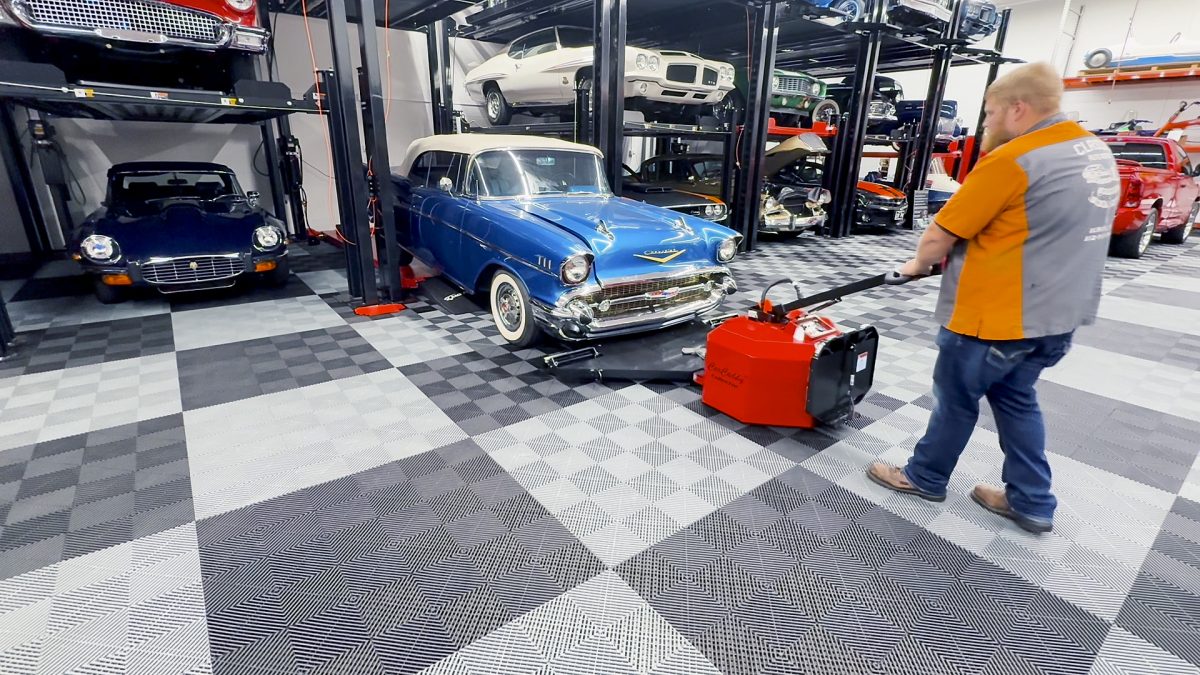
The team at Parc Motor Club were looking for an effective powered vehicle mover to reposition the priceless cars at their state of the art facility. They went with the CarCaddy Vehicle Puller and haven’t looked back.

They put the powered vehicle mover through all of the rigors and get the results they were looking for at a fraction of the cost compared to competitors. They are loving the aesthetics, efficiency, length of the battery life, and its ease of use. The CarCaddy Vehicle Puller the Collectors Edition has become an essential part of their operation.

Visit Parc Motor Club

The Luxury Valet Parking Powered Vehicle Mover: Managing High-Density Vehicle Flow in Luxury Parking Garages

luxury hotels, casinos, and residential towers, your valet service is the first and last impression you make. But behind the scenes, managing high-density vehicle flow in tight spaces is a constant challenge.

The “valet nightmare” is real: the stress of retrieving a car quickly, the risk of scraping a bumper, and the physical strain of manually pushing heavy vehicles. Modern material handling technology offers a powerful solution: the powered vehicle mover.

From Brute Force to Precision

When every parking spot counts and each vehicle is a high-value asset, relying on manual parking or pushing into a tight spot is a recipe for disaster. This outdated method often requires multiple staff members and results in jerky, uncontrolled movements—a leading cause of parking garage incidents.

A powered vehicle mover eliminates this risk by giving a single operator precise command over any vehicle’s movement. These machines use robust motors to smoothly start, move, and stop any car or SUV, even if the engine is off.

1. Maximize Density, Minimize Risk

The main goal of a high-density garage is to maximize revenue by parking as many cars as safely as possible. Manual pushing limits how tightly you can park because staff need room to maneuver.

A compact powered vehicle mover allows valets to navigate cars with only inches of clearance. The operator stands safely behind the unit, guiding it with precision and allowing vehicles to be staged shoulder-to-shoulder. This can significantly increase your garage’s capacity by eliminating wasted space.

2. Boost Safety and Protect Assets

Luxury valet services can’t afford vehicle damage. Every time a car is manually pushed, you risk:

  • Scrapes and dings from a lack of control in tight corners.
  • Back strain and injuries to staff.
  • Fumbled stops that can lead to collisions.

Solutions like our CarCaddy Vehicle Puller: The Collectors Edition are engineered for precision. They provide the power to move large vehicles with smooth acceleration and braking. This creates a safer work environment for your team and offers unmatched protection for your clients’ property.

3. Improve Speed and Staff Retention

In a luxury setting, wait times are critical. A powered vehicle mover helps your team work more efficiently by:

  • Reducing physical fatigue, which lowers staff burnout and turnover.
  • Increasing retrieval speed, as one person can move cars faster than a team of three.
  • Handling any vehicle, including those in neutral or with low clearance, without delay.

For high-volume, high-value valet operations, investing in a purpose-built powered vehicle mover is a necessity. It’s the ultimate tool to transform garage chaos into a seamless, professional, and profitable service. Contact us today and one of our professional sales engineers with help you build the powered vehicle mover specifically to your needs.