Beyond the Bumper: Why Historic Paints and Original Chrome Require a Tire-Lift Solution

Quick answer: Traditional push-pads and complex metal frames can easily damage delicate automotive paint, custom wraps, and vintage chrome trim. To prevent micro-abrasions and stress fractures, auto businesses should use an electric car pusher that features an under-car cradle design. This method safely grips only the rubber tires, leaving zero trace on the vehicle.

Operating a boutique auto dealership, restoration shop, or high-end garage means handling significant investments every single day. You take in vehicles that feature original chrome trim, rare fiberglass panels, and expensive custom vinyl wraps. Moving these cars around the shop floor safely is a top priority for your daily operations. You need to maximize efficiency without putting your clients’ assets at risk.

Many shops rely on outdated equipment to move dead vehicles. Employees often use manual pushing techniques or rely on generic equipment equipped with bulky push-pads. While these methods might seem cost-effective initially, they introduce a high risk of accidental damage. Even a minor scratch on a vintage vehicle can destroy your profit margin and damage your reputation with a loyal customer.

Upgrading your shop floor technology directly protects your bottom line. Investing in a specialized electric car pusher ensures that your staff can move vehicles efficiently and safely. By understanding exactly how traditional tools fail, you can make an informed decision that protects the delicate bodywork of every car in your care.

How does aging metal react to traditional car pushing machines?

Classic cars and high-end exotics require specialized handling. Vintage lacquer paint and original chrome trim simply cannot handle the pressure exerted by traditional push pads. Many legacy machines use large foam or rubber pads that press directly against the bumper or body panels to generate pushing force.

Over time, this direct contact causes severe problems for delicate materials. Even soft rubber pads can cause micro-abrasions on clear coats. The friction generated during movement grinds microscopic dirt particles directly into the paint. Furthermore, older fiberglass and aluminum bodies suffer under localized pressure. Pushing thousands of pounds of dead weight through a single contact point on a fiberglass bumper often creates hidden stress fractures.

Custom vinyl wraps present another major challenge. Modern wraps are thin and highly susceptible to peeling or tearing when subjected to dragging friction. A traditional car pushing machine that relies on a flat contact pad can easily catch the edge of a custom wrap, causing hundreds of dollars in damage in a matter of seconds.

Why is the under-car cradle approach safer for your vehicles?

The safest way to move a vehicle is by utilizing the components designed to bear its weight. Our equipment, the CarCaddy, uses an innovative under-car cradle approach. Instead of pressing against painted panels or fragile chrome, this system grips only the rubber of the tires.

Tires are inherently durable and designed to handle the entire weight and rolling resistance of the car. By directing the pushing and pulling force exclusively through the tires, the electric car pusher completely bypasses the vehicle’s bodywork. You eliminate the risk of cracking fiberglass, scratching paint, or denting aluminum.

This approach provides a seamless, stress-free moving experience. Your staff can easily position the machine, secure the tires, and maneuver the vehicle through tight shop spaces. The under-car cradle design offers excellent control and visibility, allowing a single employee to move a heavy vehicle safely without relying on a team of technicians.

How do you move cars without straps or scratches?

Heavy industrial equipment often relies on complex tie-down systems. Many towing or moving devices require ratchets, hooks, or nylon straps near the rims to secure the load. These metal hooks and tight straps introduce a completely new set of risks to the vehicle’s wheels and lower body panels.

A dropped metal hook easily chips the paint on a high-end alloy wheel. Ratchet straps that vibrate against the lower rocker panels during transport cause severe clear-coat damage. Your customers expect their vehicles to remain pristine while in your shop, and relying on strap-heavy equipment makes that difficult to guarantee.

The CarCaddy Electric Car Pusher secures the vehicle effortlessly without needing a single strap or hook. The cradle mechanism pinches the tire securely from the front and back, locking the vehicle in place through mechanical leverage. This eliminates the need to route straps through delicate wheel spokes or around suspension components. You can move the car exactly where it needs to go, leaving zero trace that it was ever moved.

Next steps for upgrading your auto handling process

Protecting your clients’ assets should be the foundation of your shop’s standard operating procedures. Relying on outdated push-pads and strap-based towing equipment introduces unnecessary risk and liability into your business. Upgrading to a specialized electric car pusher protects your reputation and improves your operational efficiency.

Take a walk through your facility today and observe how your team currently handles dead vehicles. Calculate the potential cost of repairing a damaged custom wrap or repairing a cracked vintage fiberglass bumper. You will quickly see that investing in the right equipment delivers a strong return on investment. Choose a machine that uses an under-car cradle design, and give your staff the tools they need to succeed.

Frequently Asked Questions (FAQ)

What is the safest way to push a car with a dead battery?

The safest method is using an electric car pusher that features an under-car cradle design. This equipment grips only the tires, ensuring no pressure is applied to the delicate paint, fiberglass, or chrome trim of the vehicle.

Why do rubber push pads damage car paint?

Rubber push pads trap dirt and dust between the pad and the vehicle’s surface. When pushing force is applied, the pad shifts slightly, grinding these abrasive particles into the paint and causing permanent micro-abrasions.

Can an electric car pusher move vehicles with custom wraps?

Yes, provided you use a model that grips the tires rather than the bodywork. Pushing directly against a wrapped bumper with a traditional pad will often tear or peel the vinyl material.

Do I need multiple employees to operate a tire-gripping car pusher?

No. A high-quality electric car pusher is designed for single-user operation. One employee can safely attach the cradle to the vehicle’s tires and maneuver the car through tight spaces without assistance.

Get a free price quote today to upgrade your machinery that you use to move cars today.

The Secret to Stopping Cold Starting: Moving Your Classic Cars

May is finally here, and for private automotive collectors, that means it is time to get your vehicles ready for the road. The weather is warming up, the salt is off the roads, and the open highway is calling. But before you can take your favorite summer driver out for a spin, you usually have to deal with a frustrating logistical hurdle: “the shuffle.”

Often, the exact car you want to take out on the first sunny weekend is tucked safely in the back corner of your garage, completely blocked by three other vehicles. Moving a million-dollar car with only inches of clearance is a stressful endeavor. It requires careful planning, a lot of patience, and usually a few extra sets of hands.

Many collectors resort to simply turning on the engines of the blocking cars, backing them out into the driveway, and then pulling the summer vehicle out. While this might seem like the fastest method, it introduces a host of risks to your delicate engines and your enclosed air quality. There is a much better, safer way to handle the summer shuffle.

By utilizing an electric car pusher, you can safely and efficiently move your vehicles without the exhaust fumes or the risk of damaging your engines. Let’s look at why this simple equipment upgrade is the best investment you can make for your private garage this season.

The Problem with Cold Starts

Starting a vintage engine just to move a vehicle 15 feet is one of the worst things you can do for its longevity. When a car has been sitting in a garage for weeks or months, the oil drains down into the oil pan. The engine is completely dry at the top. When you turn the key, the metal components rub against each other without proper lubrication for those first few crucial seconds.

This is known as a cold start, and it causes significant wear and tear. Furthermore, running an engine for only a minute or two prevents it from reaching its proper operating temperature. This short run time leads to several mechanical issues:

  • Condensation buildup: Moisture naturally forms inside the engine and exhaust system. If the car does not get hot enough to burn this moisture off, it sits inside the exhaust pipes and engine block, leading to internal rust and corrosion.
  • Oil pressure drops: Cold oil is thick and heavy. Asking your oil pump to move cold oil for a 15-foot trip, only to shut the engine off immediately, places unnecessary strain on your vehicle’s internal systems.
  • Toxic exhaust fumes: Starting multiple older, un-catalyzed vehicles in an enclosed or semi-enclosed garage fills your sanctuary with dangerous carbon monoxide and noxious odors.

Using an electric car pusher eliminates the need for cold starts entirely. You can safely maneuver your classic cars out of the way without ever turning the ignition key, protecting your investment and your lungs.

Reclaiming Your Garage Space

Garage real estate is incredibly valuable. Whether you have a dedicated warehouse or a heavily customized residential garage, maximizing your square footage is always a priority. Unfortunately, maneuvering vehicles by hand or by driving them requires leaving wide gaps between the cars. You need enough room to swing the driver’s side door open, get inside, and physically steer the wheel.

An electric car pusher changes the geometry of your garage entirely. Because the pusher attaches directly to the tires and allows you to control the vehicle’s direction from the outside, you no longer need door-swing clearance.

You can park your cars safely with mere inches of clearance between them. This allows you to fit more vehicles into the same footprint, effectively reclaiming lost space. You can push a vehicle tightly against a wall or snug it up next to another car with complete confidence, knowing you have total control over its momentum and direction.

Reorganize on Your Own Terms: One-Person Operation

For many collectors, the garage is a place of solitude and relaxation. Spending a Saturday morning detailing, maintaining, and reorganizing your collection should be an enjoyable experience. But if you have to rely on neighbors, friends, or family members to help you push heavy cars around, that independence disappears.

An electric car pusher gives you the freedom of a true one-person operation. You do not need a spotter, and you do not need someone steering from the driver’s seat while you push from the bumper.

  • Total control: You stand at the front or rear of the vehicle, giving you a clear line of sight to all potential obstacles.
  • Effortless movement: The electric motor does all the heavy lifting, allowing you to move heavy vintage steel across flat surfaces or slight inclines without breaking a sweat.
  • Ultimate convenience: Reorganize your entire layout on a whim, at any hour of the day, without waiting for assistance or waking up the neighborhood with loud exhaust notes.

Frequently Asked Questions (FAQ)

Can an electric car pusher handle heavy vintage vehicles?

Absolutely. Most high-quality electric car pushers are rated to move vehicles weighing several thousand pounds. Whether you are moving a lightweight European sports car or a heavy American muscle car, the pusher provides consistent, smooth torque to get the job done safely.

Will the pusher damage my tires or bodywork?

No. An electric car pusher is designed to engage smoothly with the tread of your tires. It does not make contact with your fragile bodywork, bumpers, or undercarriage components, ensuring your million-dollar vehicles remain in pristine condition.

Is it difficult to steer a car from the outside?

Not at all. The pusher handles the forward and reverse momentum. For steering, you simply guide the vehicle’s tires from the outside, or in some cases, you can reach through an open window to adjust the steering wheel slightly. Because you are moving at a slow, highly controlled pace, keeping the car on track is incredibly easy.

Make Your Next Garage Reorganization a Breeze

Your collection is your sanctuary, and the time you spend with your vehicles should be relaxing and rewarding. Moving your cars to prepare for the summer driving season should never involve stress, the risk of body damage, or the mechanical strain of cold starting a delicate engine.

As a fellow enthusiast, I understand the level of care your collection requires. Keep your private garage running smoothly and safely this season. Contact us today for a personalized price quote on an electric car pusher, and make your next garage shuffle a completely effortless experience.

Why Museums Trust Electric Movers for Vintage Cars

Curating a museum exhibition featuring classic automobiles is a demanding task. You spend months sourcing rare vehicles, verifying their provenance, and planning the perfect gallery layout. But when the time comes to actually place these priceless artifacts on the showroom floor, facility managers face a massive logistical hurdle.

Moving a vintage car indoors requires extreme care. These vehicles are heavy, fragile, and often lack functioning drivetrains. In the past, gallery staff relied on sheer physical strength to muscle these machines into position. That approach routinely put both the artifacts and the employees at high risk of injury or damage.

Fortunately, facility managers now have a much safer option. Upgrading to an electric vehicle move eliminates the physical strain and unpredictable movement associated with manual pushing. By reading this guide, you will learn exactly why top automotive museums and private collectors have fully transitioned to specialized electric pushers for their gallery operations.

The Hidden Risks of Manual Pushing

Relying on human strength to move a vintage car might seem straightforward, but it creates a multitude of unseen hazards. When a team of employees pushes a vehicle, they apply uneven pressure across the car’s exterior. Vintage bodywork is incredibly delicate. Thin aluminum panels, aged fiberglass, and decades-old paint easily buckle or crack under the localized weight of human hands.

Furthermore, manual pushing lacks consistent control. Gallery spaces are notoriously tight, featuring narrow corridors, fragile glass display cases, and expensive lighting fixtures. When a heavy car builds momentum, human muscle cannot easily stop it. A sudden slip by a staff member or a miscommunication during a sharp turn drastically increases the risk of a catastrophic collision.

By removing the human element from the physical pushing process, you protect the structural integrity of the vehicle. Specialized moving equipment attaches securely to the vehicle’s chassis or tires, distributing the load evenly and entirely avoiding contact with the fragile body panels.

Silent and Exhaust-Free Operation

Bringing vehicles inside a climate-controlled building introduces environmental concerns. You cannot simply start a classic car’s engine and drive it onto the display floor. Combustion engines produce toxic carbon monoxide and thick exhaust smoke. These emissions quickly contaminate the indoor air quality, posing a severe health hazard to your staff and future visitors.

Beyond human safety, exhaust fumes carry microscopic particulates and corrosive elements. When these particulates settle on nearby exhibits, they degrade sensitive fabrics, dry out historic leathers, and permanently stain delicate paints. Museums spend significant portions of their budget maintaining a pristine, temperature-controlled environment. Introducing exhaust fumes immediately compromises those preservation efforts.

Electric motors solve this problem completely. An electric mover produces zero emissions, ensuring your gallery air remains clean and your surrounding artifacts stay safe. Additionally, the electric motor is completely silent. Your staff can orchestrate a complex electric vehicle move during regular operating hours without disrupting the peaceful, quiet atmosphere your patrons expect.

Achieve Single-Operator Precision

Coordinating a manual car move typically creates a chaotic environment. It requires pulling multiple staff members away from their regular duties to act as pushers, spotters, and steerers. This “all-hands-on-deck” approach wastes valuable labor hours and leads to loud, stressful communication across the gallery floor.

Modern electric movers give you total control with minimal manpower. These compact machines connect directly to the vehicle and operate via a wireless remote or an ergonomic steering handle. One single curator can easily navigate a multi-million dollar vehicle through a crowded exhibit space.

This single-operator precision offers incredible maneuverability. You can creep the vehicle forward at a fraction of a mile per hour, make sharp adjustments, and bring the heavy machine to an immediate, controlled stop. This level of exactness ensures the car lands precisely on its display mark without the stress, shouting, and physical exertion of a manual move.

Frequently Asked Questions About Museum Movers

Are electric movers safe for all types of vintage tires?

Yes. Professional-grade electric movers are designed to accommodate everything from narrow brass-era wooden wheels to wide modern racing slicks. They gently cradle the tire or attach to the chassis, preventing any pinching, scuffing, or flat-spotting on historic rubber.

How much training does my staff need to operate one?

Very little. The controls are highly intuitive, usually consisting of a simple directional joystick and a variable speed dial. Most facility staff become fully proficient in operating the equipment safely within a single afternoon of training.

Can these machines handle inclines and ramps?

Absolutely. High-torque electric motors easily maintain traction and speed control when navigating loading ramps, transport trailers, and sloping gallery floors. The automatic braking systems also prevent the vehicle from rolling backward on an incline.

Secure Your Collection with the Right Tools

Your museum collection represents a massive financial and historical investment. Protecting that investment means utilizing the best available equipment for every stage of your operations. Continuing to move priceless vehicles by hand exposes your business to unnecessary liabilities, potential worker compensation claims, and irreversible damage to irreplaceable artifacts.

Switching to electric moving equipment streamlines your workflow, lowers your labor costs, and provides peace of mind. Your staff can work more efficiently, and your vehicles remain in pristine condition. Review your current gallery logistics today and consider investing in an electric mover tailored for your specific facility needs.

An Electric Vehicle Mover Designed for Boutique Dealerships

The Best Electric Vehicle Puller For The Tight Spaces

If you are a boutique dealership owner or manage a specialized service center, you have likely noticed a troubling trend: your square footage isn’t growing, but your costs certainly are.

Commercial real estate prices have skyrocketed in recent years. For many business owners, expanding the physical footprint of a showroom or service bay is no longer a financially viable option. Instead, you are forced to do more with less. You are packing more inventory into the same showroom floor and squeezing more repair jobs into existing service bays.

The result? “Parking lot Tetris.”

Your technicians waste valuable billable hours shuffling cars around just to get one vehicle into a lift. You risk door dings and bumper scrapes every time a vehicle is moved in a tight corridor. The traditional tools of the trade—forklifts and tow trucks—are simply too bulky to navigate these narrowing aisles effectively.

When real estate is at a premium, efficiency isn’t just a nice-to-have; it’s a survival mechanism. If you can’t make your facility bigger, you have to make your operations smarter.

The High Cost of “Space Tetris”

Let’s face it: moving cars in a crowded facility is a logistical nightmare.

In a perfect world, you would have ample room to maneuver every vehicle. But in the current market, maximizing revenue per square foot means high-density storage. Whether you are storing classic cars for consignment or queuing up daily repairs, every inch of floor space represents potential revenue.

However, high-density storage comes with high-stakes risks:

Damage to Inventory: Manually pushing cars or squeezing full-sized trucks into tight spots increases the risk of dents and scratches.

Employee Injury: Asking technicians to manually push stalled vehicles is a leading cause of back strain and workers’ comp claims.

Lost Productivity: Every minute your team spends maneuvering a car is a minute they aren’t fixing one.

You need a tool that allows you to utilize every corner of your facility without sacrificing safety or efficiency.

Enter the CarCaddy Vehicle Puller

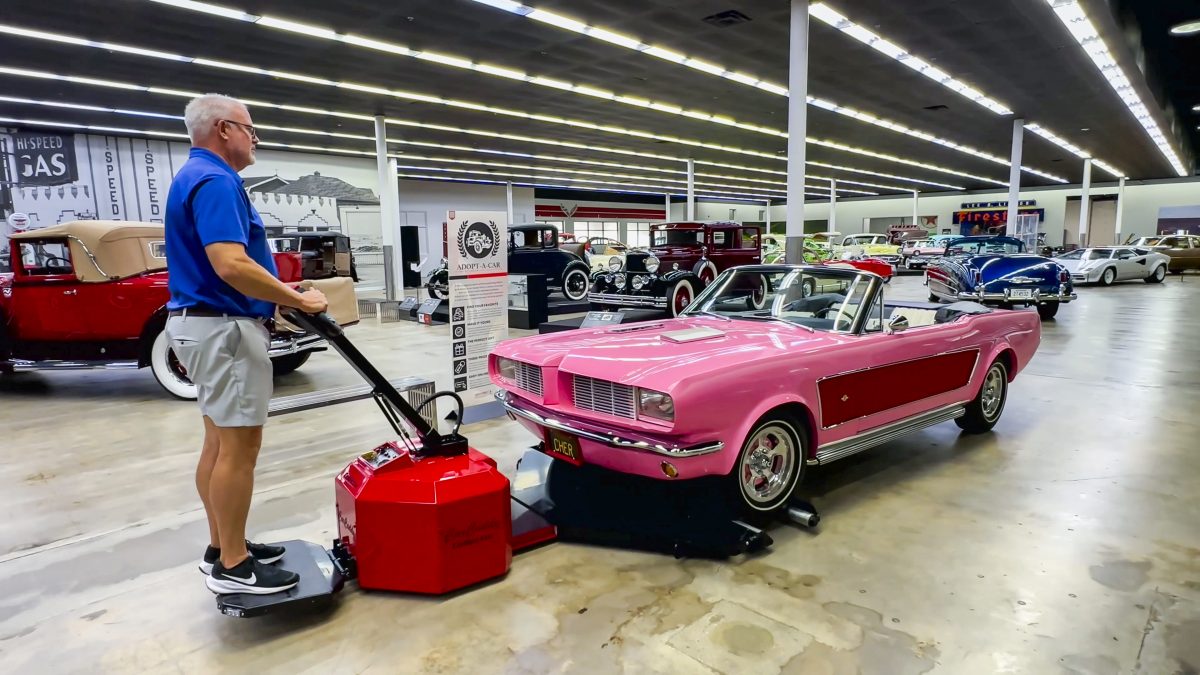
The CarCaddy Vehicle Puller (specifically the VP 7K or “Collector’s Edition”) is designed exactly for this “tight squeeze” reality. It is an electric vehicle mover that allows a single employee to move cars up to 7,000 lbs. easily, safely, and efficiently.

Unlike a forklift or a tow truck, which requires a significant amount of clearance space to turn and operate, the CarCaddy is compact. It acts as a “force multiplier” for your staff—turning a three-person pushing job into a one-person, effortless task.

The “Zero-Turn” Advantage

One of the biggest hurdles in a cramped service center is the turning radius. You might have the space to park a car, but not the space to drive it in.

The CarCaddy solves this with exceptional maneuverability. Its wagon-wheel steering and compact footprint allow operators to execute sharp turns in confined areas. You can guide a non-running vehicle into a service bay or a showroom slot with surgical precision, utilizing space that traditional support vehicles simply can’t reach.

This capability allows for high-density vehicle storage. Because you don’t need to leave wide lanes for big tow trucks, you can park vehicles closer together, effectively increasing your inventory capacity without paying a dime more in rent.

Built for Boutique Needs: CarCaddyVP 7K

The CarCaddy Vehicle Puller isn’t just about raw power; it’s about refined control. Whether you are moving a vintage Ferrari in a consignment shop or a stalled sedan in a busy repair garage, this unit is engineered to protect the vehicle and the operator.

Here is a look at the specs that make it the ideal solution for space-constrained businesses:

Capacity: Pulls vehicles up to 7,000 lbs.

Protection: Hydraulic roller arms gently scoop up the front two wheels (up to 3,000 lb. of front axle weight), so there is no contact with the bumper or body. This is critical for high-end or classic inventory where a scratch can cost thousands.

Power: 36VDC drive system with 3 batteries, providing plenty of juice for a full day’s work.

Control: High-tech speed controller with adjustable acceleration and braking. It moves at a safe 0-3 mph, giving the operator complete control in tight quarters.

Steering: Wagon-wheel steering allows for intuitive handling, even for new operators.

Safety: Features a safety stop switch, non-marking tires (to keep your showroom floors pristine), and a horn.

For specialized applications, there are even options like wheel bonnets, AGM batteries, and an AWD Dolly Kit for vehicles that are completely locked up.

Maximize Your ROI

In a business environment where real estate costs are eating into margins, the CarCaddy Vehicle Puller is an investment in density. It allows you to:

  1. Store more cars in your existing footprint.
  2. Reduce labor costs by making vehicle movement a one-person job.
  3. Eliminate damage costs associated with manual pushing or bulky towing equipment.

Don’t let rising rent prices dictate your capacity. Take control of your floor plan.

Ready to stop playing parking lot Tetris? Check out the CarCaddy Vehicle Puller today to reclaim your space. Contact our team for the full CarCaddy Vehicle Puller specs and options.

Concours-Ready Floors: Protecting Your Museum’s Most Underappreciated Asset

When you walk into a high-end automotive museum or a private collection, your eyes are naturally drawn to the metal. The curves of a vintage Ferrari, the chrome of a classic Cadillac, the pristine paint of a muscle car restoration. But as business owners and curators, we know that the “stage” is just as important as the actors. Your floor—whether it’s polished concrete, epoxy, or specialty tile—sets the tone for the entire visitor experience. 

Maintaining that showroom shine is a constant battle. Foot traffic is one thing, but the real enemy of a pristine floor is moving day. Shifting vehicles for a new exhibit, rotating stock, or simply moving a car for maintenance can wreak havoc on your flooring surfaces. Tire marks, scuffs from heavy equipment, and scratches from dollies can turn a concours-ready floor into a maintenance nightmare in seconds. 

If you are still pushing vehicles by hand or using generic towing equipment, you are risking damage to both your collection and your facility. It is time to look at a solution designed specifically for the unique needs of museums and private collections: the CarCaddy Vehicle Puller an electric vehicle mover. 

The Problem with Traditional Moving Methods 

Moving a 5,000-pound classic car isn’t just a workout; it’s a liability. When your team pushes a vehicle manually, the risk of injury is high, but the risk to the floor is often overlooked. As staff struggle for traction, shoe scuffs accumulate. If you use a forklift or a standard tow tractor, you are introducing industrial-grade tires to a showroom environment. These tires are often made of compounds designed for grip on asphalt, not for delicacy on epoxy. 

The result? Black rubber streaks that require harsh chemicals and intensive labor to remove—chemicals that, over time, can degrade the finish of your high-end flooring. 

The CarCaddy Solution: Designed for the Showroom 

This is where the CarCaddy Vehicle Puller distinguishes itself. Unlike industrial movers adapted for cars, the CarCaddy—specifically the Collector’s Edition—was engineered with the museum environment in mind. 

The standout feature for facility managers is the non-marking tire system. The CarCaddy utilizes a specialized non-marking drive tire and non-marking crown caster wheels. These tires are constructed from high-quality synthetic compounds that provide the necessary traction to move heavy vehicles without leaving a trace of residue behind. 

You can maneuver a vintage Rolls-Royce across a white epoxy floor without anxiety. There are no black streaks, no gouges, and no expensive cleanup crew needed after the move. It preserves the integrity of your facility just as carefully as it preserves the bumper of the car it’s towing. 

Beyond the Floor: Protecting the Collection 

While the floors are critical, the vehicles are the stars. The CarCaddy offers a “touchless” moving experience regarding the vehicle’s bodywork. Traditional towing often involves hooking onto bumpers or chassis points that were never designed for lateral stress, or worse, manually pushing on fenders and trunks, leading to dents and fingerprints. 

The CarCaddy uses hydraulic roller arms that gently scoop up the vehicle’s tires. The puller engages the tires, not the bumper. This means the vehicle is lifted slightly and moved without any stress on the suspension or body panels. For a museum housing irreplaceable history, this level of care is non-negotiable. 

Precision Control in Tight Spaces 

Museums are often packed tight to maximize display space. Maneuvering a vehicle into a corner spot requires surgical precision. The CarCaddy features “Wagon Wheel” steering and a high-tech speed controller, allowing for smooth acceleration and braking. 

With a variable speed of 0-3 mph, your staff can creep a vehicle into position with inch-perfect accuracy. The variable speed thumb control allows for feather-light adjustments, ensuring that a valuable exhibit never comes into accidental contact with a wall, a pillar, or another car. 

Technical Specifications: CarCaddy VP Collector’s Edition 

For those managing the logistics of a collection, power and capacity are key. The CarCaddy Collector’s Edition is built to handle the majority of classic and passenger vehicles with ease, all while maintaining a low profile that slides under low chassis designs. 

Here are the key specifications you need to know: 

  • Towing Capacity: Pulls vehicles up to 7,000 lbs. 
  • Axle Weight Capacity: Handles a front axle weight of up to 3,000 lbs. 
  • Power Source: 36VDC Drive system powered by a 36v (3-battery) system, ensuring quiet, fume-free operation suitable for indoor environments. 
  • Tires: Non-marking drive wheel and non-marking crown caster wheels to protect flooring. 
  • Speed: Variable 0-3 mph (Forward and Reverse) for precise control. 
  • Lighting: Integrated LED lighting and Hi-Beam headlights to improve visibility during moves in dimly lit storage areas. 
  • Control: Angled control panel with molded handlebars and a safety stop switch for operator security. 
  • Attachment: Roller arms that engage the tires, preventing bumper damage. 

Invest in the Right Tools for Your Collection 

As business owners, we invest heavily in security systems, climate control, and insurance to protect our assets. The equipment used to move those assets shouldn’t be an afterthought. 

The CarCaddy Vehicle Puller is more than just a piece of machinery; it is an insurance policy for your facility’s floors and your collection’s bodywork. It allows a single employee to safely, silently, and cleanly move vehicles that would otherwise require a team of people. It turns a chaotic, high-risk operation into a smooth, professional process. 

If you are tired of scrubbing tire marks off your showroom floor or holding your breath every time a classic car is moved, it is time to upgrade your ground game. 

Ready to protect your floors and your fleet?
Contact us today to learn more about the CarCaddy Vehicle Puller and how we can customize a solution for your museum or private collection. Let’s keep your history moving forward, safely.